Netherlands Nicotine Limits: New Rules Proposed for Tobacco-Free Nicotine Products
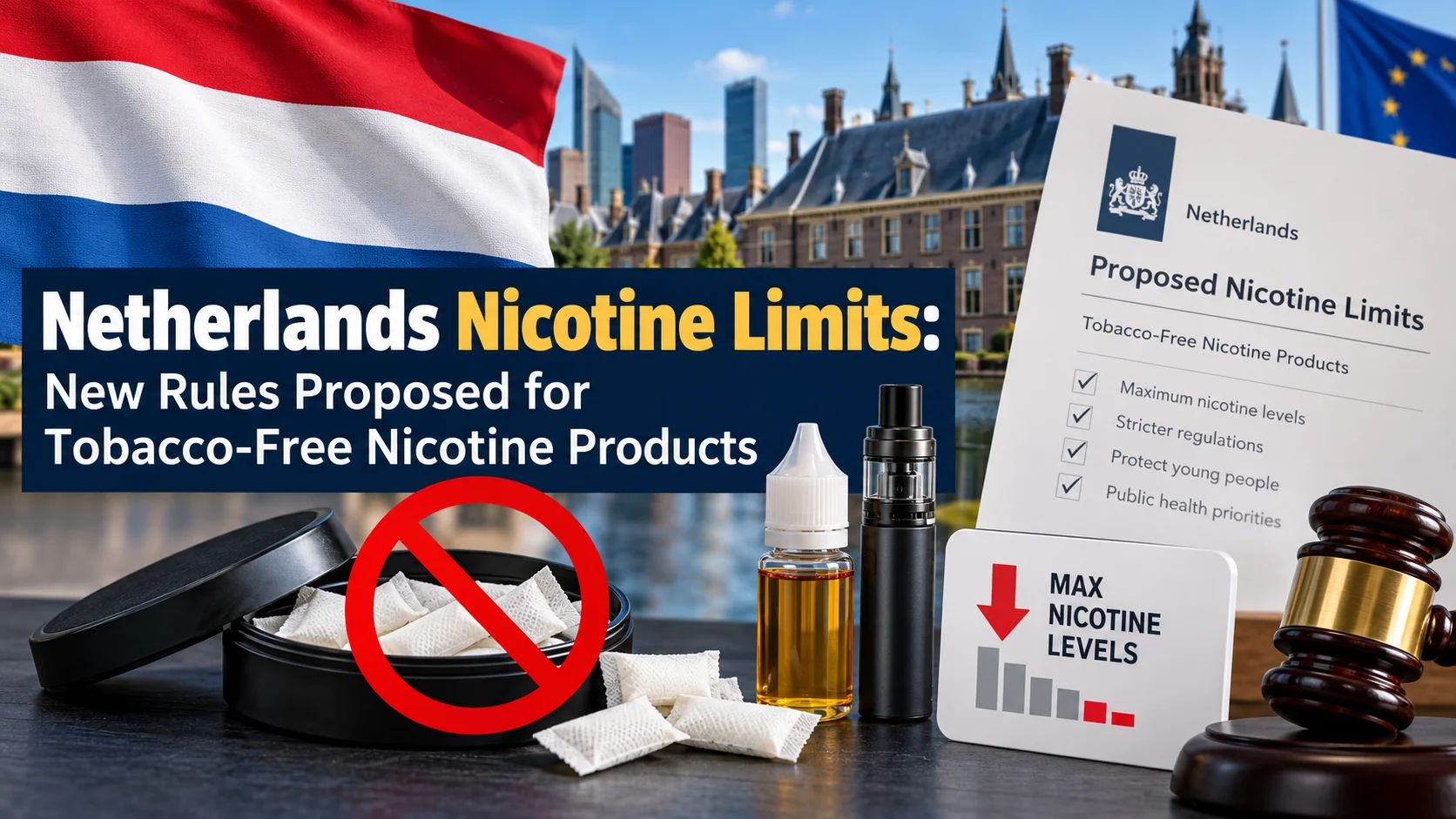
Netherlands nicotine limits are being proposed for tobacco-free nicotine products as the Dutch government moves to introduce maximum nicotine levels and strengthen regulation of emerging nicotine products.
The Netherlands notified the European Commission on 1 July 2026 of a draft amendment to its Tobacco and Smoking Products Regulation. The proposal would establish maximum nicotine levels for tobacco-free nicotine products and introduce appearance requirements for refill containers used with electronic cigarettes.
The proposal is aimed at protecting public health, particularly young people, and supporting the Netherlands’ goal of achieving a smoke-free generation by 2040.
What Are the Proposed Netherlands Nicotine Limits?
Under the draft regulation, the Netherlands proposes different maximum levels depending on the type of nicotine used in a tobacco-free nicotine product.
For nicotine forms other than 6-methylnicotine, the proposed maximum is 0.028 milligrams per tobacco-free nicotine product.
For products containing 6-methylnicotine, the proposed maximum is 0.0030 milligrams per product.
| Product / nicotine type | Proposed maximum level |
|---|---|
| Nicotine other than 6-methylnicotine | 0.028 mg per product |
| 6-Methylnicotine | 0.0030 mg per product |
These are proposed Dutch limits, not a new EU-wide nicotine standard.
Why Is the Netherlands Proposing New Nicotine Limits?
The Dutch government says tobacco-free nicotine products can have harmful and addictive effects, particularly for young people.
The proposed regulation is intended to limit nicotine exposure and prevent people, especially young people and people who have never previously used nicotine or tobacco, from becoming dependent on nicotine products.
The proposal is also connected to the Netherlands’ broader objective of achieving a smoke-free generation by 2040.
For businesses following regulatory developments, our coverage of [EU nicotine regulations] can provide additional context on the changing European regulatory landscape.
What Are Tobacco-Free Nicotine Products?
Tobacco-free nicotine products are products designed to deliver nicotine without containing tobacco.
The Dutch authorities distinguish these products from electronic vaping products. Examples can include certain nicotine products intended for inhalation and other emerging nicotine products.
The regulatory framework for these products has been developing as new nicotine products enter the market.
The Netherlands has already introduced restrictions on tobacco-free nicotine products. Since 1 January 2025, these products fall under certain rules applying to related products under Dutch tobacco legislation.
Netherlands Nicotine Pouch Regulation
Nicotine pouches are an important part of the wider European discussion around tobacco-free nicotine products.
However, the proposed Netherlands nicotine limits should not be interpreted as approval for nicotine pouches to be sold in the country.
The Dutch authorities state that there is already a total sales ban on nicotine pouches in the Netherlands.
This distinction is important for manufacturers, distributors and retailers because nicotine pouch regulation and regulation of other tobacco-free nicotine products may involve different requirements.
Businesses can also read our article on [EU nicotine pouch regulations] for an overview of the wider European regulatory developments.
Proposed Limit for 6-Methylnicotine
One notable part of the Dutch proposal is the separate limit for 6-methylnicotine.
The proposed maximum is 0.0030 mg per tobacco-free nicotine product when 6-methylnicotine is present. The Dutch notification states that the proposed values correspond to advisory values developed by the Netherlands’ National Institute for Public Health and the Environment (RIVM).
RIVM previously recommended advisory values of 0.028 mg for nicotine and 0.0030 mg for 6-methylnicotine based on its assessment of nicotine emissions and potential health effects.
This makes 6-methylnicotine an important compliance consideration for businesses developing or supplying relevant products in the Dutch market.
New Requirements for E-Cigarette Refill Containers
The Dutch proposal also covers refill containers for electronic cigarettes.
The draft would introduce requirements concerning the appearance of refill containers, both with and without nicotine. The objective is to ensure that the exterior of refill containers follows requirements similar to those applying to packaging units and external packaging of electronic vaping products.
The proposal states that this approach is intended to make the products less attractive and ensure that users receive health warnings even when a refill container is sold without additional packaging.
This means that companies supplying vaping-related products may need to monitor both product-content requirements and packaging requirements as the Dutch regulatory process develops.
What Could the New Dutch Nicotine Rules Mean for Businesses?
The proposed Netherlands nicotine limits could create additional compliance considerations for manufacturers, importers, distributors and retailers.
Businesses may need to review:
- Nicotine concentration
- Product ingredients
- 6-methylnicotine content
- Product classification
- Packaging and refill-container design
- Health warnings
- Product documentation
- Dutch market-access requirements
Companies operating across multiple European markets should also monitor individual national regulations because nicotine-product rules can differ between EU Member States.
For a wider market overview, businesses can follow our [European nicotine market regulations] coverage.
Netherlands Nicotine Regulations and the Smoke-Free Generation
The proposed nicotine limits form part of a broader Dutch strategy to reduce smoking and nicotine use.
The Netherlands has already introduced several tobacco-control measures, including restrictions on sales, advertising and flavoured e-cigarettes. The government is working towards a tobacco-free generation by 2040.
The government has also stated that a total ban on nicotine pouches is being prepared, reflecting its broader approach to limiting nicotine addiction and exposure.
The latest proposal therefore needs to be viewed as part of a wider regulatory strategy rather than as an isolated change.
What Is the Current Status of the Proposal?
The Netherlands submitted its draft regulation to the European Commission under notification 2026/0327/NL on 1 July 2026.
The notification records comments from Czechia and Bulgaria and detailed opinions from Romania, Greece and Italy.
The proposal is therefore still part of the regulatory process. Businesses should avoid treating the proposed nicotine limits as final requirements until the Dutch legislative process is completed.
The official Dutch consultation for the draft regulation ran from 1 June to 29 June 2026 and is now closed.
How Could This Affect the European Nicotine Market?
The Netherlands is one of several European countries increasing regulatory attention on emerging nicotine products.
Different approaches across Europe can create additional compliance challenges for businesses selling nicotine products across borders.
For companies active in European markets, it is important to monitor individual country requirements alongside developments at EU level.
Related regulatory developments can also be tracked through our articles on [Italy nicotine regulations], [Greece nicotine regulations], and [Bulgaria nicotine regulations].
What Should Nicotine Businesses Do Next?
Companies operating in the Dutch nicotine market should closely monitor the final regulatory text and assess how the proposed requirements could affect their products.
Businesses may consider reviewing:
- Product formulations for proposed nicotine thresholds.
- 6-methylnicotine use and related product specifications.
- Packaging designs for refill containers.
- Product documentation and compliance records.
- Market-specific requirements before supplying products in the Netherlands.
- EU and national regulatory developments affecting emerging nicotine products.
Early regulatory monitoring can help manufacturers and distributors prepare for possible changes before new requirements become applicable.