Nicotine Regulations in Luxembourg: Rules, Compliance & B2B Guide
Understanding nicotine regulations in Luxembourg is important for manufacturers, importers, distributors and B2B buyers dealing with tobacco, vaping and nicotine-related products. Luxembourg regulates tobacco and vaping products through national legislation alongside applicable European Union requirements.
For businesses entering the Luxembourg market, compliance should be assessed according to the product category, intended use, supply-chain role and applicable consumer or excise requirements.
What Are the Main Nicotine Regulations in Luxembourg?
Luxembourg has established a regulatory framework covering tobacco products and vaping products. The country’s tobacco-control measures address product composition, advertising, sales to minors, health warnings and restrictions on smoking and vaping in specified locations.
For B2B companies, it is important to distinguish between nicotine raw materials and finished consumer products such as cigarettes, e-cigarettes, e-liquids and other nicotine-containing products.
Age Restrictions for Nicotine Products
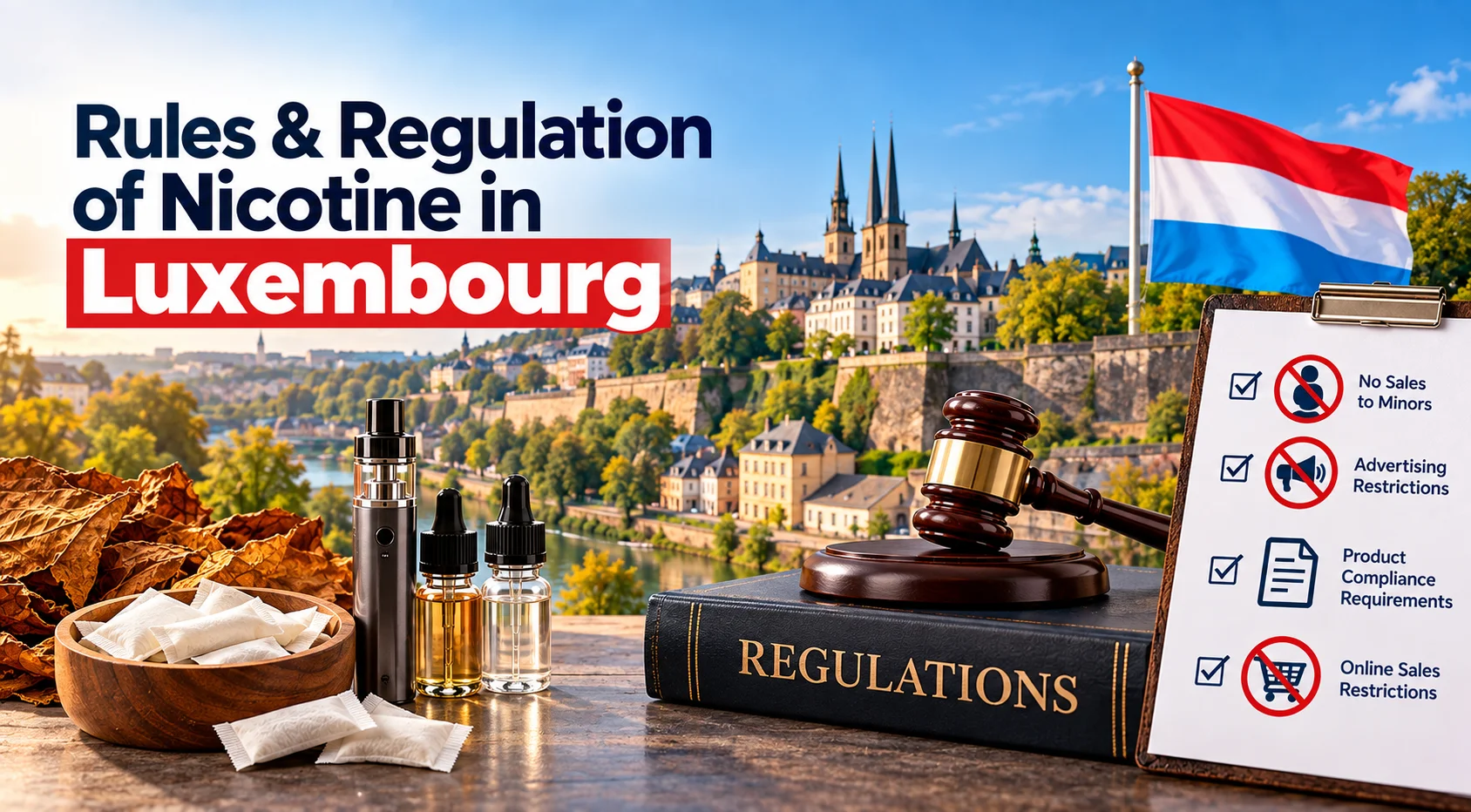
One of the key requirements in Luxembourg is the prohibition on selling tobacco products and electronic cigarettes to people under 18 years of age. Businesses selling covered products therefore need to take appropriate measures to prevent sales to minors.
Age requirements should be considered when designing both physical retail and online sales processes.
Advertising and Promotion Restrictions
Luxembourg places significant restrictions on tobacco advertising and sponsorship. Official government guidance states that tobacco-product advertising and sponsorship are prohibited, with limited exceptions at points of sale and in the form of the product and brand name.
Businesses should therefore review marketing materials, websites, promotional campaigns, packaging and point-of-sale communications before supplying regulated products in Luxembourg.
E-Cigarette and Vaping Regulations
Electronic cigarettes and vaping products are included within Luxembourg’s tobacco-control framework.
The Luxembourg Health Portal provides specific information on vaping products and maintains requirements concerning product ingredients and regulatory compliance.
Businesses supplying vaping products should review:
- Product composition
- Nicotine concentration
- Ingredients
- Packaging
- Labelling
- Health warnings
- Product information
- Applicable notification requirements
- Advertising restrictions
The rules applicable to a finished vaping product can differ from those applicable to nicotine supplied as an industrial raw material.
Nicotine Pouches and Other Nicotine Products
Nicotine pouches and other oral nicotine products have become increasingly relevant to the Luxembourg market. The Luxembourg Health Portal specifically identifies nicotine pouches among newer forms of nicotine consumption.
Because regulatory treatment can depend on the exact product category and intended use, manufacturers and importers should verify the current requirements before placing a specific nicotine product on the Luxembourg market.
Tobacco and Nicotine Product Trade
Businesses involved in the commercial movement of tobacco products must also consider Luxembourg’s excise framework.
The Luxembourg government states that businesses dealing with excise goods, including tobacco, must declare their activity to the Customs and Excise Agency where applicable. Traders may need the appropriate excise authorisation or documentation depending on how the goods are received, stored, moved or released for consumption.
For international B2B suppliers, this makes customs and excise planning an important part of market-entry preparation.
Import and Excise Compliance
Tobacco products are subject to excise duties in Luxembourg. Businesses receiving or dispatching excise goods within the EU may need an excise number and the appropriate authorisation depending on the transaction structure.
Before shipping regulated products, companies should review:
- Product classification
- Excise status
- Import documentation
- Customs requirements
- Excise authorisation
- Product documentation
- Packaging and labelling
- Destination-market requirements
Online and Distance Sales
Businesses selling products online to consumers in Luxembourg must also consider the country’s distance-selling and e-commerce requirements.
Luxembourg’s official guidance requires online businesses to provide consumers with specified information before a distance purchase and clearly communicate applicable delivery restrictions and payment methods.
For nicotine and vaping products, companies should additionally verify whether product-specific restrictions apply before offering online sales.
What Should B2B Buyers Check Before Purchasing Nicotine?
Manufacturers and B2B buyers sourcing nicotine for production should establish the intended use and applicable product classification before placing an order.
A practical procurement checklist includes:
- Nicotine type and grade
- Required purity
- Product specification
- Intended application
- Certificate of Analysis (CoA)
- Safety Data Sheet (SDS)
- Batch number and traceability
- Packaging requirements
- Transport documentation
- Import requirements
- Applicable EU requirements
- Luxembourg market requirements
Clear technical documentation can help procurement and quality teams evaluate incoming material more consistently.
Importance of Batch Traceability
For manufacturers using nicotine as a raw material, batch-to-batch consistency is an important quality consideration.
Buyers can request documentation covering:
- Batch identification
- Assay/purity
- Analytical results
- Manufacturing specifications
- CoA
- SDS
- Packaging information
- Traceability records
A documented supply chain can help businesses maintain stronger quality-control processes.
Luxembourg Compared With Other European Markets
Nicotine regulations can vary significantly between European countries even when EU-level requirements apply.
For example, businesses supplying different European markets can compare Luxembourg’s requirements with the regulatory frameworks discussed in our existing articles:
- Nicotine Regulations in Ireland — useful for comparing licensing and retail requirements.
- Nicotine Regulations in Denmark — useful for comparing product composition, flavour and nicotine-product requirements.
- Nicotine Regulations in Switzerland — useful for comparing product notification, labelling and market-surveillance requirements.
- Nicotine Rules and Regulations in the United Kingdom — useful for comparing the UK’s separate regulatory framework.
- Cross-Border Shipping Rules for Nicotine Products — useful for understanding destination-market compliance when exporting nicotine products.
What Manufacturers Should Consider Before Entering Luxembourg
Before supplying nicotine-containing products to Luxembourg, manufacturers and exporters should review:
Product:
Classification, composition, nicotine content and intended use.
Quality:
Specification, purity, CoA, SDS and batch traceability.
Packaging:
Labelling, warnings and packaging requirements applicable to the finished product.
Commercial:
Age restrictions, advertising requirements and sales channels.
Import:
Customs, excise and documentation requirements.
Market:
Current Luxembourg and applicable EU requirements.