Comparing Regional Nicotine Supply Options for B2B Procurement
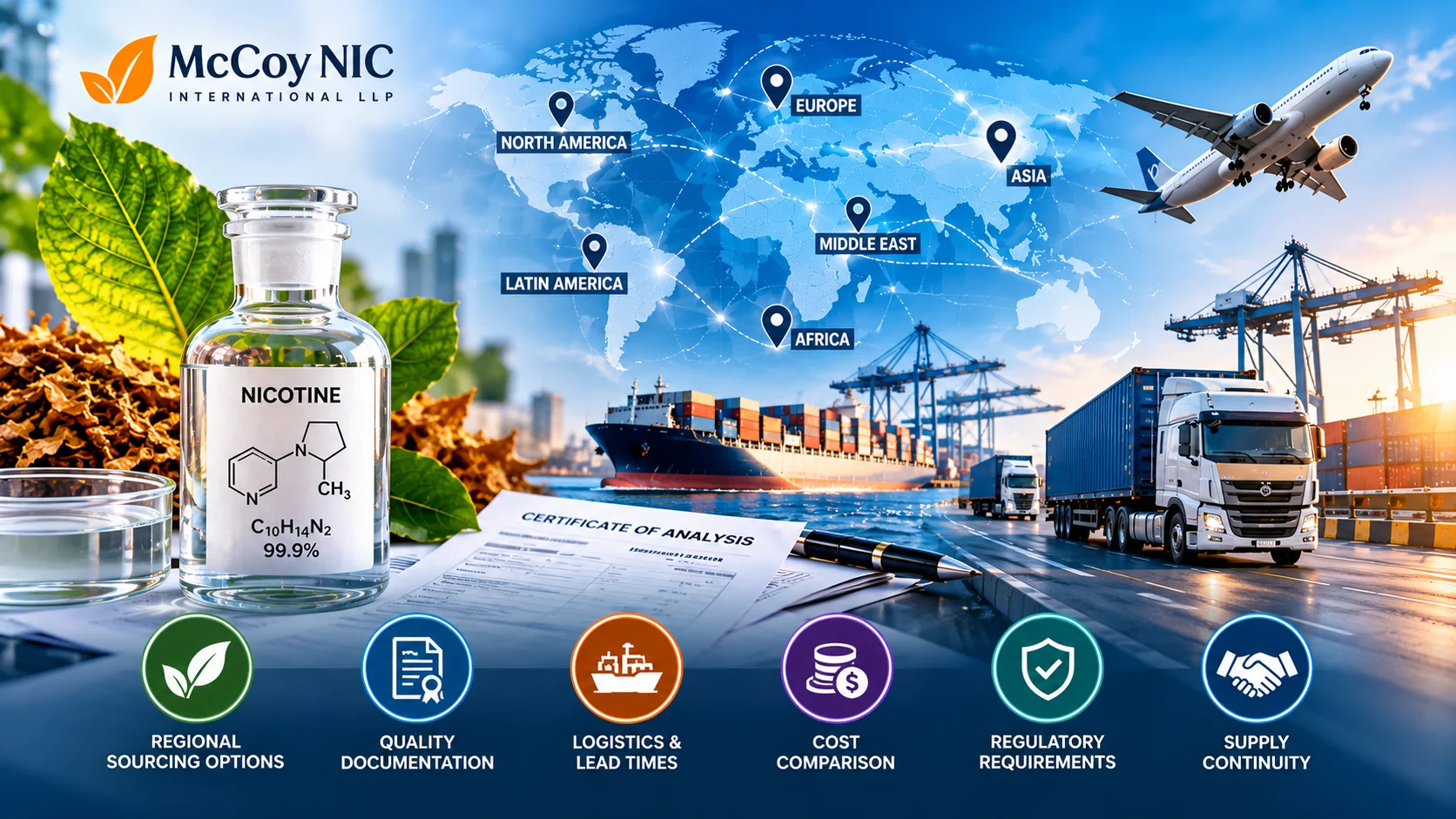
Regional nicotine supply options are an important consideration for manufacturers, formulators, distributors, and other qualified B2B buyers. When comparing suppliers across different regions, procurement teams need to look beyond quoted prices and evaluate product specifications, documentation, regulatory requirements, shipping arrangements, and supply continuity.
A supplier located closer to the buyer may offer logistical advantages in some situations, while an international supplier may provide a product specification or sourcing option that better matches the buyer’s requirements. The right decision depends on the destination market, intended application, order volume, and supplier capabilities.
Why Regional Nicotine Sourcing Matters
Nicotine procurement can involve multiple commercial, technical, and regulatory considerations. Buyers sourcing across regions must account for differences in transportation routes, import procedures, documentation requirements, and delivery schedules.
Regional sourcing decisions can influence:
- Delivery planning: Transit times, customs clearance, and carrier schedules can affect expected delivery dates.
- Total procurement cost: Product price is only one component; freight, insurance, duties, handling, and other applicable charges may also matter.
- Product suitability: Suppliers should be able to provide the grade and specifications required for the intended application.
- Documentation readiness: Buyers may need batch-specific quality records, safety information, origin details, and shipment documents.
- Supply continuity: Supplier capacity, production planning, and contingency arrangements can influence long-term procurement.
Comparing these factors together provides a more useful picture than evaluating suppliers by region alone.
Key Regional Supply Options for B2B Buyers
1. Domestic or In-Country Suppliers
Suppliers located within the buyer’s country may simplify communication, commercial coordination, and transportation planning. Depending on the transaction, domestic sourcing may also avoid certain cross-border import procedures.
However, domestic availability does not automatically guarantee shorter lead times, lower total costs, or the required product specifications. Buyers should verify actual availability, documentation, quality requirements, and delivery commitments.
2. Suppliers in Nearby Countries or Regions
Regional cross-border sourcing can provide another option when domestic supply is limited or when buyers are comparing different product specifications.
Nearby suppliers may offer practical transport routes, but the actual benefits depend on border procedures, applicable duties, carrier availability, product restrictions, and the shipment’s destination.
Procurement teams should confirm import eligibility and estimate the complete landed cost before comparing a regional quotation with a domestic offer.
3. International Suppliers
International sourcing can expand the range of suppliers and product options available to a buyer. It may be useful when a particular specification, documented origin, or supply arrangement is not readily available locally.
International procurement can also involve longer transport routes, additional documentation, customs valuation checks, import authorisations, and coordination between the supplier, buyer, carrier, and customs broker.
A well-prepared shipment plan should identify these requirements before an order is committed.
How to Compare Regional Nicotine Suppliers
A structured comparison helps procurement teams evaluate suppliers consistently, regardless of their location.
Product Specifications and Quality Documentation
Start by confirming that the offered material meets the required specification. Review the product identity, grade, applicable purity or assay requirements, batch information, and available analytical documentation.
A batch-specific Certificate of Analysis (CoA) can help quality teams review reported test results. Buyers should confirm that the document corresponds to the supplied batch and that the reported parameters match their requirements.
Related resource: Pure Nicotine 99.9%.
Total Landed Cost
Compare the full cost of receiving the material, not just the supplier’s quoted unit price.
Depending on the transaction, the calculation may include:
- Quoted product price
- Freight and insurance
- Customs duties and taxes, where applicable
- Customs brokerage and handling
- Storage or other shipment-related charges
- Currency conversion and payment costs
Use comparable quantities, currencies, delivery terms, and quotation validity periods. Duties and import taxes depend on the destination country, product classification, and applicable rules.
Lead Times and Delivery Commitments
Ask suppliers to clarify the expected timeline for documentation review, order acceptance, product availability, dispatch, transit, and customs clearance.
A quoted production lead time may not include buyer-side authorisations or import clearance. Comparing timelines on the same basis helps avoid unrealistic delivery expectations.
Regulatory and Import Requirements
Nicotine is subject to different requirements depending on the jurisdiction, product form, intended use, and transaction. Buyers should verify whether the proposed product can legally be imported for the intended application and determine which permits, declarations, labels, and transport documents are required.
Supplier documentation can support the review, but the buyer should confirm destination-specific obligations with a qualified customs or regulatory professional.
Supplier Communication and Supply Continuity
Clear communication is important when buyers need revised forecasts, updated documents, or clarification about product specifications.
Procurement teams should establish how suppliers handle order updates, documentation requests, shipment coordination, and changes that may affect future supply. For recurring purchases, buyers can also evaluate whether the supplier’s stated capacity and planning arrangements match their requirements.
Tobacco-Derived and Synthetic Nicotine: Confirm the Required Product
Regional supplier comparisons should distinguish between the sourcing location and the type of nicotine being offered. These are separate considerations.
Tobacco-derived nicotine is extracted from tobacco, while synthetic nicotine is manufactured through a synthetic route. The appropriate option depends on the required product identity, specification, application, documentation, and applicable destination-market rules.
Buyers should not assume that a particular origin or manufacturing route automatically determines product quality or regulatory treatment. Confirm the details for the specific product and market.
Explore the related McCoy NIC pages:
A Practical Checklist for Regional Procurement Decisions
Before selecting a supplier, B2B procurement teams can use the following checklist:
- Confirm the exact product specification and intended application.
- Request relevant quality documents and batch information.
- Verify the supplier’s ability to meet the required order quantity and schedule.
- Compare total landed cost using consistent commercial assumptions.
- Check import permissions, customs requirements, and transport restrictions.
- Confirm packaging, labelling, and shipment documentation requirements.
- Clarify expected lead times and the responsibilities of each party.
- Review contingency arrangements for potential supply interruptions.
For quality and supplier qualification, buyers can also review McCoy NIC’s certifications and compliance information and its nicotine batch traceability guidance.
How McCoy NIC Supports International B2B Buyers
McCoy NIC International LLP supplies nicotine raw materials to qualified B2B customers and provides product and supply-related information to support procurement discussions.
Buyers evaluating a sourcing requirement can review available product information, specifications, and applicable quality documentation before proceeding. Sharing the destination market, required specification, expected quantity, and intended application helps establish which commercial and documentation requirements need to be reviewed.
For related information, read McCoy NIC’s technical support for nicotine buyers or visit the Request CoA and Price page.