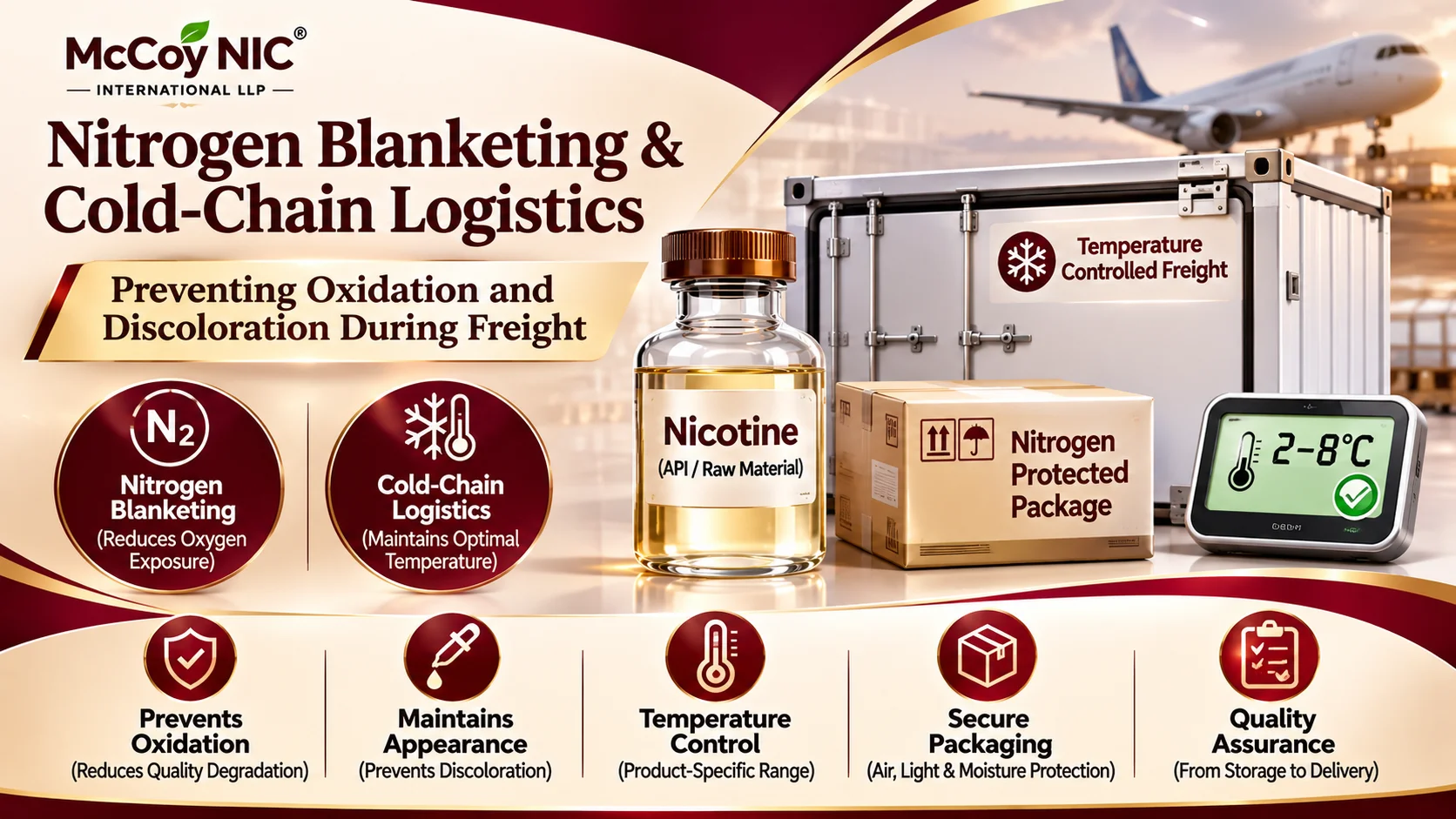
Nitrogen blanketing and cold-chain logistics for nicotine, preventing oxidation and discoloration during freight through secure packaging and temperature control.

Nitrogen Blanketing and Cold-Chain Logistics: Preventing Nicotine Oxidation and Discoloration During Freight

Nitrogen Blanketing and Cold-Chain Logistics: Preventing Nicotine Oxidation and Discoloration During Freight Nitrogen blanketing and cold-chain logistics are important considerations for protecting nicotine quality during storage, handling and international transportation. Exposure to air, light, moisture and unsuitable temperatures can affect nicotine’s appearance and chemical stability. For manufacturers, exporters and pharmaceutical raw-material suppliers, appropriate packaging and […]

Continue Reading
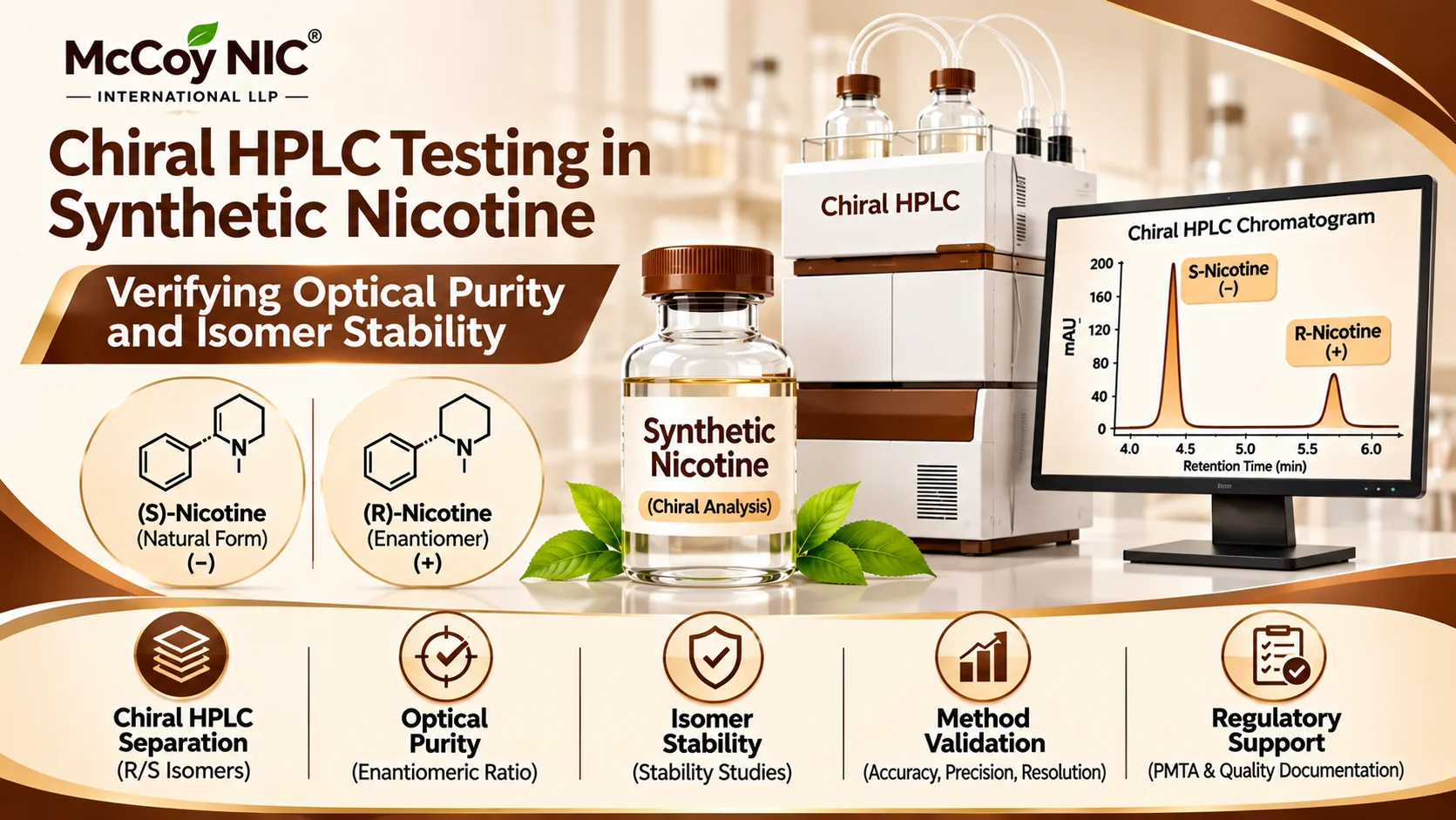
Chiral HPLC testing in synthetic nicotine showing R and S nicotine enantiomer separation, optical purity analysis, chromatogram and isomer stability monitoring

Chiral HPLC Testing in Synthetic Nicotine: Verifying Optical Purity and Isomer Stability

Chiral HPLC Testing in Synthetic Nicotine: Verifying Optical Purity and Isomer Stability Chiral HPLC testing in synthetic nicotine is an important analytical approach for determining the optical purity and enantiomeric composition of nicotine. As manufacturers develop and supply synthetic nicotine for pharmaceutical and other regulated applications, accurately measuring the two nicotine isomers—R-nicotine and S-nicotine—can support […]

Continue Reading
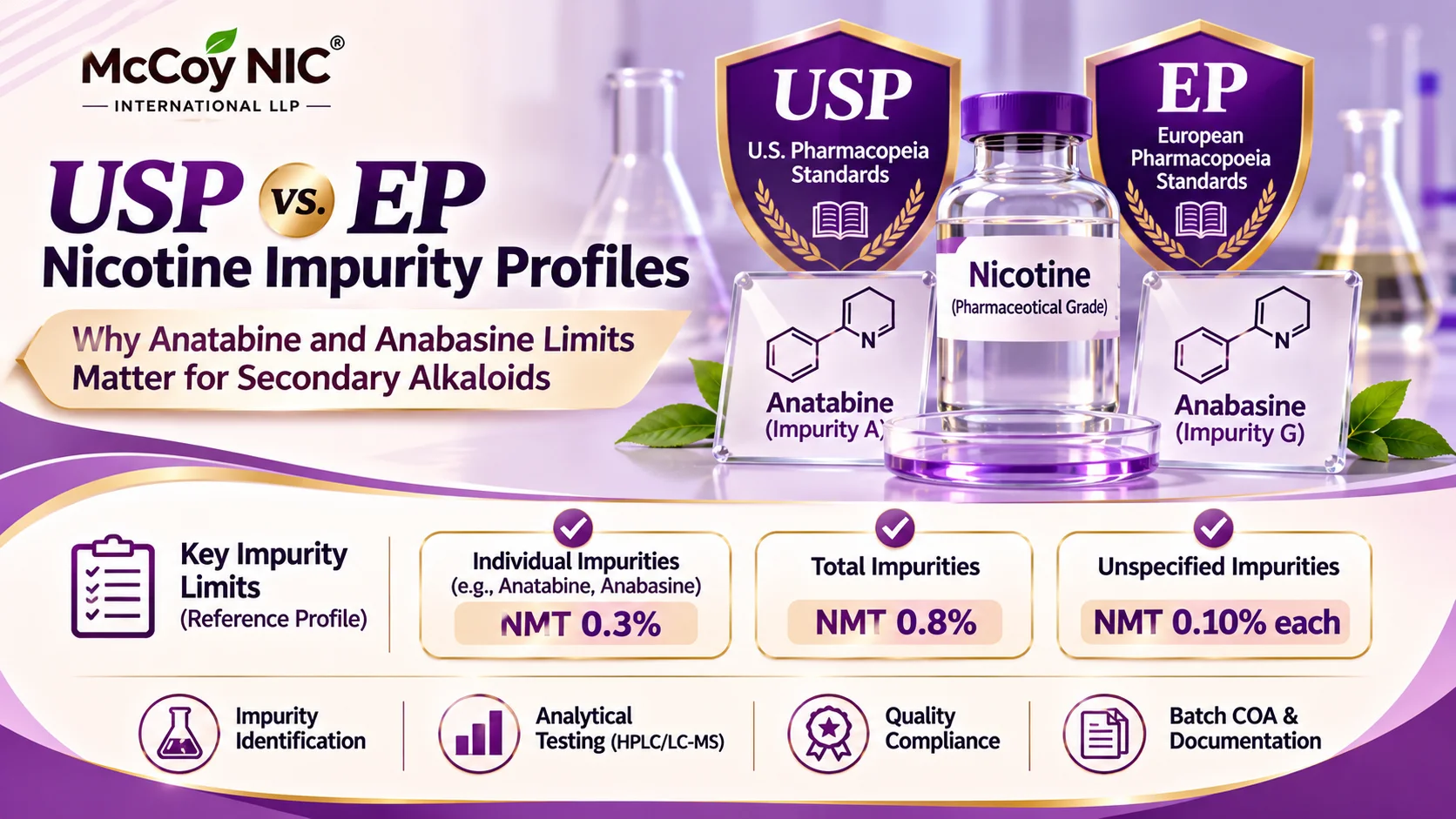
USP vs EP nicotine impurity profiles highlighting anatabine and anabasine limits, secondary alkaloids and pharmaceutical nicotine quality standards

USP vs EP Nicotine Impurity Limits: Why Anatabine and Anabasine Matter

USP vs EP Nicotine Impurity Limits: Why Anatabine and Anabasine Matter USP vs EP nicotine impurity limits are important quality considerations for pharmaceutical-grade nicotine manufacturers, suppliers and buyers. Both the United States Pharmacopeia (USP) and European Pharmacopoeia (EP) provide standards for evaluating nicotine identity, assay and related substances. Among the secondary alkaloids included in nicotine […]

Continue Reading
Sample preparation in analytical testing

Why Sample Preparation Is Critical in Analytical Testing

Why Sample Preparation Is Critical in Analytical Testing Accurate analytical testing depends not only on the quality of laboratory instruments but also on how a sample is prepared before testing. Sample preparation in analytical testing is an essential step that helps transform a collected sample into a suitable form for measurement, identification and quantification. Real-world […]

Continue Reading
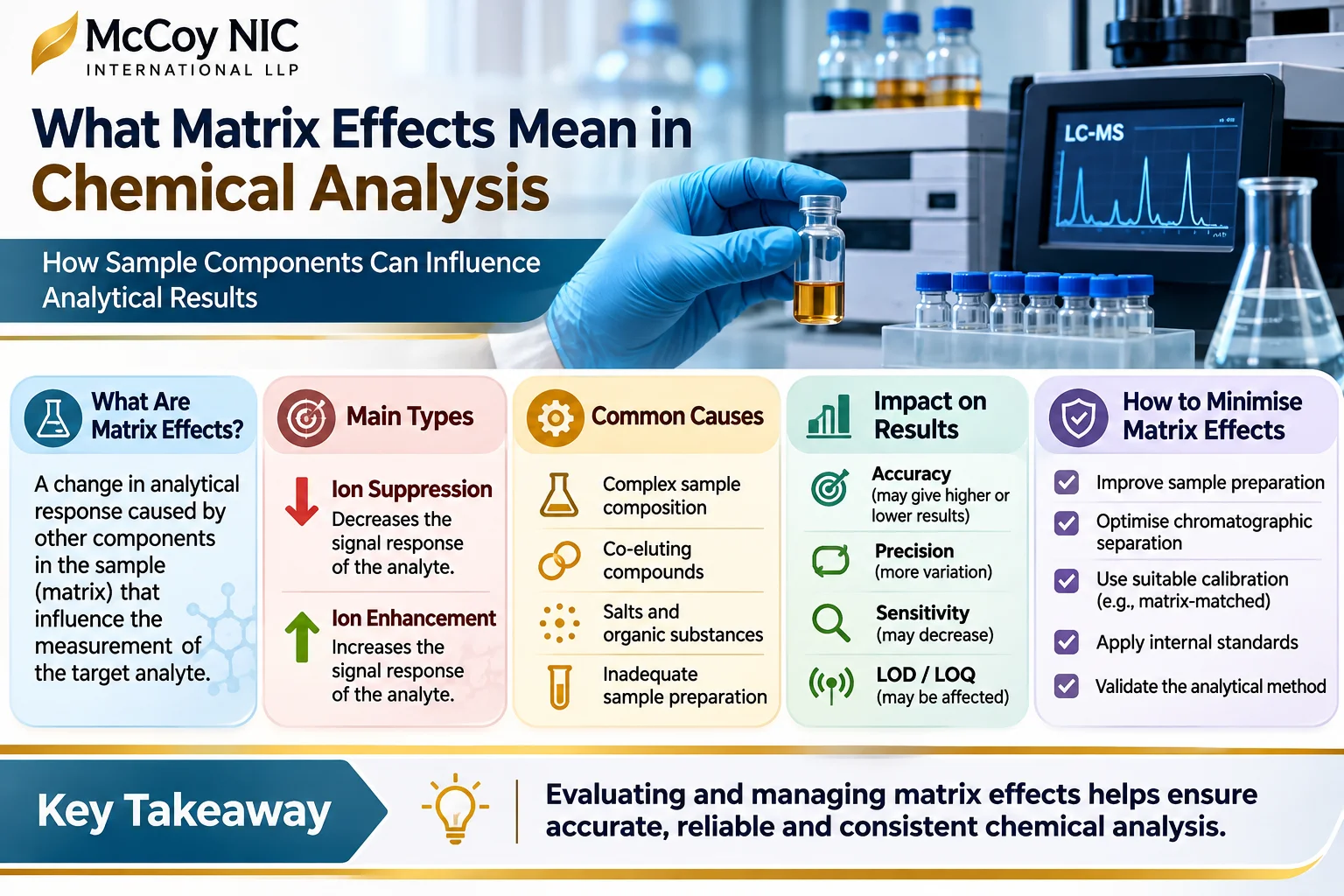
Matrix effects in chemical analysis

What Matrix Effects Mean in Chemical Analysis

What Matrix Effects Mean in Chemical Analysis Accurate chemical analysis depends on more than selecting the right instrument or analytical method. The composition of a sample can also influence the measurement process. One important factor is matrix effects in chemical analysis, which occur when other components present in a sample affect the response or measurement […]

Continue Reading
Laboratory instrument calibration using reference standards, precision balance and quality checks for accurate results.

Laboratory Instrument Calibration: How Instruments Are Calibrated and Checked

Laboratory Instrument Calibration: How Instruments Are Calibrated and Checked Laboratory Instrument Calibration is an essential process for maintaining measurement accuracy, consistency and reliability in scientific testing. Laboratories use different instruments to measure temperature, weight, pressure, volume, concentration and other important parameters. If these instruments do not perform correctly, measurement errors can affect test results and […]

Continue Reading
Repeatability vs Reproducibility in laboratory testing showing key differences in testing conditions and quality control.

Repeatability vs Reproducibility in Laboratory Testing: Understanding the Difference

Repeatability vs Reproducibility in Laboratory Testing: Understanding the Difference Repeatability vs Reproducibility is an important concept in laboratory testing, analytical measurement and quality control. Both terms help laboratories evaluate the consistency and reliability of test results. Although they are closely related, they describe different testing conditions and provide different insights into the performance of an […]

Continue Reading
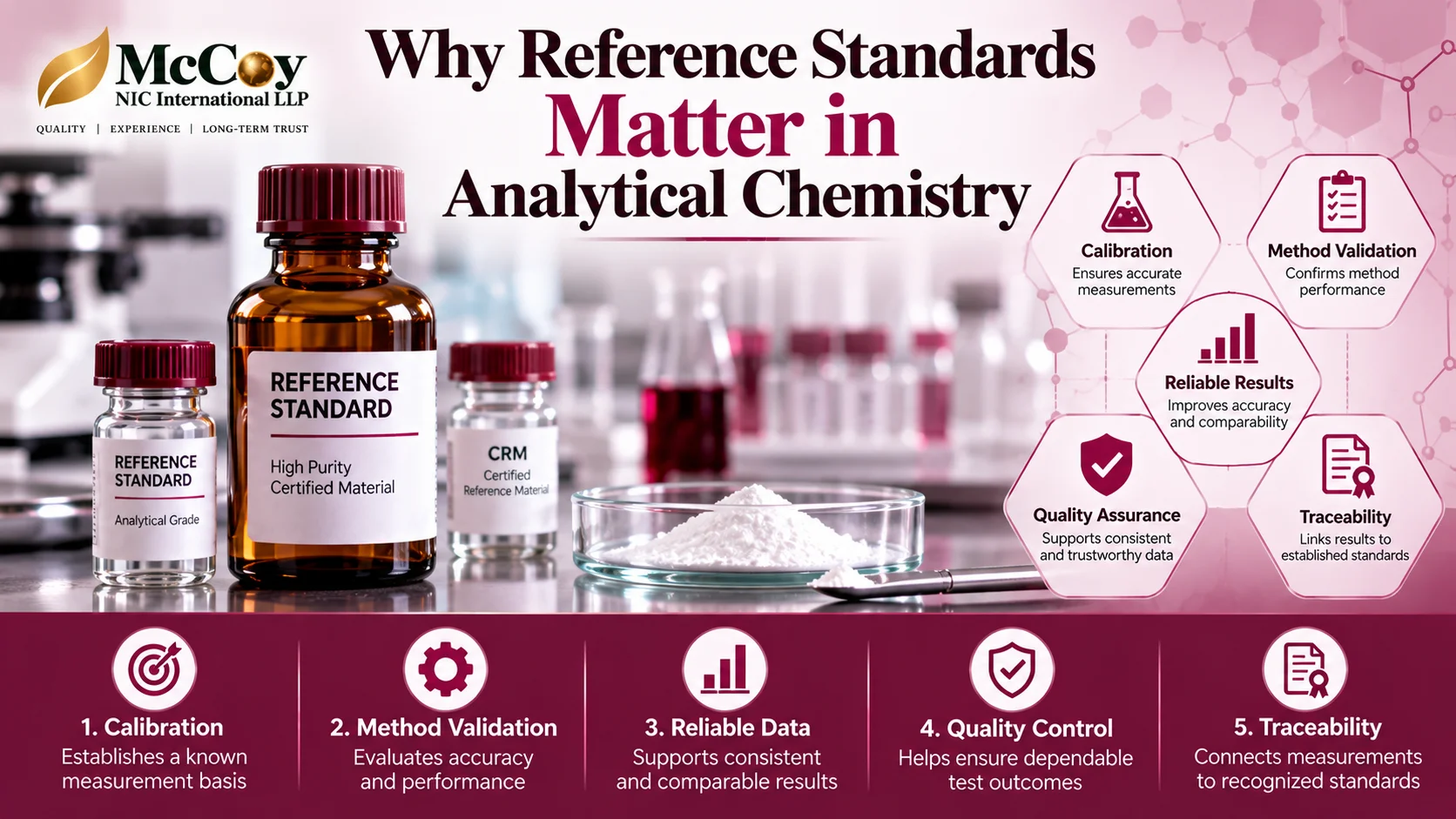
Reference standards in analytical chemistry

Why Reference Standards Matter in Analytical Chemistry

Why Reference Standards Matter in Analytical Chemistry Reliable analytical testing depends on more than laboratory equipment and testing procedures. Laboratories also need appropriate reference standards and reference materials to calibrate instruments, evaluate analytical methods and assess the reliability of measurement results. Reference standards in analytical chemistry help laboratories compare measurements against established values and improve […]

Continue Reading
Sampling plans and representative laboratory testing

How Sampling Plans Affect Representativeness of Test Results

How Sampling Plans Affect Representativeness of Test Results Reliable laboratory testing begins before a sample reaches the laboratory. The way a sample is selected, collected, handled and prepared can influence whether the resulting data accurately reflect the material or batch being evaluated. This is why sampling plans are an important part of quality control, analytical […]

Continue Reading
Nicotine testing methods, laboratory analysis, and result comparison.

Why Analytical Method Details Matter When Comparing Nicotine Test Results

Why Analytical Method Details Matter When Comparing Nicotine Test Results Analytical method details for nicotine testing are essential when buyers, manufacturers, and quality teams compare laboratory results from different suppliers. Two reports may show different assay values even when they refer to the same material, because the analytical procedure, sample preparation, calibration, reporting units, and […]

Continue Reading