Shared planning between sales quality and operations teams

Why Sales, Quality and Operations Need Shared Planning

Why Sales, Quality and Operations Need Shared Planning In manufacturing and specialty ingredient businesses, successful execution depends on more than individual departmental performance. Sales teams understand customer demand, quality teams protect product standards, and operations teams manage production capacity and delivery schedules. When these departments work with separate plans, businesses may face conflicting priorities, delayed […]

Continue Reading

Process change control for manufacturing consistency

How Process Change Control Supports Manufacturing Consistency

How Process Change Control Supports Manufacturing Consistency Manufacturing operations require stable processes, controlled procedures and consistent quality standards to deliver reliable products. However, changes in raw materials, equipment, production methods, suppliers or operating conditions may become necessary as businesses improve their operations. Managing these changes carefully is essential to maintaining product quality. Process Change Control […]

Continue Reading
alt text iske liye Alt Text: Planning for Utility Interruptions in Process Operations with backup power, water supply, steam and cooling systems. What Buyers Should Know About Supplier Business Continuity Plans news articles post krni h seo with rank k hisab se or us interlink bhi krna h इस article को McCoy NIC News के Business & Supply Chain / Procurement विषय के अनुसार तैयार किया है। इसमें buyers के लिए supplier की continuity planning, backup arrangements, recovery time, quality protection, documentation और supplier evaluation के practical points शामिल हैं। McCoy NIC की relevant product pages और पहले के related articles की internal links भी जोड़ी हैं। What Buyers Should Know About Supplier Business Continuity Plans Supplier Business Continuity Plans are an important consideration for buyers who depend on external manufacturers, raw material suppliers, logistics providers and service partners. A supplier may offer competitive pricing, suitable product specifications and reliable delivery under normal conditions, but buyers also need to understand how that supplier will respond when unexpected disruptions occur. Events such as power failures, natural disasters, equipment breakdowns, cyber incidents, labour shortages, transportation problems or raw material shortages can interrupt supply. A well-developed business continuity plan helps suppliers prepare for these situations, protect critical operations and restore normal activities in a controlled manner. For procurement teams, reviewing a supplier's continuity arrangements is not just a risk management exercise. It is also an important part of evaluating long-term supplier reliability and protecting business operations. 1. What Is a Supplier Business Continuity Plan? A Supplier Business Continuity Plan (BCP) is a documented framework that explains how a supplier intends to maintain or restore essential business activities during and after a disruption. Depending on the supplier's operations, the plan may cover: Alternative production or operating arrangements. Backup equipment and utility arrangements. Raw material availability and alternative sourcing. Employee and key personnel availability. Data protection and information recovery. Logistics and transportation alternatives. Customer communication and incident reporting. Recovery procedures and restart responsibilities. The plan should be relevant to the actual products or services being supplied. A general statement that a supplier has an emergency plan does not necessarily demonstrate that it can continue delivering a specific product during a major disruption. 2. Why Buyers Should Review Supplier Continuity Plans A disruption at a supplier's facility can affect several parts of the buyer's business. Delayed raw materials may interrupt manufacturing schedules, while an unexpected logistics issue may affect customer commitments. Reviewing continuity arrangements helps buyers understand: Supply reliability: Whether the supplier has considered ways to maintain or restore deliveries during unexpected events. Production stability: Whether critical manufacturing activities have suitable backup or recovery arrangements. Inventory planning: Whether the supplier can explain its approach to raw material availability and stock management during disruptions. Quality protection: Whether materials affected by abnormal operating conditions are assessed before being released. Communication: Whether the supplier has a defined process for informing customers about incidents, delays and recovery progress. Long-term risk management: Whether the supplier periodically reviews and improves its continuity arrangements. The Business Continuity Institute's supply chain resilience research identifies continuity plans, recognised standards, supplier assessments and supporting documentation as important areas organisations consider when evaluating critical suppliers. 3. Check Whether the Supplier Has Identified Critical Risks Buyers should understand whether the supplier has identified the major risks that could interrupt its operations. Common risks include: Natural disasters, flooding and severe weather. Electricity, water and other utility interruptions. Equipment failure and maintenance-related downtime. Shortages of essential raw materials. Transportation and logistics disruptions. Cybersecurity incidents and data loss. Labour shortages and key employee unavailability. Financial or operational difficulties. A useful continuity plan should explain which activities are most critical, what could affect them and what measures are available to reduce the impact. Buyers should also consider whether the supplier depends on a limited number of subcontractors, raw material sources or transportation providers. A supplier may appear to have multiple operating capabilities but still depend on one critical upstream provider. 4. Evaluate Backup Production and Alternative Sourcing One of the most important questions buyers can ask is how the supplier will manage production if its primary facility or a critical resource becomes unavailable. Depending on the product and industry, possible arrangements may include: An alternative manufacturing location. Backup production equipment. Qualified alternative raw material sources. Additional inventory of critical materials. Alternative logistics and transportation providers. Agreements with approved external manufacturing partners. However, buyers should not assume that an alternative facility can immediately manufacture the same product. Equipment compatibility, process requirements, product specifications, quality controls and customer approvals may need to be verified first. For regulated or specialised materials, any change in manufacturing location, source or process should be assessed under the applicable quality and regulatory requirements. 5. Understand Recovery Time and Delivery Commitments A continuity plan should provide a realistic understanding of how the supplier intends to restore critical activities. Buyers can ask about: Recovery Time Objective (RTO): The target time within which a critical activity or service is intended to be restored after disruption. Recovery Point Objective (RPO): The target for the point in time to which data should be recovered following a disruption, where data recovery is relevant. Production recovery: The expected time required to restore manufacturing capacity. Order recovery: How delayed orders and outstanding customer commitments will be prioritised. Communication timeline: When and how customers will receive updates after a significant incident. These targets should be realistic, documented and relevant to the buyer's requirements. A supplier's recovery target should be compared with the buyer's own operational needs and acceptable supply interruption period. 6. Review Quality Assurance During Disruptions Business continuity is not only about restarting production. It is equally important to ensure that product quality is not compromised during an emergency. For chemical ingredients, pharmaceutical materials and other specialised products, unexpected operating conditions may affect product quality or documentation. Buyers should check whether the supplier has procedures for: Identifying materials affected by abnormal operating conditions. Reviewing relevant batch and production records. Assessing deviations before product release. Maintaining appropriate quality checks. Controlling changes to raw materials or manufacturing processes. Providing updated documentation where required. For nicotine-related ingredients, buyers may also review relevant product specifications, Certificates of Analysis (COA), batch identification and supporting quality documentation as part of their normal supplier qualification process. A production restart should not automatically be treated as confirmation that all affected materials meet the required specifications. 7. Ask for Supporting Documents and Evidence A supplier's written assurance is useful, but buyers should also understand what evidence supports it. Depending on supplier criticality and the level of risk, buyers may request: A business continuity policy or relevant plan summary. A list of critical operational dependencies. Risk assessment or business impact analysis summaries. Details of backup production or alternative supply arrangements. Records or summaries of continuity exercises. Corrective action records from previous exercises. Emergency communication and escalation procedures. Relevant management system certificates, where applicable. The information requested should be proportionate to the importance of the supplier and the potential impact of a disruption. Buyers should also check the scope and validity of any certification provided. ISO 22301 certification can provide evidence of a business continuity management system, but buyers should not assume that certification alone guarantees uninterrupted supply or that every supplier must hold it. 8. Evaluate Communication and Incident Reporting Procedures Timely communication can help buyers reduce the impact of a supplier disruption. A reliable supplier should have a clear process for communicating significant operational incidents. Buyers should understand: Who will notify the customer. How the notification will be provided. What information will be shared. How frequently updates will be communicated. Who will coordinate recovery and order prioritisation. How revised delivery schedules will be confirmed. Buyers may also include appropriate notification timelines and escalation requirements in supply agreements, depending on the nature and criticality of the products being purchased. Clear communication helps procurement and operations teams make timely decisions about inventory, alternative sourcing and customer commitments. 9. Include Business Continuity in Supplier Qualification Supplier continuity assessment should begin during supplier qualification rather than only after a disruption occurs. Procurement teams can include continuity-related questions in their supplier questionnaires, audits and periodic performance reviews. For example, buyers can ask: Does the supplier maintain a documented business continuity plan? Which critical operations are covered by the plan? Are alternative production or supply arrangements available? How are critical raw material suppliers evaluated? When was the continuity plan last reviewed or tested? How are customers notified about significant disruptions? How are product quality and traceability maintained during recovery? Are recovery responsibilities assigned to specific personnel? The answers should be reviewed alongside other supplier qualification factors, including product quality, technical capability, compliance, delivery performance and commercial suitability. 10. Review Continuity Arrangements Regularly A supplier's continuity plan should not remain unchanged for years. Business operations, equipment, raw material sources, facilities and logistics arrangements can change over time. Buyers should consider reviewing continuity information: During initial supplier qualification. At regular intervals based on supplier risk. When a supplier changes its manufacturing location. When critical raw material sources change. After a significant operational disruption. When delivery performance shows repeated problems. During contract renewal or major procurement changes. A risk-based review process helps buyers focus more attention on suppliers whose disruption could have a significant effect on their own operations. Practical Buyer Checklist: Supplier Business Continuity Before finalising a supplier relationship, buyers can use this checklist: The supplier has a documented continuity policy or plan. Critical production activities and dependencies are identified. Backup production or alternative sourcing arrangements are explained. Recovery targets are understood. Quality controls during disruption and restart are documented. Customer notification and escalation procedures are defined. Relevant continuity testing or review evidence is available. Critical subcontractors and upstream dependencies are considered. Continuity arrangements are reviewed periodically. Relevant contractual requirements are agreed. Not every item will apply equally to every supplier. Buyers should adapt the checklist according to product criticality, supply risk and business requirements. Conclusion Understanding Supplier Business Continuity Plans helps buyers evaluate more than a supplier's normal production and delivery capabilities. It provides insight into how the supplier prepares for unexpected events, protects critical operations, maintains product quality and communicates during disruptions. A practical assessment should consider risk identification, backup arrangements, recovery targets, quality controls, supporting evidence and regular plan reviews. By including these factors in supplier qualification and procurement decisions, buyers can make more informed choices and strengthen long-term supply chain resilience. How McCoy NIC Supports B2B Nicotine Product Enquiries For businesses sourcing specialised nicotine ingredients, supplier evaluation should include product specifications, quality documentation, commercial requirements and suitability for the intended application. McCoy NIC provides information about its product categories, including Pure Nicotine, Tobacco-Derived Nicotine, Synthetic Nicotine, Nicotine Salts and Pharmaceutical NRT Nicotine. Buyers can also review the company's certificates and quality-related documentation and learn more about McCoy NIC. For additional reading, explore our articles on public product information for buyers and completing an enquiry for McCoy NIC. External References The Business Continuity Institute – Supply Chain Resilience Report ISO/TS 22318 – Supply Chain Continuity Management Guidelines NHS England – Business Continuity Management Toolkit Moody's – Supplier Due Diligence Rank Math SEO Details FOCUS KEYWORD Supplier Business Continuity Plans SEO Title What Buyers Should Know About Supplier Business Continuity Plans Permalink / URL Slug supplier-business-continuity-plans-buyers-guide Meta Description Learn what buyers should know about Supplier Business Continuity Plans, including risk assessment, backup arrangements, recovery targets and supplier evaluation. Category Business & Industry Tags Supplier Management, Business Continuity, Supply Chain Resilience, Procurement, Supplier Risk Assessment, B2B Buyers, Risk Management Internal linking included Page / Article Link purpose Pure Nicotine Product information Tobacco-Derived Nicotine Product information Synthetic Nicotine Product information Nicotine Salts Product information Pharmaceutical NRT Nicotine Product information Certificates Quality documentation About Us Company information Public Product Information for Buyers Related news article Complete Enquiry for McCoy NIC Enquiry guidance External research support The article's supplier-assessment guidance is supported by the BCI Supply Chain Resilience Report, ISO/TS 22318 supply chain continuity guidance, NHS England's supplier and contractor guidance, and Moody's supplier due diligence overview. SGSCorp +3 Rank Math tip: Focus Keyword को SEO title, meta description, URL slug और पहले paragraph में इसी exact phrase के साथ रखें। यदि permalink पहले से publish हो चुका है, तो बदलने पर पुराने URL से 301 redirect लगाएं। आगे मैं इस article के लिए पिछले brown-theme design से अलग एक professional featured image भी बना सकता हूँ। pehle se alg images bnz dijiye iske liye design alg bna dijiye short alt text iske liye Supplier Business Continuity Plans for reliable supply chain management. alt text iske liye Alt Text: Planning for Utility Interruptions in Process Operations with backup power, water supply, steam and cooling systems. What Buyers Should Know About Supplier Business Continuity Plans news articles post krni h seo with rank k hisab se or us interlink bhi krna h इस article को McCoy NIC News के Business & Supply Chain / Procurement विषय के अनुसार तैयार किया है। इसमें buyers के लिए supplier की continuity planning, backup arrangements, recovery time, quality protection, documentation और supplier evaluation के practical points शामिल हैं। McCoy NIC की relevant product pages और पहले के related articles की internal links भी जोड़ी हैं। What Buyers Should Know About Supplier Business Continuity Plans Supplier Business Continuity Plans are an important consideration for buyers who depend on external manufacturers, raw material suppliers, logistics providers and service partners. A supplier may offer competitive pricing, suitable product specifications and reliable delivery under normal conditions, but buyers also need to understand how that supplier will respond when unexpected disruptions occur. Events such as power failures, natural disasters, equipment breakdowns, cyber incidents, labour shortages, transportation problems or raw material shortages can interrupt supply. A well-developed business continuity plan helps suppliers prepare for these situations, protect critical operations and restore normal activities in a controlled manner. For procurement teams, reviewing a supplier's continuity arrangements is not just a risk management exercise. It is also an important part of evaluating long-term supplier reliability and protecting business operations. 1. What Is a Supplier Business Continuity Plan? A Supplier Business Continuity Plan (BCP) is a documented framework that explains how a supplier intends to maintain or restore essential business activities during and after a disruption. Depending on the supplier's operations, the plan may cover: Alternative production or operating arrangements. Backup equipment and utility arrangements. Raw material availability and alternative sourcing. Employee and key personnel availability. Data protection and information recovery. Logistics and transportation alternatives. Customer communication and incident reporting. Recovery procedures and restart responsibilities. The plan should be relevant to the actual products or services being supplied. A general statement that a supplier has an emergency plan does not necessarily demonstrate that it can continue delivering a specific product during a major disruption. 2. Why Buyers Should Review Supplier Continuity Plans A disruption at a supplier's facility can affect several parts of the buyer's business. Delayed raw materials may interrupt manufacturing schedules, while an unexpected logistics issue may affect customer commitments. Reviewing continuity arrangements helps buyers understand: Supply reliability: Whether the supplier has considered ways to maintain or restore deliveries during unexpected events. Production stability: Whether critical manufacturing activities have suitable backup or recovery arrangements. Inventory planning: Whether the supplier can explain its approach to raw material availability and stock management during disruptions. Quality protection: Whether materials affected by abnormal operating conditions are assessed before being released. Communication: Whether the supplier has a defined process for informing customers about incidents, delays and recovery progress. Long-term risk management: Whether the supplier periodically reviews and improves its continuity arrangements. The Business Continuity Institute's supply chain resilience research identifies continuity plans, recognised standards, supplier assessments and supporting documentation as important areas organisations consider when evaluating critical suppliers. 3. Check Whether the Supplier Has Identified Critical Risks Buyers should understand whether the supplier has identified the major risks that could interrupt its operations. Common risks include: Natural disasters, flooding and severe weather. Electricity, water and other utility interruptions. Equipment failure and maintenance-related downtime. Shortages of essential raw materials. Transportation and logistics disruptions. Cybersecurity incidents and data loss. Labour shortages and key employee unavailability. Financial or operational difficulties. A useful continuity plan should explain which activities are most critical, what could affect them and what measures are available to reduce the impact. Buyers should also consider whether the supplier depends on a limited number of subcontractors, raw material sources or transportation providers. A supplier may appear to have multiple operating capabilities but still depend on one critical upstream provider. 4. Evaluate Backup Production and Alternative Sourcing One of the most important questions buyers can ask is how the supplier will manage production if its primary facility or a critical resource becomes unavailable. Depending on the product and industry, possible arrangements may include: An alternative manufacturing location. Backup production equipment. Qualified alternative raw material sources. Additional inventory of critical materials. Alternative logistics and transportation providers. Agreements with approved external manufacturing partners. However, buyers should not assume that an alternative facility can immediately manufacture the same product. Equipment compatibility, process requirements, product specifications, quality controls and customer approvals may need to be verified first. For regulated or specialised materials, any change in manufacturing location, source or process should be assessed under the applicable quality and regulatory requirements. 5. Understand Recovery Time and Delivery Commitments A continuity plan should provide a realistic understanding of how the supplier intends to restore critical activities. Buyers can ask about: Recovery Time Objective (RTO): The target time within which a critical activity or service is intended to be restored after disruption. Recovery Point Objective (RPO): The target for the point in time to which data should be recovered following a disruption, where data recovery is relevant. Production recovery: The expected time required to restore manufacturing capacity. Order recovery: How delayed orders and outstanding customer commitments will be prioritised. Communication timeline: When and how customers will receive updates after a significant incident. These targets should be realistic, documented and relevant to the buyer's requirements. A supplier's recovery target should be compared with the buyer's own operational needs and acceptable supply interruption period. 6. Review Quality Assurance During Disruptions Business continuity is not only about restarting production. It is equally important to ensure that product quality is not compromised during an emergency. For chemical ingredients, pharmaceutical materials and other specialised products, unexpected operating conditions may affect product quality or documentation. Buyers should check whether the supplier has procedures for: Identifying materials affected by abnormal operating conditions. Reviewing relevant batch and production records. Assessing deviations before product release. Maintaining appropriate quality checks. Controlling changes to raw materials or manufacturing processes. Providing updated documentation where required. For nicotine-related ingredients, buyers may also review relevant product specifications, Certificates of Analysis (COA), batch identification and supporting quality documentation as part of their normal supplier qualification process. A production restart should not automatically be treated as confirmation that all affected materials meet the required specifications. 7. Ask for Supporting Documents and Evidence A supplier's written assurance is useful, but buyers should also understand what evidence supports it. Depending on supplier criticality and the level of risk, buyers may request: A business continuity policy or relevant plan summary. A list of critical operational dependencies. Risk assessment or business impact analysis summaries. Details of backup production or alternative supply arrangements. Records or summaries of continuity exercises. Corrective action records from previous exercises. Emergency communication and escalation procedures. Relevant management system certificates, where applicable. The information requested should be proportionate to the importance of the supplier and the potential impact of a disruption. Buyers should also check the scope and validity of any certification provided. ISO 22301 certification can provide evidence of a business continuity management system, but buyers should not assume that certification alone guarantees uninterrupted supply or that every supplier must hold it. 8. Evaluate Communication and Incident Reporting Procedures Timely communication can help buyers reduce the impact of a supplier disruption. A reliable supplier should have a clear process for communicating significant operational incidents. Buyers should understand: Who will notify the customer. How the notification will be provided. What information will be shared. How frequently updates will be communicated. Who will coordinate recovery and order prioritisation. How revised delivery schedules will be confirmed. Buyers may also include appropriate notification timelines and escalation requirements in supply agreements, depending on the nature and criticality of the products being purchased. Clear communication helps procurement and operations teams make timely decisions about inventory, alternative sourcing and customer commitments. 9. Include Business Continuity in Supplier Qualification Supplier continuity assessment should begin during supplier qualification rather than only after a disruption occurs. Procurement teams can include continuity-related questions in their supplier questionnaires, audits and periodic performance reviews. For example, buyers can ask: Does the supplier maintain a documented business continuity plan? Which critical operations are covered by the plan? Are alternative production or supply arrangements available? How are critical raw material suppliers evaluated? When was the continuity plan last reviewed or tested? How are customers notified about significant disruptions? How are product quality and traceability maintained during recovery? Are recovery responsibilities assigned to specific personnel? The answers should be reviewed alongside other supplier qualification factors, including product quality, technical capability, compliance, delivery performance and commercial suitability. 10. Review Continuity Arrangements Regularly A supplier's continuity plan should not remain unchanged for years. Business operations, equipment, raw material sources, facilities and logistics arrangements can change over time. Buyers should consider reviewing continuity information: During initial supplier qualification. At regular intervals based on supplier risk. When a supplier changes its manufacturing location. When critical raw material sources change. After a significant operational disruption. When delivery performance shows repeated problems. During contract renewal or major procurement changes. A risk-based review process helps buyers focus more attention on suppliers whose disruption could have a significant effect on their own operations. Practical Buyer Checklist: Supplier Business Continuity Before finalising a supplier relationship, buyers can use this checklist: The supplier has a documented continuity policy or plan. Critical production activities and dependencies are identified. Backup production or alternative sourcing arrangements are explained. Recovery targets are understood. Quality controls during disruption and restart are documented. Customer notification and escalation procedures are defined. Relevant continuity testing or review evidence is available. Critical subcontractors and upstream dependencies are considered. Continuity arrangements are reviewed periodically. Relevant contractual requirements are agreed. Not every item will apply equally to every supplier. Buyers should adapt the checklist according to product criticality, supply risk and business requirements. Conclusion Understanding Supplier Business Continuity Plans helps buyers evaluate more than a supplier's normal production and delivery capabilities. It provides insight into how the supplier prepares for unexpected events, protects critical operations, maintains product quality and communicates during disruptions. A practical assessment should consider risk identification, backup arrangements, recovery targets, quality controls, supporting evidence and regular plan reviews. By including these factors in supplier qualification and procurement decisions, buyers can make more informed choices and strengthen long-term supply chain resilience. How McCoy NIC Supports B2B Nicotine Product Enquiries For businesses sourcing specialised nicotine ingredients, supplier evaluation should include product specifications, quality documentation, commercial requirements and suitability for the intended application. McCoy NIC provides information about its product categories, including Pure Nicotine, Tobacco-Derived Nicotine, Synthetic Nicotine, Nicotine Salts and Pharmaceutical NRT Nicotine. Buyers can also review the company's certificates and quality-related documentation and learn more about McCoy NIC. For additional reading, explore our articles on public product information for buyers and completing an enquiry for McCoy NIC. External References The Business Continuity Institute – Supply Chain Resilience Report ISO/TS 22318 – Supply Chain Continuity Management Guidelines NHS England – Business Continuity Management Toolkit Moody's – Supplier Due Diligence Rank Math SEO Details FOCUS KEYWORD Supplier Business Continuity Plans SEO Title What Buyers Should Know About Supplier Business Continuity Plans Permalink / URL Slug supplier-business-continuity-plans-buyers-guide Meta Description Learn what buyers should know about Supplier Business Continuity Plans, including risk assessment, backup arrangements, recovery targets and supplier evaluation. Category Business & Industry Tags Supplier Management, Business Continuity, Supply Chain Resilience, Procurement, Supplier Risk Assessment, B2B Buyers, Risk Management Internal linking included Page / Article Link purpose Pure Nicotine Product information Tobacco-Derived Nicotine Product information Synthetic Nicotine Product information Nicotine Salts Product information Pharmaceutical NRT Nicotine Product information Certificates Quality documentation About Us Company information Public Product Information for Buyers Related news article Complete Enquiry for McCoy NIC Enquiry guidance External research support The article's supplier-assessment guidance is supported by the BCI Supply Chain Resilience Report, ISO/TS 22318 supply chain continuity guidance, NHS England's supplier and contractor guidance, and Moody's supplier due diligence overview. SGSCorp +3 Rank Math tip: Focus Keyword को SEO title, meta description, URL slug और पहले paragraph में इसी exact phrase के साथ रखें। यदि permalink पहले से publish हो चुका है, तो बदलने पर पुराने URL से 301 redirect लगाएं। आगे मैं इस article के लिए पिछले brown-theme design से अलग एक professional featured image भी बना सकता हूँ। pehle se alg images bnz dijiye iske liye design alg bna dijiye short alt text iske liye Supplier Business Continuity Plans for reliable supply chain management. alt text iske liye Alt Text: Planning for Utility Interruptions in Process Operations with backup power, water supply, steam and cooling systems. What Buyers Should Know About Supplier Business Continuity Plans news articles post krni h seo with rank k hisab se or us interlink bhi krna h इस article को McCoy NIC News के Business & Supply Chain / Procurement विषय के अनुसार तैयार किया है। इसमें buyers के लिए supplier की continuity planning, backup arrangements, recovery time, quality protection, documentation और supplier evaluation के practical points शामिल हैं। McCoy NIC की relevant product pages और पहले के related articles की internal links भी जोड़ी हैं। What Buyers Should Know About Supplier Business Continuity Plans Supplier Business Continuity Plans are an important consideration for buyers who depend on external manufacturers, raw material suppliers, logistics providers and service partners. A supplier may offer competitive pricing, suitable product specifications and reliable delivery under normal conditions, but buyers also need to understand how that supplier will respond when unexpected disruptions occur. Events such as power failures, natural disasters, equipment breakdowns, cyber incidents, labour shortages, transportation problems or raw material shortages can interrupt supply. A well-developed business continuity plan helps suppliers prepare for these situations, protect critical operations and restore normal activities in a controlled manner. For procurement teams, reviewing a supplier's continuity arrangements is not just a risk management exercise. It is also an important part of evaluating long-term supplier reliability and protecting business operations. 1. What Is a Supplier Business Continuity Plan? A Supplier Business Continuity Plan (BCP) is a documented framework that explains how a supplier intends to maintain or restore essential business activities during and after a disruption. Depending on the supplier's operations, the plan may cover: Alternative production or operating arrangements. Backup equipment and utility arrangements. Raw material availability and alternative sourcing. Employee and key personnel availability. Data protection and information recovery. Logistics and transportation alternatives. Customer communication and incident reporting. Recovery procedures and restart responsibilities. The plan should be relevant to the actual products or services being supplied. A general statement that a supplier has an emergency plan does not necessarily demonstrate that it can continue delivering a specific product during a major disruption. 2. Why Buyers Should Review Supplier Continuity Plans A disruption at a supplier's facility can affect several parts of the buyer's business. Delayed raw materials may interrupt manufacturing schedules, while an unexpected logistics issue may affect customer commitments. Reviewing continuity arrangements helps buyers understand: Supply reliability: Whether the supplier has considered ways to maintain or restore deliveries during unexpected events. Production stability: Whether critical manufacturing activities have suitable backup or recovery arrangements. Inventory planning: Whether the supplier can explain its approach to raw material availability and stock management during disruptions. Quality protection: Whether materials affected by abnormal operating conditions are assessed before being released. Communication: Whether the supplier has a defined process for informing customers about incidents, delays and recovery progress. Long-term risk management: Whether the supplier periodically reviews and improves its continuity arrangements. The Business Continuity Institute's supply chain resilience research identifies continuity plans, recognised standards, supplier assessments and supporting documentation as important areas organisations consider when evaluating critical suppliers. 3. Check Whether the Supplier Has Identified Critical Risks Buyers should understand whether the supplier has identified the major risks that could interrupt its operations. Common risks include: Natural disasters, flooding and severe weather. Electricity, water and other utility interruptions. Equipment failure and maintenance-related downtime. Shortages of essential raw materials. Transportation and logistics disruptions. Cybersecurity incidents and data loss. Labour shortages and key employee unavailability. Financial or operational difficulties. A useful continuity plan should explain which activities are most critical, what could affect them and what measures are available to reduce the impact. Buyers should also consider whether the supplier depends on a limited number of subcontractors, raw material sources or transportation providers. A supplier may appear to have multiple operating capabilities but still depend on one critical upstream provider. 4. Evaluate Backup Production and Alternative Sourcing One of the most important questions buyers can ask is how the supplier will manage production if its primary facility or a critical resource becomes unavailable. Depending on the product and industry, possible arrangements may include: An alternative manufacturing location. Backup production equipment. Qualified alternative raw material sources. Additional inventory of critical materials. Alternative logistics and transportation providers. Agreements with approved external manufacturing partners. However, buyers should not assume that an alternative facility can immediately manufacture the same product. Equipment compatibility, process requirements, product specifications, quality controls and customer approvals may need to be verified first. For regulated or specialised materials, any change in manufacturing location, source or process should be assessed under the applicable quality and regulatory requirements. 5. Understand Recovery Time and Delivery Commitments A continuity plan should provide a realistic understanding of how the supplier intends to restore critical activities. Buyers can ask about: Recovery Time Objective (RTO): The target time within which a critical activity or service is intended to be restored after disruption. Recovery Point Objective (RPO): The target for the point in time to which data should be recovered following a disruption, where data recovery is relevant. Production recovery: The expected time required to restore manufacturing capacity. Order recovery: How delayed orders and outstanding customer commitments will be prioritised. Communication timeline: When and how customers will receive updates after a significant incident. These targets should be realistic, documented and relevant to the buyer's requirements. A supplier's recovery target should be compared with the buyer's own operational needs and acceptable supply interruption period. 6. Review Quality Assurance During Disruptions Business continuity is not only about restarting production. It is equally important to ensure that product quality is not compromised during an emergency. For chemical ingredients, pharmaceutical materials and other specialised products, unexpected operating conditions may affect product quality or documentation. Buyers should check whether the supplier has procedures for: Identifying materials affected by abnormal operating conditions. Reviewing relevant batch and production records. Assessing deviations before product release. Maintaining appropriate quality checks. Controlling changes to raw materials or manufacturing processes. Providing updated documentation where required. For nicotine-related ingredients, buyers may also review relevant product specifications, Certificates of Analysis (COA), batch identification and supporting quality documentation as part of their normal supplier qualification process. A production restart should not automatically be treated as confirmation that all affected materials meet the required specifications. 7. Ask for Supporting Documents and Evidence A supplier's written assurance is useful, but buyers should also understand what evidence supports it. Depending on supplier criticality and the level of risk, buyers may request: A business continuity policy or relevant plan summary. A list of critical operational dependencies. Risk assessment or business impact analysis summaries. Details of backup production or alternative supply arrangements. Records or summaries of continuity exercises. Corrective action records from previous exercises. Emergency communication and escalation procedures. Relevant management system certificates, where applicable. The information requested should be proportionate to the importance of the supplier and the potential impact of a disruption. Buyers should also check the scope and validity of any certification provided. ISO 22301 certification can provide evidence of a business continuity management system, but buyers should not assume that certification alone guarantees uninterrupted supply or that every supplier must hold it. 8. Evaluate Communication and Incident Reporting Procedures Timely communication can help buyers reduce the impact of a supplier disruption. A reliable supplier should have a clear process for communicating significant operational incidents. Buyers should understand: Who will notify the customer. How the notification will be provided. What information will be shared. How frequently updates will be communicated. Who will coordinate recovery and order prioritisation. How revised delivery schedules will be confirmed. Buyers may also include appropriate notification timelines and escalation requirements in supply agreements, depending on the nature and criticality of the products being purchased. Clear communication helps procurement and operations teams make timely decisions about inventory, alternative sourcing and customer commitments. 9. Include Business Continuity in Supplier Qualification Supplier continuity assessment should begin during supplier qualification rather than only after a disruption occurs. Procurement teams can include continuity-related questions in their supplier questionnaires, audits and periodic performance reviews. For example, buyers can ask: Does the supplier maintain a documented business continuity plan? Which critical operations are covered by the plan? Are alternative production or supply arrangements available? How are critical raw material suppliers evaluated? When was the continuity plan last reviewed or tested? How are customers notified about significant disruptions? How are product quality and traceability maintained during recovery? Are recovery responsibilities assigned to specific personnel? The answers should be reviewed alongside other supplier qualification factors, including product quality, technical capability, compliance, delivery performance and commercial suitability. 10. Review Continuity Arrangements Regularly A supplier's continuity plan should not remain unchanged for years. Business operations, equipment, raw material sources, facilities and logistics arrangements can change over time. Buyers should consider reviewing continuity information: During initial supplier qualification. At regular intervals based on supplier risk. When a supplier changes its manufacturing location. When critical raw material sources change. After a significant operational disruption. When delivery performance shows repeated problems. During contract renewal or major procurement changes. A risk-based review process helps buyers focus more attention on suppliers whose disruption could have a significant effect on their own operations. Practical Buyer Checklist: Supplier Business Continuity Before finalising a supplier relationship, buyers can use this checklist: The supplier has a documented continuity policy or plan. Critical production activities and dependencies are identified. Backup production or alternative sourcing arrangements are explained. Recovery targets are understood. Quality controls during disruption and restart are documented. Customer notification and escalation procedures are defined. Relevant continuity testing or review evidence is available. Critical subcontractors and upstream dependencies are considered. Continuity arrangements are reviewed periodically. Relevant contractual requirements are agreed. Not every item will apply equally to every supplier. Buyers should adapt the checklist according to product criticality, supply risk and business requirements. Conclusion Understanding Supplier Business Continuity Plans helps buyers evaluate more than a supplier's normal production and delivery capabilities. It provides insight into how the supplier prepares for unexpected events, protects critical operations, maintains product quality and communicates during disruptions. A practical assessment should consider risk identification, backup arrangements, recovery targets, quality controls, supporting evidence and regular plan reviews. By including these factors in supplier qualification and procurement decisions, buyers can make more informed choices and strengthen long-term supply chain resilience. How McCoy NIC Supports B2B Nicotine Product Enquiries For businesses sourcing specialised nicotine ingredients, supplier evaluation should include product specifications, quality documentation, commercial requirements and suitability for the intended application. McCoy NIC provides information about its product categories, including Pure Nicotine, Tobacco-Derived Nicotine, Synthetic Nicotine, Nicotine Salts and Pharmaceutical NRT Nicotine. Buyers can also review the company's certificates and quality-related documentation and learn more about McCoy NIC. For additional reading, explore our articles on public product information for buyers and completing an enquiry for McCoy NIC. External References The Business Continuity Institute – Supply Chain Resilience Report ISO/TS 22318 – Supply Chain Continuity Management Guidelines NHS England – Business Continuity Management Toolkit Moody's – Supplier Due Diligence Rank Math SEO Details FOCUS KEYWORD Supplier Business Continuity Plans SEO Title What Buyers Should Know About Supplier Business Continuity Plans Permalink / URL Slug supplier-business-continuity-plans-buyers-guide Meta Description Learn what buyers should know about Supplier Business Continuity Plans, including risk assessment, backup arrangements, recovery targets and supplier evaluation. Category Business & Industry Tags Supplier Management, Business Continuity, Supply Chain Resilience, Procurement, Supplier Risk Assessment, B2B Buyers, Risk Management Internal linking included Page / Article Link purpose Pure Nicotine Product information Tobacco-Derived Nicotine Product information Synthetic Nicotine Product information Nicotine Salts Product information Pharmaceutical NRT Nicotine Product information Certificates Quality documentation About Us Company information Public Product Information for Buyers Related news article Complete Enquiry for McCoy NIC Enquiry guidance External research support The article's supplier-assessment guidance is supported by the BCI Supply Chain Resilience Report, ISO/TS 22318 supply chain continuity guidance, NHS England's supplier and contractor guidance, and Moody's supplier due diligence overview. SGSCorp +3 Rank Math tip: Focus Keyword को SEO title, meta description, URL slug और पहले paragraph में इसी exact phrase के साथ रखें। यदि permalink पहले से publish हो चुका है, तो बदलने पर पुराने URL से 301 redirect लगाएं। आगे मैं इस article के लिए पिछले brown-theme design से अलग एक professional featured image भी बना सकता हूँ। pehle se alg images bnz dijiye iske liye design alg bna dijiye short alt text iske liye Supplier Business Continuity Plans for reliable supply chain management. Supplier Business Continuity Plans for reliable supply chain management.

What Buyers Should Know About Supplier Business Continuity Plans

What Buyers Should Know About Supplier Business Continuity Plans Supplier Business Continuity Plans are an important consideration for buyers who depend on external manufacturers, raw material suppliers, logistics providers and service partners. A supplier may offer competitive pricing, suitable product specifications and reliable delivery under normal conditions, but buyers also need to understand how that […]

Continue Reading
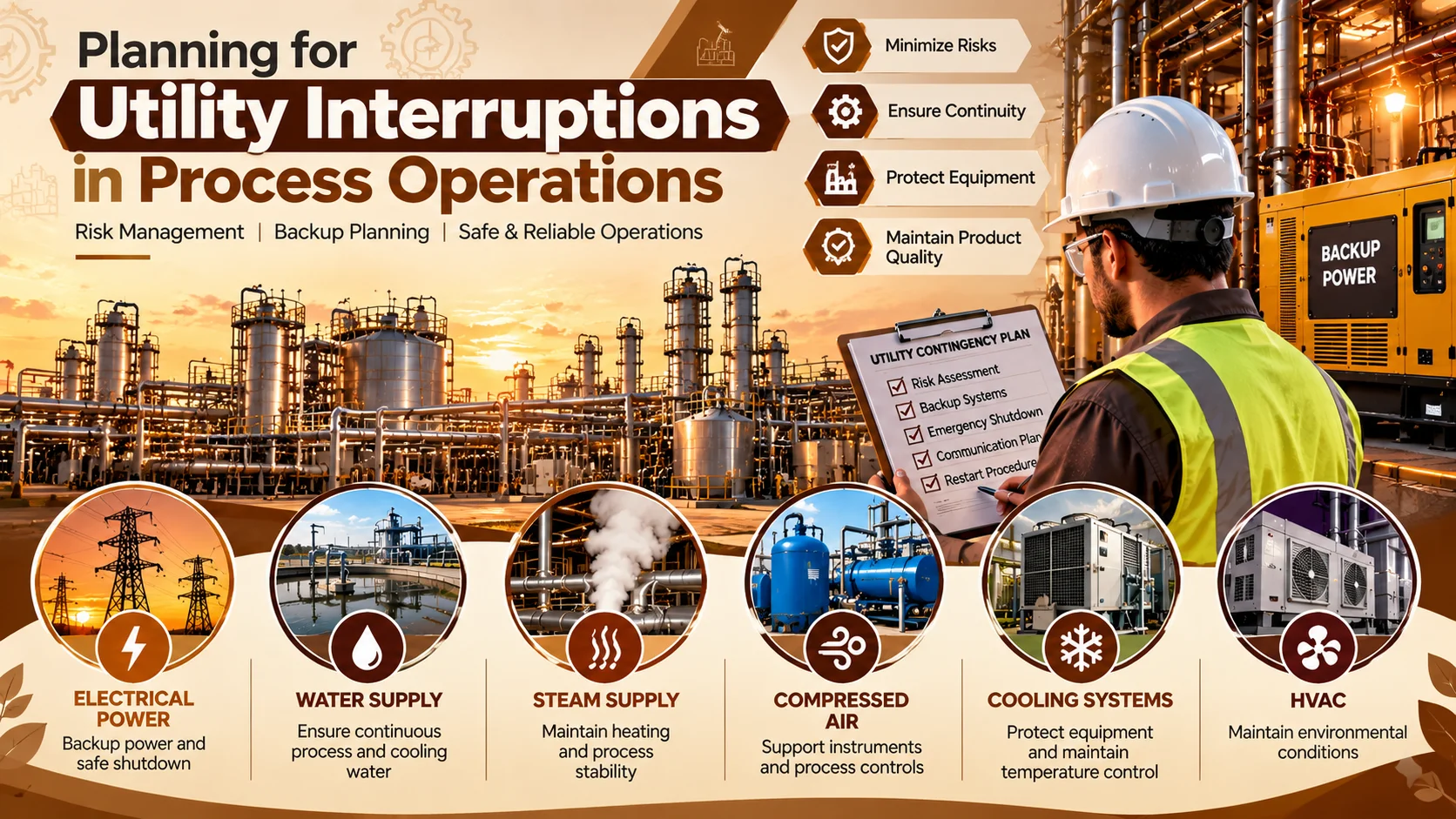
Planning for Utility Interruptions in Process Operations with backup power, water supply, steam and cooling systems.

Planning for Utility Interruptions in Process Operations: A Practical Guide

Planning for Utility Interruptions in Process Operations: A Practical Guide Industrial and manufacturing facilities depend on reliable utility services to maintain safe, stable and efficient operations. Planning for Utility Interruptions in Process Operations is therefore an important part of operational risk management. Unexpected disruptions in electricity, water, steam, compressed air, cooling systems or other essential […]

Continue Reading
Cybersecurity in Chemical Supply Chain Resilience

Why Cybersecurity Is Part of Supply-Chain Resilience: Protecting Modern Chemical Manufacturing

Why Cybersecurity Is Part of Supply-Chain Resilience: Protecting Modern Chemical Manufacturing Cybersecurity in Supply Chain Resilience plays a critical role in protecting modern chemical manufacturing businesses from digital threats and operational disruptions. As companies increasingly depend on connected suppliers, digital procurement systems, industrial automation and global logistics networks, strong cybersecurity measures are essential to protect […]

Continue Reading
Digital Chemical Manufacturing Skills

Skills Needed for Digitized Chemical Manufacturing: Preparing the Workforce for Industry 4.0

Skills Needed for Digitized Chemical Manufacturing: Preparing the Workforce for Industry 4.0 The chemical manufacturing industry is undergoing a major transformation as companies increasingly adopt digital technologies to improve production efficiency, process reliability, product quality and workplace safety. Automation, artificial intelligence (AI), Industrial Internet of Things (IIoT), cloud computing and advanced data analytics are changing […]

Continue Reading
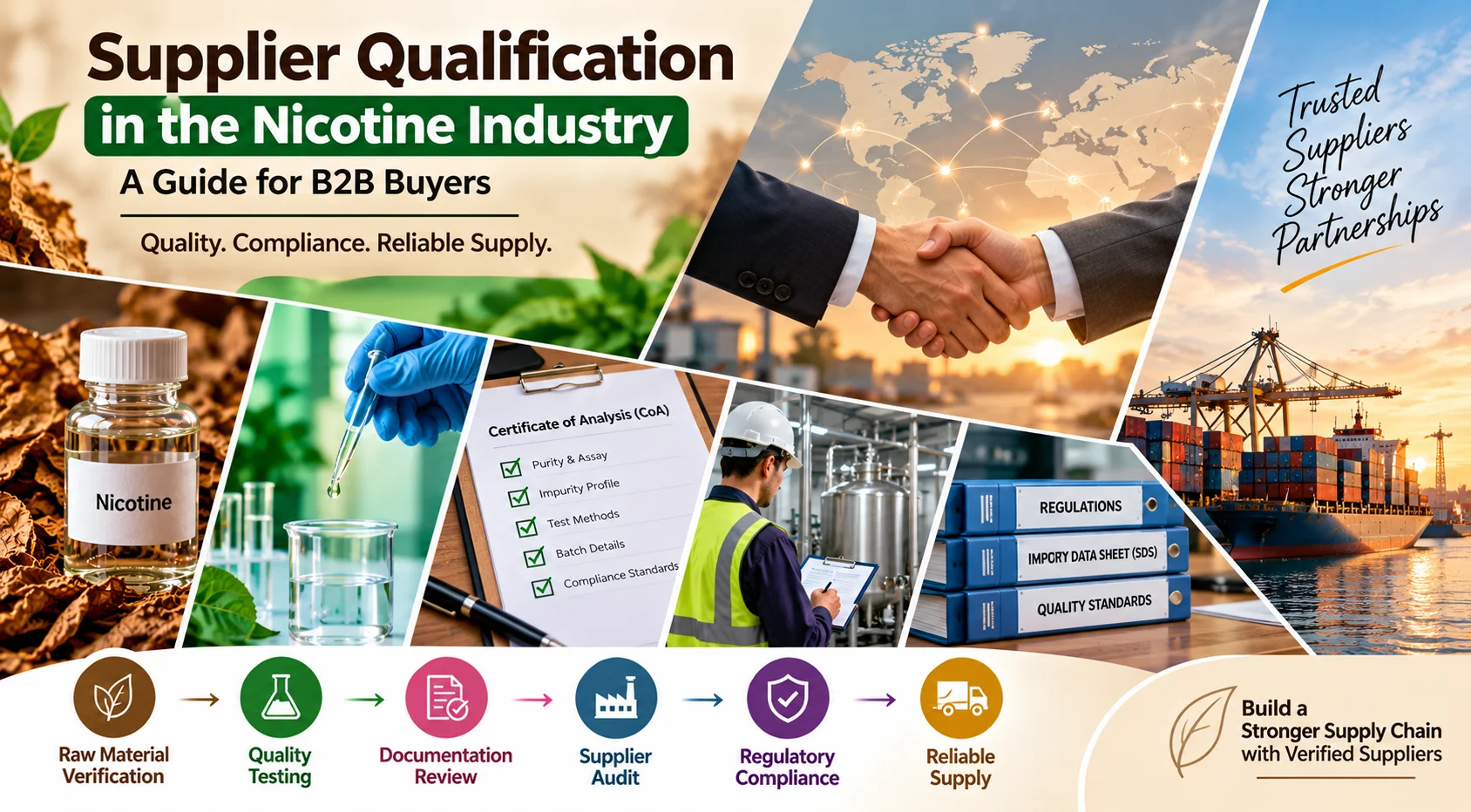
Supplier qualification in the nicotine industry, featuring laboratory testing, CoA verification, supplier audits, regulatory compliance, and global supply chain management.

How Supplier Qualification Works in the Nicotine Ingredient Industry

How Supplier Qualification Works in the Nicotine Ingredient Industry Supplier qualification in the nicotine industry is a structured process that helps businesses evaluate potential suppliers before purchasing raw materials. For manufacturers, formulators, distributors, and other B2B buyers, the process involves reviewing product specifications, quality documentation, traceability, supply capabilities, and applicable regulatory requirements. A supplier’s quotation […]

Continue Reading

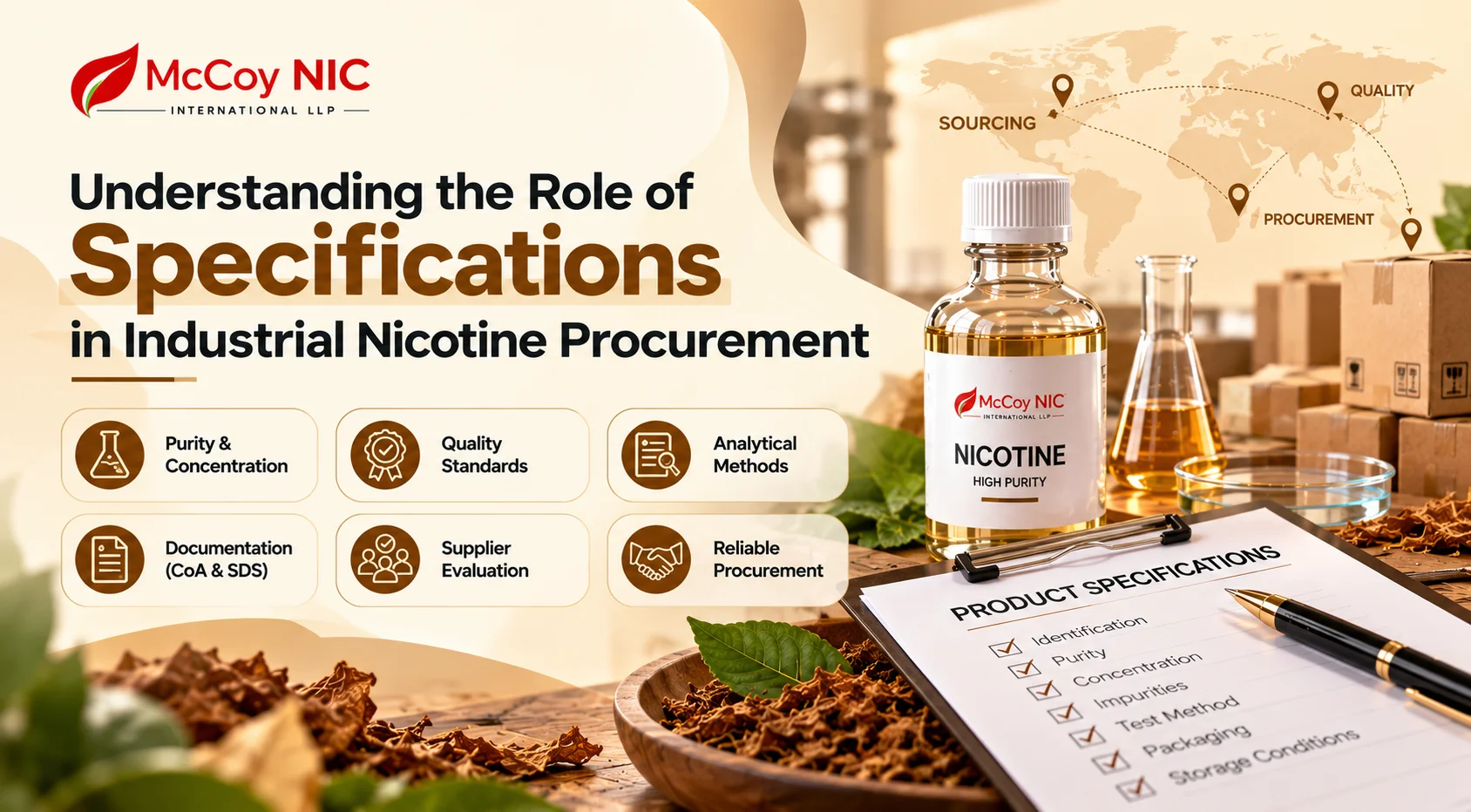
Understanding the Role of Specifications in Industrial Nicotine Procurement

Understanding the Role of Specifications in Industrial Nicotine Procurement Category: Industry Insights Industrial procurement decisions depend on accurate product information, clearly defined quality requirements and reliable documentation. In the nicotine industry, product specifications help buyers and suppliers establish a common understanding of the material being discussed before a commercial transaction moves forward. Understanding industrial nicotine […]

Continue Reading
Nicotine supplier documentation and quality control for NRT manufacturers

NRT Manufacturers Reassess Nicotine Supplier Documentation and Quality Risk Controls

NRT Manufacturers Reassess Nicotine Supplier Documentation and Quality Risk Controls News Analysis | Pharmaceutical Supply Chain As pharmaceutical manufacturers continue to strengthen supplier oversight, the documentation supporting critical raw materials is receiving greater attention across quality assurance, procurement, and regulatory teams. For manufacturers of Nicotine Replacement Therapy (NRT) products, the assessment of a nicotine supplier […]

Continue Reading
Nicotine Supplier Evaluation Checklist

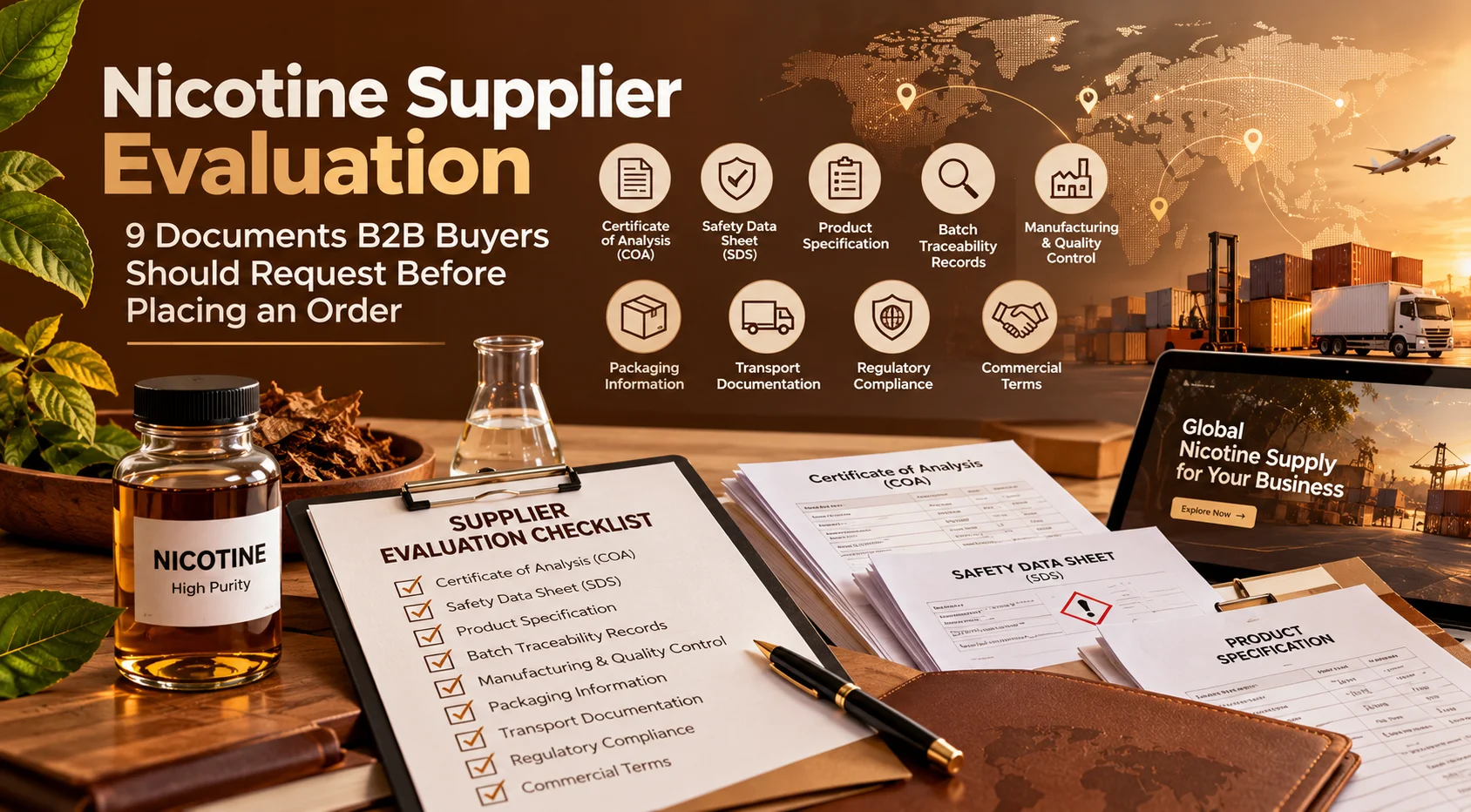
Nicotine Supplier Evaluation: 9 Documents B2B Buyers Should Request Before Placing an Order

Nicotine Supplier Evaluation: 9 Documents B2B Buyers Should Request Before Placing an Order Selecting a nicotine supplier involves more than comparing prices and delivery estimates. For manufacturers, procurement teams and international B2B buyers, reviewing technical documentation before placing an order can help clarify product specifications, quality requirements, safety information and import responsibilities. A structured nicotine […]

Continue Reading