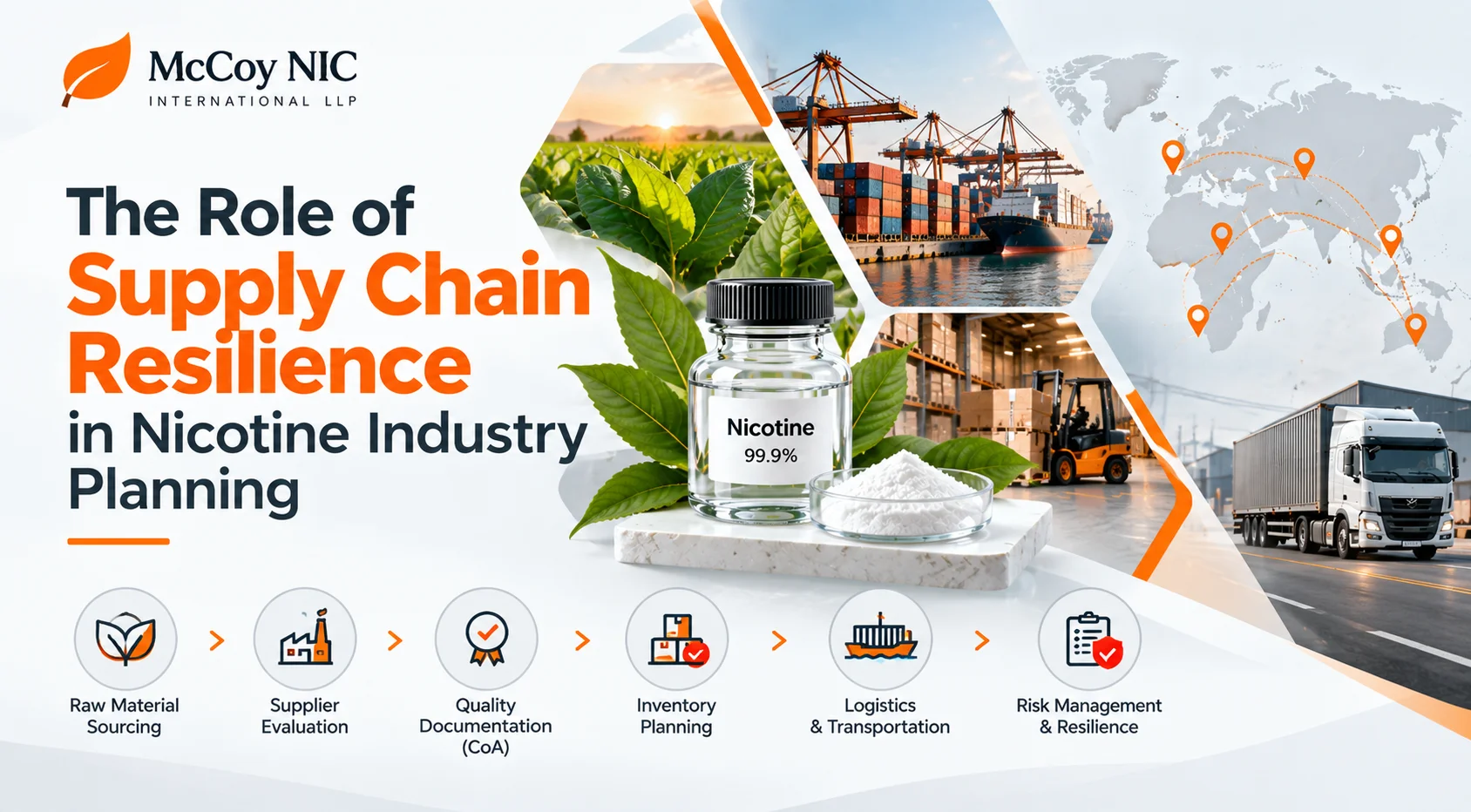
The Role of Supply Chain Resilience in Nicotine Industry Planning
Nicotine supply chain resilience is becoming an important consideration for businesses that depend on consistent raw-material availability, reliable documentation, and coordinated logistics. For manufacturers and qualified B2B buyers, supply chain planning involves more than placing orders. It requires identifying potential risks, evaluating suppliers, monitoring inventory needs, and preparing for disruptions that may affect procurement schedules.
In the nicotine industry, these considerations are particularly relevant because product specifications, quality requirements, packaging, transportation, and destination-country regulations can influence the movement of raw materials across markets.
What Is Supply Chain Resilience?
Supply chain resilience refers to the ability of a business to prepare for, respond to, and recover from disruptions affecting sourcing, production, transportation, or delivery.
For nicotine-related businesses, resilience can involve maintaining clear supplier communication, understanding lead times, preserving traceability records, and ensuring that procurement decisions are based on verified product requirements.
A resilient supply chain does not eliminate every risk. Instead, it helps businesses identify vulnerabilities early and make informed decisions when circumstances change.
Why Supply Chain Resilience Matters in the Nicotine Industry
Supply interruptions can affect production planning, inventory availability, purchasing costs, and customer commitments. Delays may arise from transportation constraints, changing demand, supplier capacity limitations, documentation gaps, or regulatory requirements.
Businesses can improve preparedness by reviewing their supply arrangements regularly and identifying which stages depend on a single supplier, route, or approval process.
A structured approach to nicotine supply chain resilience can help procurement, quality, and logistics teams coordinate their activities and respond more effectively to unexpected changes.
1. Evaluate Suppliers Beyond Price
Supplier selection is a central part of resilient supply chain planning. A competitive quotation is useful, but it does not establish whether a supplier can meet the required specifications, provide appropriate documentation, or support the expected purchasing schedule.
B2B buyers should assess product specifications, quality records, batch traceability, communication, production capability, lead times, and relevant export documentation.
Where appropriate, businesses can also assess alternative qualified suppliers. Any alternative must meet the same technical, quality, safety, and regulatory requirements before it is approved.
Read our guide on How Can International Buyers Evaluate an Indian Nicotine Supplier?.
2. Improve Demand Forecasting and Inventory Planning
Demand forecasting helps businesses estimate future raw-material requirements using production schedules, historical consumption, confirmed orders, and expected market demand.
Poor planning can lead to either shortages or excessive inventory. Both situations can affect procurement costs and operational efficiency.
Businesses can improve planning by reviewing:
- Expected production requirements
- Current inventory and committed quantities
- Supplier lead times
- Reorder points and safety-stock policies
- Storage and shelf-life requirements, where applicable
- Changes in customer demand
Inventory decisions should reflect actual business needs, material characteristics, storage requirements, and applicable safety procedures rather than relying on a fixed stock level for every product.
3. Strengthen Batch Traceability and Quality Documentation
Traceability connects a batch with relevant source, quality, testing, and handling records. It can help businesses investigate discrepancies, verify documentation, and maintain clearer quality-control records.
For nicotine raw materials, procurement and quality teams should understand how batch identification relates to the applicable Certificate of Analysis (CoA), product specifications, and supporting documentation.
Records should be organized so that relevant information can be retrieved when needed. Changes to approved specifications or other significant supply details should also be reviewed through the business’s established quality procedures.
Learn more in our article, Why Batch Traceability Is Becoming More Important in the Global Nicotine Supply Chain.
4. Plan for Logistics and Transportation Risks
Transportation delays, route changes, customs procedures, and incomplete shipping documents can affect international procurement schedules.
Businesses can prepare by confirming shipment responsibilities, required documents, packaging arrangements, expected timelines, and destination-country requirements before an order is finalized.
For international shipments, buyers should verify applicable import permissions and transport requirements with the relevant authorities and qualified logistics or compliance professionals.
Maintaining clear communication between the supplier, purchasing team, freight provider, and importer can help identify potential problems earlier.
5. Understand Regulatory and Market Requirements
Regulatory requirements may differ according to the product, intended application, destination market, and relevant business activity. A document or authorization accepted in one jurisdiction may not satisfy the requirements of another.
Supply chain planning should therefore include a review of applicable product classification, safety documentation, labelling, shipping conditions, and import requirements.
Businesses should verify current requirements before confirming an order or arranging shipment. Regulatory changes should also be reviewed when they could affect product eligibility, documentation, or delivery planning.
6. Improve Supplier Communication and Coordination
Clear communication can reduce avoidable uncertainty throughout procurement. Buyers and suppliers should agree on specifications, order quantities, documentation, commercial terms, and expected timelines.
When requirements change, the relevant teams should communicate the change promptly and assess its effect on quality approval, production schedules, inventory, and delivery commitments.
For recurring purchases, maintaining organized records of previous orders and agreed specifications can also support more consistent procurement planning.
7. Compare Total Procurement Cost and Supply Reliability
A low purchase price does not necessarily mean the lowest overall procurement cost. Freight, insurance, packaging, duties, taxes, delays, and additional inspection or documentation requirements can affect the final cost.
Procurement teams should compare quotations using consistent specifications, quantities, delivery terms, and cost assumptions.
They should also evaluate delivery performance and the supplier’s ability to meet agreed requirements. This creates a more complete view of the trade-off between cost, reliability, and operational risk.
For additional guidance, see Factors That Affect Bulk Nicotine Procurement: A B2B Buyer’s Guide.
8. Develop a Practical Supply Chain Risk Review
A supply chain risk review helps businesses identify potential vulnerabilities and determine which issues require attention first.
A practical review may cover:
- Supplier capacity and lead-time uncertainty
- Dependence on a single approved source
- Inventory shortages or excess stock
- Missing or inconsistent quality documents
- Transportation and customs delays
- Changes in applicable regulations
- Communication and escalation procedures
Each identified risk should have a clear owner, an appropriate review schedule, and a response plan proportionate to its potential impact.
Alternative sourcing, additional inventory, or revised shipping arrangements should only be adopted after the relevant quality, safety, financial, and regulatory implications have been assessed.
How McCoy NIC Fits into B2B Supply Chain Planning
For businesses sourcing nicotine raw materials, supplier discussions are an opportunity to clarify product requirements, documentation, quantities, and supply-related questions before making purchasing decisions.
McCoy NIC International LLP provides product information and supports B2B enquiries concerning relevant product specifications and procurement requirements. Buyers can discuss their individual needs and confirm which documentation and commercial details apply to a particular enquiry.
Businesses can also review McCoy NIC’s Certifications and Compliance Documents as part of their supplier qualification process. Available documents should be checked for their scope, validity, and relevance to the specific purchasing requirement.
Frequently Asked Questions
What is nicotine supply chain resilience?
Nicotine supply chain resilience is the ability to prepare for and respond to sourcing, quality, inventory, logistics, and regulatory disruptions affecting the supply of nicotine raw materials.
How can businesses reduce nicotine supply chain risks?
Businesses can evaluate suppliers carefully, forecast demand, review inventory, maintain batch traceability, verify documentation, and plan for possible logistics or regulatory disruptions.
Why is batch traceability important in nicotine procurement?
Batch traceability helps connect a specific batch with relevant source and quality records, supporting documentation checks, quality investigations, and procurement accountability.
Does supply chain resilience mean keeping more inventory?
Not necessarily. Appropriate inventory levels depend on demand, lead times, storage requirements, material characteristics, cost, and risk. Excessive stock can create its own operational challenges.