EU Nicotine Pouch Regulations: New Rules for Emerging Nicotine Products
EU nicotine pouch regulations are evolving in 2026 as the European Union reviews its approach to nicotine pouches and other emerging nicotine products. The European Commission’s evaluation of the EU tobacco-control framework identified the rapid emergence of novel tobacco and nicotine products as an area where the existing regulatory framework may not fully reflect current market developments.
The developments could be important for nicotine manufacturers, suppliers, importers, distributors and B2B buyers operating across European markets.
EU Nicotine Pouch Regulations Under Review
The European Commission published its evaluation of the EU tobacco-control framework on 2 April 2026. The evaluation examined the effectiveness, efficiency, relevance and coherence of existing tobacco-control legislation, including the Tobacco Products Directive and Tobacco Advertising Directive.
The Commission identified challenges associated with the growing popularity of novel tobacco and nicotine products, including nicotine pouches, as well as changes in digital marketing practices.
This has increased discussion around whether the EU framework should be adapted to better address emerging product categories.
Related article: Global Nicotine Industry 2026: A New Phase of Product Development
Why Are Nicotine Pouches Receiving More Regulatory Attention?
Nicotine pouches have become an increasingly visible category within the European nicotine market. Unlike traditional tobacco products, nicotine pouches do not contain tobacco leaves, which has created questions about how they should be classified and regulated at EU level.
In an October 2025 discussion, the European Commission stated that tobacco-free nicotine pouches do not fall under the EU Tobacco Products Directive because they do not contain tobacco plant material. The Commission also indicated that such products are not food products under the EU food framework and may be subject to the General Product Safety Regulation where other specific legislation does not apply. Member States may also adopt national measures in the absence of harmonised EU legislation.
This regulatory situation has contributed to differences between national markets.
Different National Approaches Across Europe
One of the major issues surrounding EU nicotine pouch regulations is the variation in national approaches.
Individual European countries have been developing their own rules concerning nicotine pouches and other nicotine-containing products. These measures can address areas such as product composition, nicotine content, packaging, labelling, marketing and sales.
For example, Finland notified the EU in 2026 of proposed amendments concerning smokeless nicotine-containing products, including requirements relating to packaging and restrictions on sale and content.
The existence of different national requirements can make cross-border compliance more complicated for companies supplying multiple European markets.
Related article: Global Nicotine Industry Faces Increasing Regulatory Differences Across Major Markets
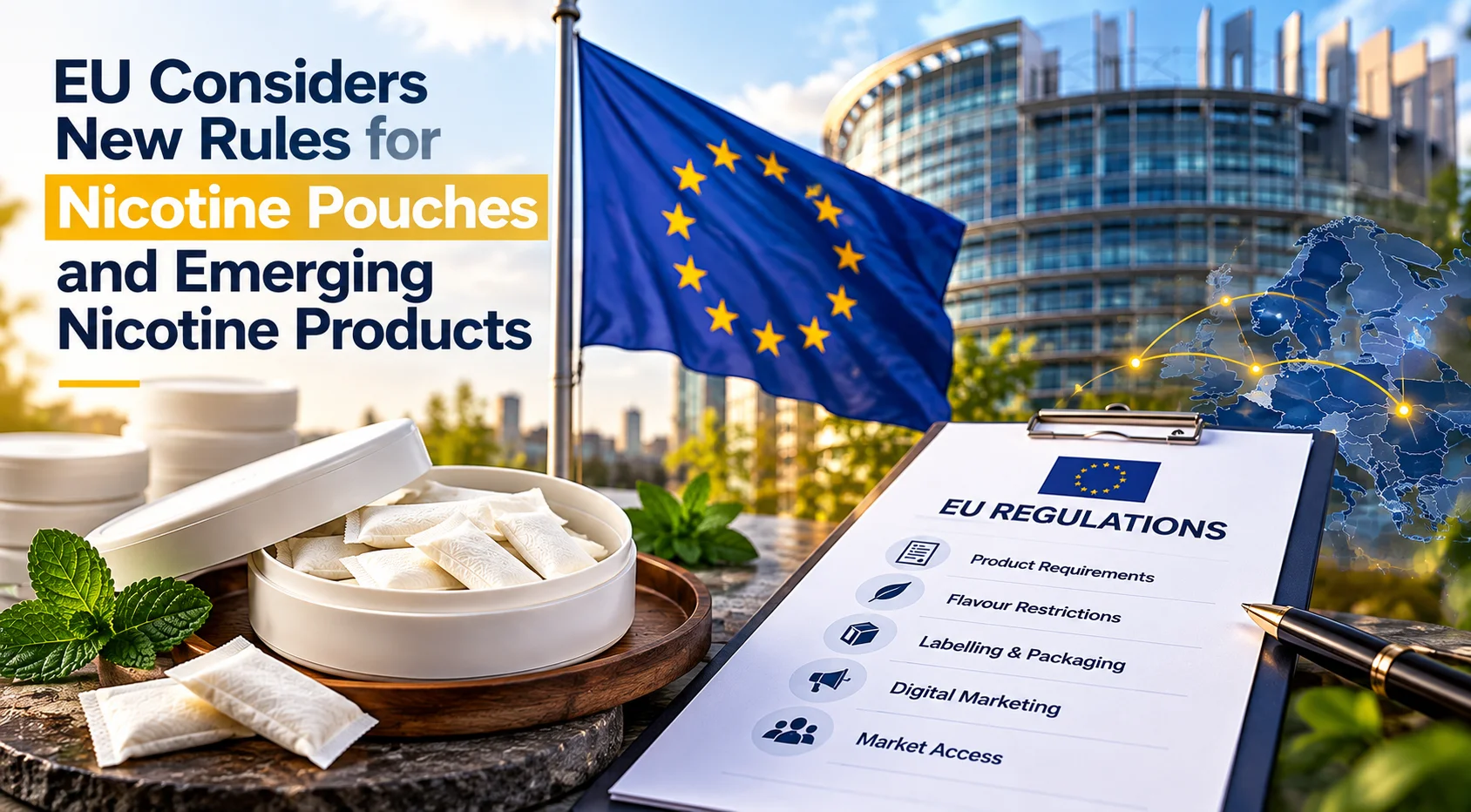
What Could Future EU Rules Cover?
The exact content of any future EU-wide framework will depend on the legislative process. However, the Commission’s evaluation highlights areas where the existing framework has gaps or may need adaptation.
Product Requirements
Future legislation could establish more consistent requirements for novel nicotine products, including nicotine pouches.
Manufacturers and suppliers may therefore need to pay closer attention to product specifications, ingredients, nicotine concentration and technical documentation.
Packaging and Labelling
Packaging and labelling are also important areas for regulatory compliance.
European national proposals have already included measures relating to packaging design and information requirements for smokeless nicotine-containing products.
For international suppliers, maintaining accurate product specifications and documentation can help support communication with buyers and regulatory teams.
Related article: How Can Buyers Verify Batch-to-Batch Consistency in Nicotine?
Flavours and Product Presentation
Flavours and product presentation are also part of the broader EU discussion around novel nicotine products.
As regulators assess how emerging nicotine products are marketed and used, manufacturers may need to monitor potential changes affecting formulations and product presentation.
Digital Marketing
Digital marketing is another area receiving attention.
The European Commission’s evaluation identified the rapid evolution of digital marketing for tobacco and nicotine products as one of the developments that existing rules do not fully address.
For companies operating in Europe, this could increase the importance of reviewing online marketing practices and country-specific requirements.
EU Nicotine Tax Rules Are Also Changing
The regulatory discussion is not limited to product-control rules.
The EU has also been considering changes to tobacco taxation that would introduce new categories for emerging tobacco and nicotine products, including nicotine pouches and other nicotine products. The European Parliament’s legislative tracking shows that this proposal has been under consideration during 2026.
However, the legislative process has not resulted in a final EU-wide tax framework for these products through the proposal discussed here. The European Parliament rejected the Commission’s proposed recast of the Tobacco Taxation Directive in June 2026, so further developments will be important to monitor.
Related article: Nicotine Industry Market Trends: What Manufacturers Are Watching in 2026
What Does This Mean for B2B Nicotine Buyers?
For B2B buyers sourcing nicotine or nicotine-related raw materials for European markets, regulatory developments make technical documentation and supplier communication increasingly important.
Buyers may want to review:
- Product specifications
- Certificate of Analysis (CoA)
- Batch-to-batch consistency
- Ingredient and formulation information
- Product traceability
- Packaging and labelling requirements
- Country-specific regulatory requirements
- Technical communication procedures
- Supply-chain documentation
Maintaining accurate digital records can also make it easier for procurement and quality teams to exchange product information with international suppliers.
Related article: What Role Can Digital Records Play in Managing Nicotine Procurement and Quality Information?
Why Regulatory Monitoring Matters for Suppliers
European nicotine markets are not governed by a single set of requirements covering every emerging nicotine product.
The European Commission’s evaluation specifically notes that the existing framework has been challenged by the emergence of novel tobacco and nicotine products and changing digital marketing practices.
For manufacturers and exporters, this means regulatory monitoring should be part of ongoing market planning rather than a one-time compliance exercise.
Companies targeting European customers may need to monitor both EU-level developments and national legislation in individual Member States.
What Should Nicotine Manufacturers Watch in 2026?
Businesses involved in the international nicotine supply chain can monitor several areas as the EU regulatory discussion develops:
- Revision of the EU tobacco-control framework
- Potential EU-level requirements for nicotine pouches
- National regulations introduced by individual Member States
- Packaging and labelling requirements
- Product composition and nicotine-content requirements
- Digital marketing restrictions
- Potential taxation of emerging nicotine products
- Documentation and traceability expectations
These developments could influence product development, market-entry planning and compliance procedures for companies supplying European customers.
EU Nicotine Pouch Regulations: What Happens Next?
The current situation should be understood as an evolving regulatory process rather than a single new EU nicotine pouch law that is already fully in force.
The European Commission’s 2026 evaluation has highlighted regulatory gaps created by the rapid development of novel nicotine products, while separate legislative work has addressed taxation of newer nicotine categories. At the same time, Member States continue to introduce or consider national measures.
Manufacturers, exporters and B2B buyers should therefore distinguish between existing requirements, national measures, legislative proposals and future EU-level policy changes.