
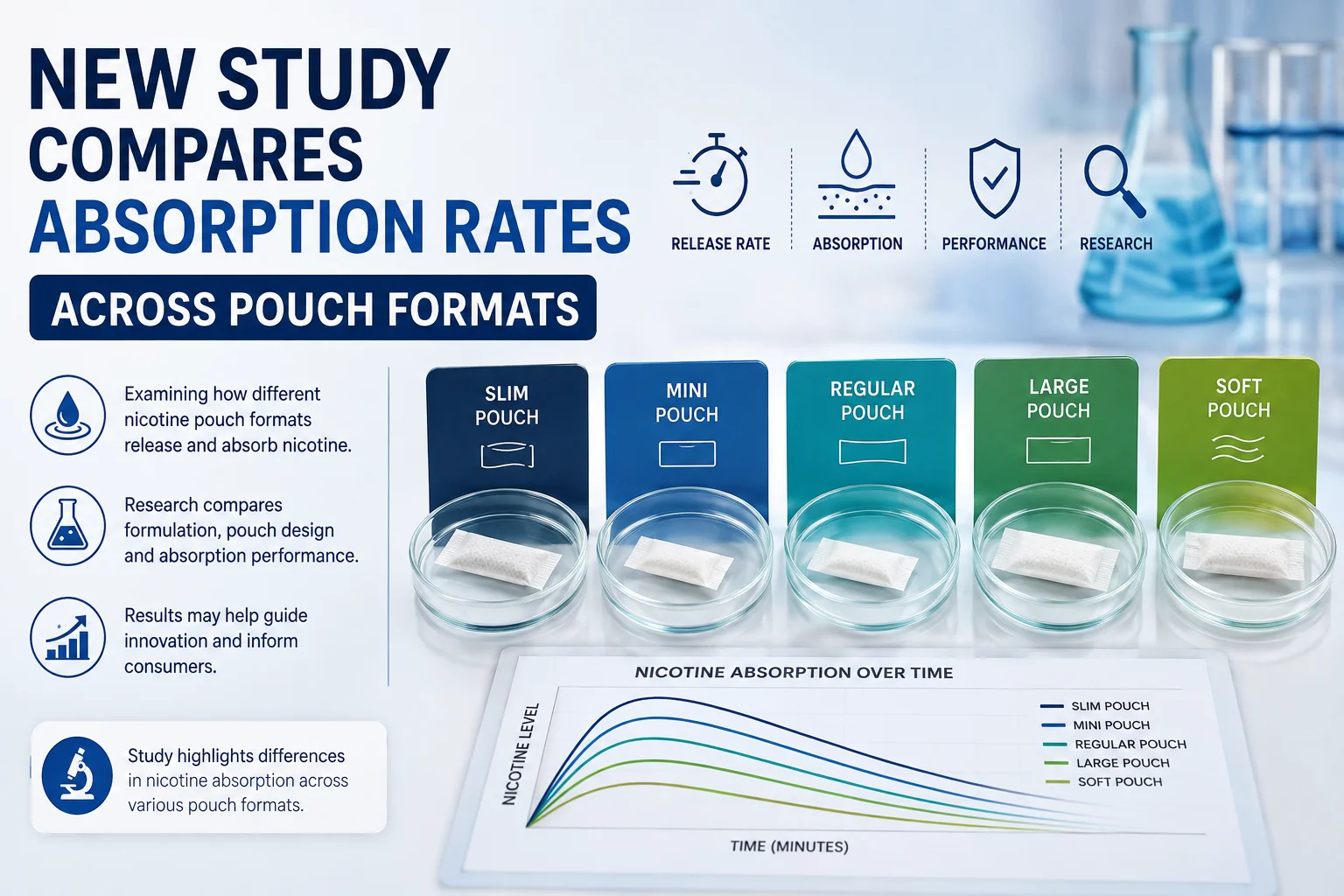
New Study Examines Nicotine Absorption Across Pouch Formats
New research is providing further insight into how nicotine is released and absorbed from oral nicotine pouches. Recent studies have compared different pouch products and examined factors that can influence nicotine delivery through the mouth.
Researchers are particularly interested in how nicotine pouch absorption rates vary depending on product formulation, nicotine strength, dissolution characteristics and oral conditions.
Pouch Formulation Can Affect Nicotine Release
A 2026 study published in Scientific Reports examined seven commercially available nicotine pouch products and compared characteristics including nicotine content, dissolution, particle size, moisture and pH. The researchers found differences in nicotine release profiles between the products tested.
The findings indicate that pouch formulation can play an important role in how quickly nicotine becomes available for absorption. Some products showed faster nicotine release than others under the laboratory conditions used in the study.
Oral Conditions May Influence Absorption
Another study published in ACS Omega evaluated nicotine dissolution and buccal permeability using several nicotine pouch products. Researchers found that factors such as pH, artificial saliva composition and product formulation could affect nicotine permeability under laboratory conditions.
This suggests that the nicotine content listed on a pouch does not necessarily tell the complete story about how nicotine is delivered. The physical and chemical characteristics of the product can also influence nicotine release and absorption.
Usage Time Also Matters
Clinical research has also examined how the duration of pouch use affects nicotine delivery. A randomized crossover study published in the Journal of Clinical Pharmacology evaluated 11 mg and 20 mg nicotine pouches used for different periods.
The researchers reported that plasma nicotine exposure increased with both nicotine strength and duration of use. Nicotine absorption was faster during the initial period of use and then slowed as use continued.
Why the Research Matters
Understanding nicotine absorption is important for researchers, regulators and manufacturers studying oral nicotine products. Comparing different pouch formats can help researchers better understand how product design influences nicotine release and delivery.
However, laboratory absorption measurements and clinical nicotine levels are not the same thing. Results can vary depending on the study design, product characteristics and participants involved.
Nicotine is addictive, and nicotine pouches are not risk-free. Research into absorption rates therefore remains important as the use and variety of oral nicotine products continue to develop.
More Research Needed
Current evidence suggests that nicotine pouch absorption is influenced by several factors rather than a single characteristic. Nicotine strength, formulation, pH, dissolution rate and duration of use can all contribute to nicotine delivery.
Further independent research could help clarify how different pouch formats perform under real-world conditions and how laboratory findings translate to nicotine exposure in consumers.
Bottom Line: New research shows that nicotine pouch absorption can vary across products and conditions. Differences in formulation, nicotine release and use duration may all influence how nicotine is delivered through the oral mucosa.