India Orders Nationwide Crackdown on Illegal Nicotine Pouches in 2026
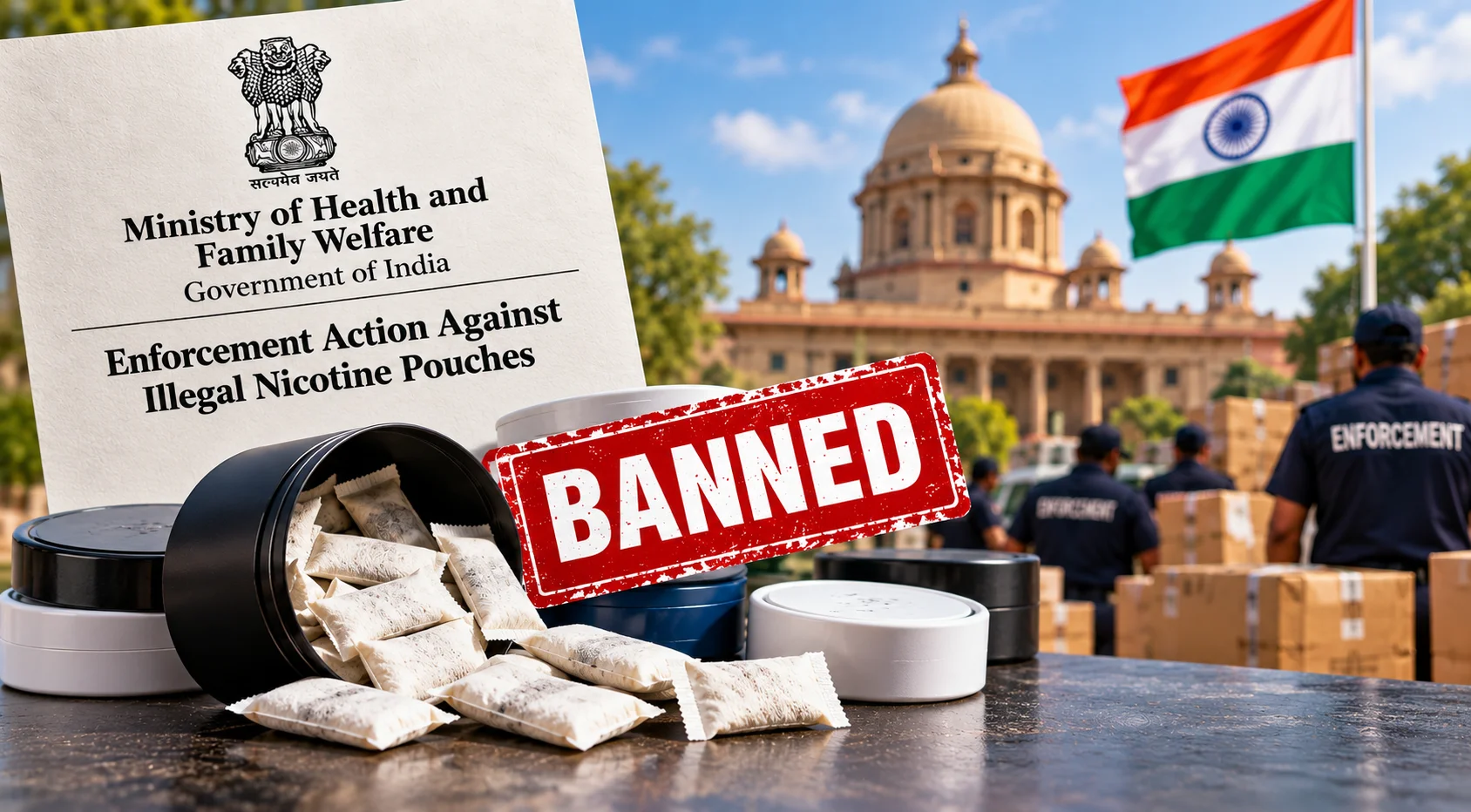
India nicotine pouch crackdown 2026 has become a major regulatory development for the country’s emerging oral nicotine market. In September 2026, the Ministry of Health and Family Welfare directed states to initiate enforcement action against the illegal sale of nicotine pouches, citing public-health concerns and increased availability through online and offline channels.
The development is significant for manufacturers, importers, distributors, retailers and other businesses involved in the nicotine supply chain because it highlights the importance of product authorization, regulatory classification and market-specific compliance.
India Steps Up Enforcement Against Illegal Nicotine Pouches
According to a Health Ministry letter dated 19 September 2026, states were asked to take appropriate enforcement action against the sale of nicotine pouches in the interest of public health and protection of children.
The directive cited provisions of India’s drug law that provide mechanisms including search, seizure and prosecution in cases involving products considered unauthorized under the applicable framework.
The action follows growing concern over the availability of nicotine pouches through both online and physical retail channels.
A June 2026 study led by researchers at ICMR-National Institute of Cancer Prevention and Research also reported the availability of nicotine pouches across Indian cities and highlighted their presence through online platforms, hookah shops and delivery channels.
Why Are Nicotine Pouches Receiving Regulatory Attention?
Nicotine pouches are small oral products that are generally placed between the lip and gum to deliver nicotine without combustion.
Their growing international popularity has attracted increased regulatory attention. In India, the regulatory position has become particularly important because approved nicotine-replacement products such as certain gums, patches and lozenges are treated differently from unapproved oral nicotine products.
The National Tobacco Control Programme has previously published an Advisory on Oral Nicotine Pouches, alongside other tobacco-control advisories.
The wider Indian tobacco-control framework includes COTPA 2003, the Prohibition of Electronic Cigarettes Act 2019 and other related laws and regulations.
Online and Offline Sales Under Greater Scrutiny
One important aspect of the 2026 development is the focus on both online and offline availability.
Regulators are increasingly examining how nicotine products reach consumers, including:
- Online marketplaces and websites
- Tobacco retailers
- Specialty stores
- Delivery platforms
- Import channels
- Other distribution networks
For businesses operating in the nicotine sector, this means that simply identifying a product as a tobacco-free or alternative nicotine product does not remove the need to examine its applicable regulatory status.
Government Drug Panel Recommends No New Nicotine Pouch Formulations
The enforcement action comes alongside a broader regulatory review.
Government drug-panel discussions in 2026 reportedly recommended that no new nicotine formulation be approved, citing concerns about addiction and the health risks associated with nicotine pouches.
This development indicates that Indian authorities are examining nicotine pouches not only from a retail-enforcement perspective but also from the perspective of product authorization and regulatory oversight.
Businesses considering the development or introduction of nicotine-containing products therefore need to assess the applicable regulatory pathway before entering the Indian market.
What Does the Crackdown Mean for the Nicotine Industry?
The latest development could have several implications for the nicotine supply chain.
1. Greater Importance of Regulatory Verification
Manufacturers and importers need to verify whether their intended product has the required authorization, registration, licence or other documentation before commercial activity.
2. Increased Attention to Imports
Products entering India may receive greater scrutiny where authorities consider them unauthorized or non-compliant.
3. Retailers Face Higher Compliance Requirements
Retailers selling nicotine products should verify the legal status and documentation associated with products before offering them for sale.
4. Online Sales May Receive More Attention
The government’s reference to online and offline availability indicates that digital channels are also part of the enforcement landscape.
5. Product Classification Matters
Nicotine products can fall under different regulatory frameworks depending on their formulation, intended use and legal classification. Companies should therefore avoid assuming that one regulatory pathway applies to every nicotine-containing product.
Implications for B2B Nicotine Buyers
For manufacturers and B2B buyers, the latest Indian regulatory developments reinforce the importance of supplier documentation and traceability.
Before sourcing nicotine raw materials, businesses should consider reviewing:
- Certificate of Analysis (CoA)
- Product specifications
- Batch information
- Traceability documentation
- Intended end use
- Import requirements
- Destination-market regulations
- Applicable quality and compliance documentation
McCoy NIC’s technical-support information also highlights the importance of product specifications, quality documentation and supply requirements for B2B nicotine buyers.
For additional context, see our article on Where India’s Nicotine Rules Actually Stand: A Plain-English Guide to the Patchwork, which explains the broader regulatory framework affecting nicotine products in India.
India’s Nicotine Regulatory Environment Continues to Evolve
The 2026 crackdown is part of a wider period of regulatory attention surrounding nicotine products.
Globally, regulators are also examining nicotine pouches, particularly issues involving nicotine strength, flavours, advertising, youth access and product authorization. The World Health Organization has called for stronger safeguards covering these areas.
India’s latest enforcement direction demonstrates that businesses cannot rely solely on the regulatory treatment of nicotine products in other countries when planning activities in the Indian market.
Companies involved in manufacturing, importing, distribution or product development should evaluate Indian requirements separately and monitor further regulatory announcements.
What Businesses Should Watch Next
The nicotine industry will be watching several areas following the September 2026 directive:
- Further state-level enforcement actions
- Product seizures and investigations
- Additional guidance from central authorities
- Regulatory decisions concerning new nicotine formulations
- Import and licensing requirements
- Online sales enforcement
- Future rules concerning oral nicotine products
The regulatory environment may continue to develop as Indian authorities assess the availability and use of nicotine pouches.