Nicotine Regulations in the United States: Key Rules for 2026
Nicotine regulations in the United States continue to evolve as the U.S. Food and Drug Administration (FDA) increases oversight of nicotine and tobacco products. The regulatory framework covers product authorization, manufacturing, imports, distribution, retail sales, labeling and enforcement.
For manufacturers, suppliers, importers and distributors planning to enter the U.S. market, understanding these requirements is becoming increasingly important.
FDA Regulates Nicotine From Any Source
One of the important developments in U.S. nicotine regulation is the expansion of FDA authority to products containing nicotine from any source.
Federal legislation that took effect on April 14, 2022, clarified that FDA’s tobacco-product authority covers nicotine from sources other than tobacco, including synthetic nicotine. As a result, applicable non-tobacco nicotine products can be subject to requirements under the Federal Food, Drug, and Cosmetic Act (FD&C Act).
This means that using synthetic or non-tobacco nicotine does not automatically place a product outside the FDA regulatory framework.
FDA Authorization Required for New Tobacco Products
New tobacco products generally cannot be legally marketed in the United States without FDA authorization.
FDA provides several pathways for obtaining marketing authorization, including the Premarket Tobacco Product Application (PMTA) pathway. Under PMTA, applicants must provide scientific information that allows FDA to determine whether marketing the product is appropriate for the protection of public health.
FDA states that a company must receive a written marketing order before legally marketing a new tobacco product in the United States.
PMTA Requirements Continue to Develop
The PMTA process remains an important part of the regulatory pathway for manufacturers introducing new nicotine and tobacco products.
In 2026, FDA updated its PMTA submission process. Starting January 2, 2026, applicants are required to use the latest FDA forms for PMTA submissions. FDA has also announced plans to phase out its eSubmitter system for PMTA and substantial-equivalence submissions, with web-based forms in CTP Portal NextGen becoming the primary submission route.
These changes make accurate regulatory documentation and submission procedures increasingly important for companies seeking U.S. market authorization.
Synthetic Nicotine Products Are Also Regulated
The FDA specifically regulates non-tobacco nicotine (NTN) products, including products containing synthetic nicotine.
According to FDA guidance, manufacturers of NTN products that want to market their products in the United States must submit a premarket application and obtain FDA authorization. Products marketed without the required authorization may be subject to FDA enforcement.
This is particularly relevant for companies involved in synthetic nicotine-based products because regulatory requirements are determined by the applicable product classification and intended use, rather than simply by whether the nicotine originated from tobacco.
Nicotine Pouches Face Increasing Regulatory Attention
Nicotine pouches have become an important focus of U.S. regulatory activity.
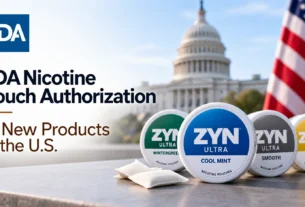
FDA maintains a list of nicotine pouch products authorized for legal sale in the United States. The agency’s current list states that there are 43 FDA-authorized nicotine pouch products and that these are the products that may lawfully be sold in the country.
At the same time, FDA has increased enforcement attention toward unauthorized nicotine pouch products.
In May 2026, FDA issued guidance describing enforcement priorities for certain unauthorized ENDS and nicotine pouch products. The agency said it would focus on products marketed without required premarket authorization, including certain illegal imports and products that may present significant public-health or safety concerns.
Age Restrictions and Retail Compliance
Federal tobacco regulations also include requirements designed to prevent sales to people under the legal age.
Retailers selling regulated tobacco products must follow federal age-verification and sales requirements. FDA’s retail guidance covers products containing nicotine from any source, including non-tobacco nicotine and synthetic nicotine.
Retail compliance is therefore an important consideration for manufacturers and distributors supplying products to the U.S. market.
Labeling, Imports and Documentation
Companies supplying nicotine and tobacco products to the United States must also consider applicable labeling, import and documentation requirements.
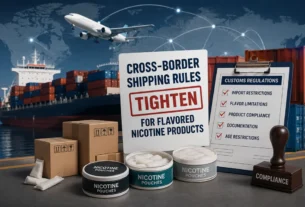
For imported products, compliance can involve product labeling, manufacturer information, required warnings and other applicable FDA requirements. Products that do not meet regulatory requirements may face enforcement action at the U.S. border or within the domestic market.
For manufacturers and raw-material suppliers, maintaining consistent product specifications, quality documentation, testing records and supply-chain information can support customers during regulatory and quality-control processes.
What the U.S. Rules Mean for Nicotine Manufacturers
The evolving nicotine regulations in the United States mean that companies cannot rely only on product demand or commercial pricing when entering the market.
Manufacturers and suppliers should evaluate:
- FDA marketing authorization requirements
- Product classification
- PMTA or other applicable regulatory pathways
- Synthetic and non-tobacco nicotine requirements
- Product testing and scientific documentation
- Labeling and warning requirements
- Import and distribution requirements
- Retail age restrictions
- State and local regulations
Companies should also verify current federal, state and local requirements before launching or shipping nicotine products into the United States.
Regulatory Compliance Remains a Key Industry Issue
The U.S. nicotine market continues to develop alongside increased regulatory scrutiny. FDA actions involving unauthorized nicotine pouches and ENDS products demonstrate that market access depends on compliance with applicable federal requirements.
For international manufacturers, exporters and nicotine raw-material suppliers, understanding the U.S. regulatory environment can help reduce compliance risks and support more informed market-entry decisions.
As FDA continues updating its guidance, application processes and enforcement priorities, companies operating in the nicotine sector will need to monitor regulatory developments closely.
Source: U.S. Food and Drug Administration (FDA).