Rethinking Tobacco Control in India: Why Nicotine Harm Reduction Deserves a Place in Policy
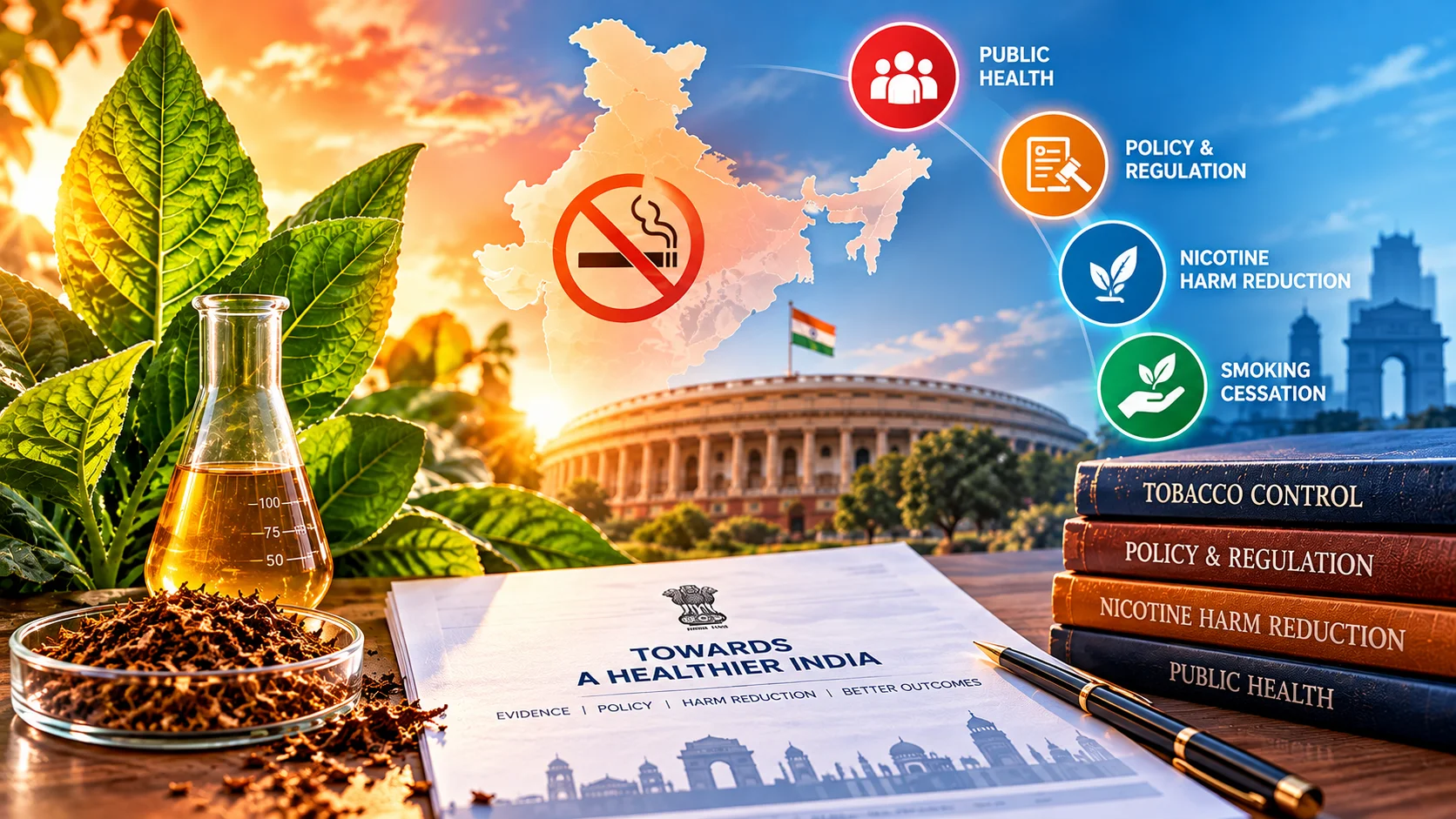
Tobacco harm reduction in India is an important part of the ongoing discussion around tobacco control, smoking cessation, nicotine regulation and public health.
India has one of the largest tobacco-using populations in the world. Despite decades of warnings, taxes and advertising bans, crores of Indians still smoke cigarettes and bidis or chew gutkha and khaini. At the same time, India has banned e-cigarettes and heated tobacco products, which many countries now treat as less harmful alternatives for adults who cannot or will not quit.
This article asks a simple question: if the goal is to reduce death and disease, should India’s policy focus on separating nicotine from the smoke and toxins of tobacco?
The Scale of the Problem in India
- Around 27 crore users: About 28.6% of Indian adults use tobacco in some form (Global Adult Tobacco Survey, GATS-2, 2016–17).
- More than 13 lakh deaths a year: The World Health Organization estimates tobacco kills over 1.3 million Indians every year.
- About ₹1.77 lakh crore in economic costs: A study published in Tobacco Control estimated the total health and productivity cost of tobacco at roughly 1% of India’s GDP (2017–18).
- Tax does not cover the damage: The same research found tobacco excise revenue covered only around 12% of these economic costs.
In other words, the current system collects tax from tobacco but pays far more in hospital bills, lost productivity and early deaths.
It’s the Smoke, Not the Nicotine, That Kills
Nicotine is the substance that makes tobacco addictive, but it is not the main cause of cancer, lung disease or heart disease. Those are caused mainly by burning tobacco, which produces tar, carbon monoxide and thousands of chemicals, many of them carcinogenic. Smokeless products used in India, such as gutkha and khaini, carry their own heavy load of toxins and are a major cause of oral cancer.
This is why medical authorities everywhere, including in India, approve nicotine replacement therapy (NRT) such as gums and patches. Public Health England (now part of the UK Health Security Agency) concluded in 2015 that vaping is around 95% less harmful than smoking, a figure that remains widely cited, though debated.
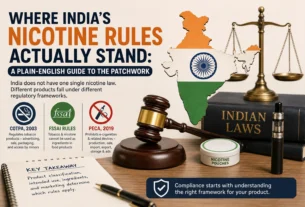
India’s Current Approach: A Policy Paradox
Under the Prohibition of Electronic Cigarettes Act (PECA), 2019, India banned the production, import, sale and advertising of e-cigarettes and heated tobacco products. The government’s concerns were real: rising youth vaping overseas, attractive flavours and uncertainty about long-term effects.
But cigarettes, bidis and chewing tobacco — the products responsible for almost all tobacco deaths — remain legally available in every neighbourhood. The result is that the most harmful products are sold openly, while potentially less harmful alternatives for adult smokers are banned and often sold illegally, without quality checks or age controls.
A Question of Consistency: Why Only Nicotine?
The same inconsistency is visible when we compare nicotine with alcohol. Alcohol use among young Indians has been rising, driven by urban lifestyles, social media, aggressive surrogate advertising and easy home delivery in many cities. According to the National Family Health Survey (NFHS-5, 2019–21), around 19% of Indian men drink alcohol, and surveys regularly report people starting at younger ages.
The harm is serious. The World Health Organization estimates that alcohol causes around 2.6 lakh deaths a year in India, through liver disease, cancers, road accidents and violence. It is also linked to domestic abuse, financial distress and lost productivity.
Yet alcohol is not banned nationally. Instead, it is regulated: states license manufacturers and shops, set minimum drinking ages, control advertising and collect excise duty. For many states, alcohol is one of the biggest sources of their own tax revenue. Where states have tried full prohibition, such as Bihar and Gujarat, they have faced illegal liquor trade, deaths from spurious alcohol and lost revenue.
This raises a fair question for policymakers: if India chooses to license, tax and control alcohol and cigarettes, despite their heavy health burden, why are potentially lower-risk smoke-free nicotine products banned outright? A consistent approach would regulate every product according to its actual level of risk, with the strictest controls on the most harmful products.
What Other Countries Are Doing
Many major economies have chosen to regulate rather than ban smoke-free nicotine:
| Country | Approach to smoke-free nicotine | Reported outcome |
| United Kingdom | Promotes vaping as a quitting aid; free starter kits offered to smokers through the NHS “Swap to Stop” scheme | Adult smoking fell to around 12% — among the lowest in Europe |
| Sweden | Allows snus and nicotine pouches as alternatives to cigarettes | Daily smoking near 5%; lowest tobacco-related cancer and death rates in the EU |
| Japan | Allows heated tobacco products | Cigarette sales fell sharply within a few years of their launch |
| New Zealand | Regulates vapes as a cessation tool alongside strict youth rules | Daily adult smoking dropped to under 7% |
| United States | FDA authorises individual products only if they benefit public health; minimum age 21 | Adult smoking at historic lows (around 11%) |
| China | State tobacco monopoly licenses and regulates e-cigarettes; tobacco flavour only at home | World’s largest producer (~90% of global e-cigarette supply), a major export industry |
| Russia | Legal but regulated: age limits, display and advertising rules, tightening flavour controls | Treated as a regulated tobacco-type product rather than banned |
| India | E-cigarettes and heated tobacco banned (PECA 2019); cigarettes, bidis and chewing tobacco legal | Around 27 crore tobacco users; more than 13 lakh deaths a year |
United States
The US Food and Drug Administration regulates e-cigarettes and nicotine pouches as tobacco products. Each product must pass a scientific review showing it is appropriate for public health before it can be sold. Several tobacco-flavoured e-cigarettes and nicotine pouches have been authorised, while most flavoured products have been rejected. The minimum age is 21. The US model shows it is possible to allow lower-risk products for adults while strictly controlling youth access.
United Kingdom and Sweden
The UK actively encourages smokers to switch to vaping and has offered free vape starter kits to smokers through its “Swap to Stop” programme. Sweden, where many adults use snus and nicotine pouches instead of cigarettes, is close to being officially “smoke-free” (under 5% daily smoking) and has the lowest rate of tobacco-related deaths in the European Union.
China
China is the world’s largest e-cigarette manufacturer, producing around 90% of global supply. Since 2022, the state tobacco monopoly has licensed and regulated e-cigarettes, allowing only tobacco flavours for domestic sale. China treats the sector as a controlled, taxed industry and a major export earner.
Russia
Russia allows e-cigarettes and nicotine products but regulates them as tobacco-type products, with age limits, advertising restrictions and tightening controls on flavours and sales. Like China and the USA, Russia has chosen control and taxation over prohibition.
Three Benefits for India
1. Fewer Deaths and Diseases
If even a fraction of India’s smokers and gutkha users switched completely to regulated, pharmaceutical-grade nicotine products, the reduction in exposure to smoke and toxins could prevent large numbers of cancers, heart attacks and lung diseases over time. Countries like Sweden and the UK show that when adults have access to less harmful alternatives, smoking rates fall faster.
2. Lower Healthcare Costs
Tobacco-related diseases such as cancer, COPD, heart disease and stroke are among the most expensive conditions to treat. Fewer cases mean lower spending for families, for government schemes such as Ayushman Bharat and for state hospitals. Since tobacco already costs India around 1% of GDP, even a modest reduction would be a significant saving.
3. Protecting and Growing Revenue
A regulated market can be licensed and taxed, much as the USA, China and Russia do today. Revenue that today goes to illegal sellers of smuggled vapes could instead go to the exchequer. India also has strong capability to produce high-purity natural nicotine from its own tobacco crop. A clear policy framework would support farmers, create skilled manufacturing jobs and grow exports of pharmaceutical-grade nicotine in line with “Make in India”.
A Responsible Policy Roadmap
Harm reduction does not mean a free market. A balanced Indian framework could include:
- Strict youth protection: a minimum age of 21, ID checks, no sales near schools and no youth-oriented flavours or marketing.
- Licensing and traceability: only licensed manufacturers, importers and retailers, with track-and-trace on every product.
- Quality standards: nicotine meeting USP/EP pharmacopoeia standards, limits on impurities and TSNAs, and BIS-certified devices.
- Risk-based taxation: the highest taxes on cigarettes, bidis and gutkha, and lower taxes on proven lower-risk products to encourage switching.
- Wider access to NRT: make nicotine gums, patches and lozenges cheaper and easier to buy, and link them to quit-smoking services.
- Independent research: fund Indian studies on switching, dual use and long-term health effects, and review the policy regularly.
The Other Side of the Debate
Not everyone agrees with this approach, and the concerns deserve serious attention:
- Youth uptake: Critics point to the rise in youth vaping in the US around 2018–19 and fear a new generation could become addicted to nicotine.
- Dual use: Some smokers use both cigarettes and e-cigarettes rather than switching completely, which reduces the health benefit.
- Long-term evidence: Vaping has existed for less than two decades, so its full long-term effects are still being studied. The WHO remains cautious and supports strong regulation, including bans in some contexts.
- Enforcement: In a country of India’s size, keeping regulated products away from minors would require strong and consistent enforcement.
Supporters of India’s ban argue that preventing a new nicotine habit among young people is more important than offering alternatives to existing smokers. Any policy change would need to address these concerns directly.