How Product Classification Changes Nicotine Import Requirements
Nicotine import requirements can vary according to product classification, intended use, formulation and destination-country regulations. For international B2B buyers, understanding how a product is classified helps identify the regulatory checks and import documentation that may apply before a shipment is dispatched.
Why Product Classification Matters
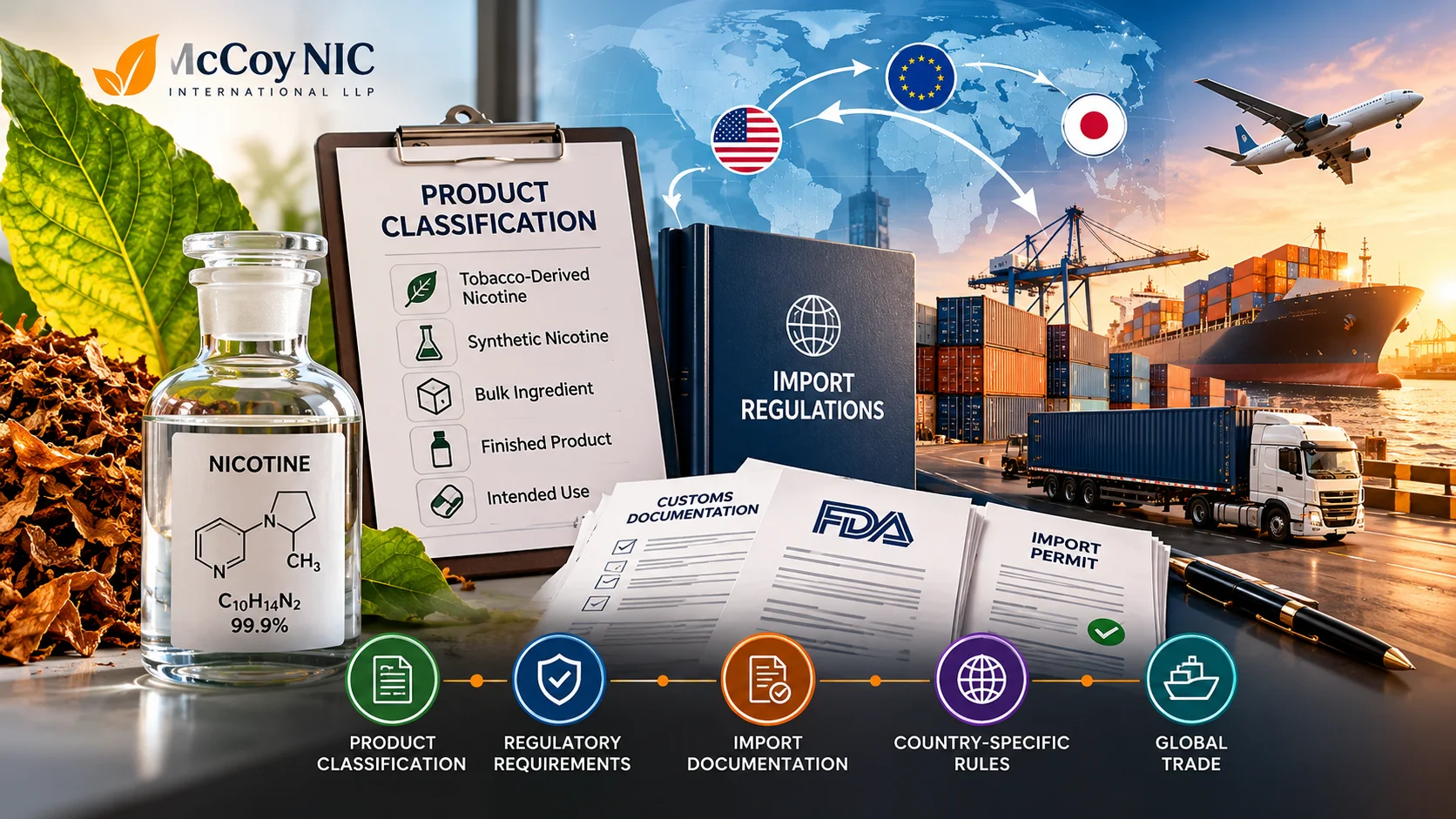
Product classification helps authorities determine which legal framework applies to an imported product. A bulk ingredient intended for further manufacturing may be treated differently from a finished consumer product, depending on the jurisdiction and the product’s characteristics.
Buyers should not assume that all nicotine-containing materials follow the same import process. Classification should be reviewed using the product description, composition, intended use and applicable official guidance.
How Classification Can Affect US Import Checks
In the United States, the Food and Drug Administration (FDA) regulates tobacco products under applicable federal law. Its definition includes certain products made or derived from tobacco, as well as products containing nicotine from any source that are intended for human consumption. Specific requirements depend on the product and circumstances.
For applicable tobacco products, FDA import reviews may involve market authorisation, labelling and user-fee requirements. Importers must also ensure that required entry information is accurate. Incorrect or incomplete declarations can delay review or lead to further examination.
Importers should consult the FDA’s official Importing Tobacco Products guidance to assess the rules relevant to their specific product.
Key Information Buyers Should Confirm
Before arranging an international shipment, B2B buyers should confirm:
- Product identity: Clearly describe the material and its intended use.
- Composition and formulation: Ensure product information accurately reflects the material being imported.
- Destination requirements: Check the applicable rules with the relevant regulator and customs authority.
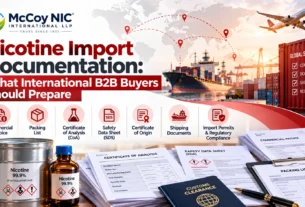
- Import documentation: Confirm which invoices, technical documents, declarations, permits or other records are required.
- Transport requirements: Check applicable transport classification and carrier requirements separately from product-market rules.
- Supplier documentation: Verify that the product description and supporting records are consistent across the order and shipment documents.
These checks help buyers identify missing information before dispatch. The precise requirements depend on the product, destination and applicable law.
The Role of Supplier Information
Reliable product information supports regulatory review and helps buyers communicate accurately with customs brokers and compliance teams. Buyers can review McCoy NIC’s information on Pure Nicotine 99.9%, Synthetic Nicotine andquality certificatesas part of their initial research.
These resources can support product evaluation, but website information or a Certificate of Analysis does not replace any import authorisation, permit or other document required by the destination country.