Tobacco-Derived Nicotine Supply Chains: From Raw Material to Finished Ingredient
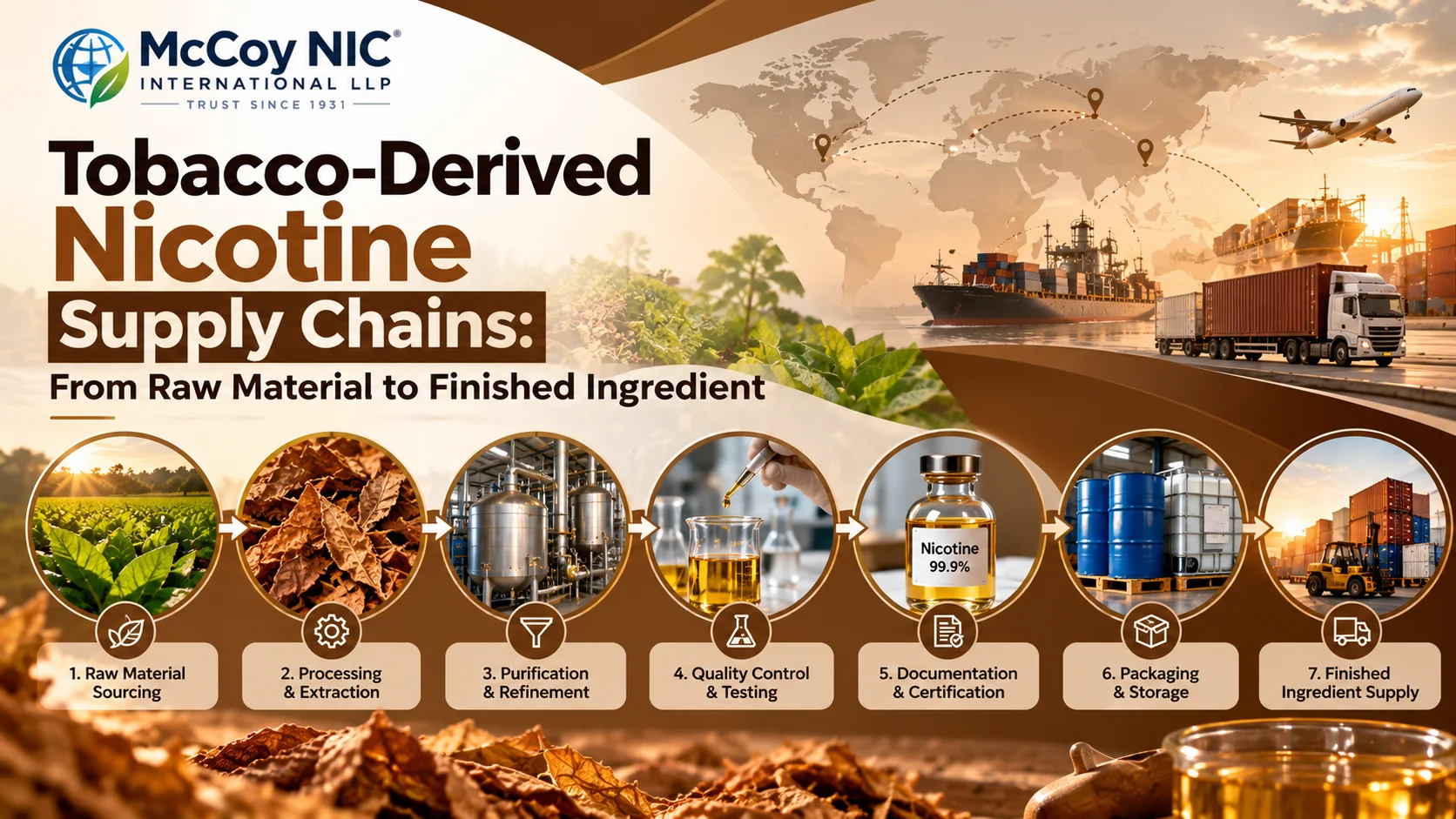
The tobacco-derived nicotine supply chain connects raw tobacco sourcing with extraction, purification, quality assessment, documentation and the delivery of finished nicotine ingredients. For manufacturers and B2B procurement teams, understanding these stages helps clarify how raw-material origin, product specifications and batch records contribute to supply-chain transparency.
As industrial buyers evaluate nicotine suppliers, they may look beyond product availability and pricing. Raw-material traceability, quality documentation, batch identification and reliable communication can all play important roles in supplier evaluation.
Understanding the journey from tobacco to finished ingredient provides a useful starting point for reviewing these requirements.
1. Raw Material Sourcing and Identification
The supply chain begins with the identification and sourcing of tobacco raw material.
The characteristics and documentation of incoming material can influence how manufacturers assess its suitability for further processing. Relevant information may include the source, material description, incoming lot identification and applicable quality requirements.
Maintaining clear records at this stage helps establish a documented starting point for subsequent quality and production records.
For tobacco-derived nicotine suppliers, traceability is particularly relevant because buyers may need evidence connecting the finished ingredient to its original tobacco lot.
Learn more about McCoy NIC’s tobacco-derived nicotine and its approach to documenting natural origin and raw-material traceability.
2. Processing and Ingredient Transformation
After incoming material has been identified and assessed, it moves through the manufacturer’s controlled processing operations.
At a general level, the transformation from tobacco raw material to finished nicotine involves extraction, purification and subsequent quality assessment. Manufacturers establish process controls and in-process checks appropriate to their operations and product specifications.
The purpose of these controls is to support a consistent, documented manufacturing process.
For B2B buyers, understanding the overall process can help them ask more informed questions about manufacturing controls, batch identification and the quality evidence available for a finished ingredient.
McCoy NIC provides an overview of its nicotine extraction process, including the stages connecting tobacco raw material with finished nicotine.
3. Purification and Finished Ingredient Specifications
Purification and quality assessment are important considerations when evaluating a finished nicotine ingredient.
Buyers should establish the specifications relevant to their intended application rather than relying on a product description alone. Depending on the agreed specification, the assessment may cover identity, assay or purity, related substances, water content and other applicable quality parameters.
The required testing and acceptance criteria should be defined according to the product, intended use, relevant standards and applicable regulations.
A supplier’s published specifications provide an initial reference, but the documentation associated with the supplied batch remains important when assessing a particular shipment.
For example, buyers reviewing high-purity material can refer to the McCoy NIC Pure Nicotine 99.9% product information to understand the product specifications and available batch documentation.
4. Quality Control and Batch Consistency
Quality control connects manufacturing activities with the requirements expected of the finished ingredient.
For procurement and quality-assurance teams, an important consideration is whether the supplied batch meets the agreed specifications and whether the supporting records identify that batch correctly.
Useful information may include:
- Product identity and grade
- Batch or lot number
- Applicable quality specifications
- Relevant laboratory test results
- Release documentation
- Packaging and labelling information
- Records required by the customer or destination market
Comparing documentation across shipments can also help buyers review whether successive batches continue to meet their established requirements.
However, traceability and batch consistency are different concepts. Traceability connects a batch with its associated records, while batch consistency concerns whether batches continue to meet the required quality characteristics.
Both should be considered during supplier qualification.
5. Documentation from Raw Material to Finished Product
Documentation provides the link between the different stages of the supply chain.
When records are appropriately maintained, buyers and quality teams can review information about the raw material, manufacturing batch, testing and finished ingredient without relying solely on general product descriptions.
Depending on the product and order, relevant documents may include:
- Product specification sheets
- Certificate of Analysis (CoA)
- Batch identification and traceability records
- Origin declarations, where applicable
- Safety Data Sheets (SDS)
- Packaging and shipment documentation
- Relevant quality or compliance documents
The exact documentation available will depend on the product, customer requirements and applicable regulations.
A Certificate of Analysis (CoA) is particularly relevant because it records specified quality parameters and analytical results for the associated batch. Buyers should verify that the document corresponds to the material being supplied.
For further information, visit the McCoy NIC quality and certification information page.
6. Packaging, Storage and Shipment Coordination
The supply chain does not end when a finished ingredient passes its quality checks. Packaging, labelling, storage and shipment coordination are also important parts of the delivery process.
For regulated and hazardous materials, packaging and transport arrangements must be appropriate to the product and comply with applicable requirements.
B2B buyers should confirm the relevant packaging format, batch labelling, storage requirements, shipping documentation and destination-market requirements before finalising procurement arrangements.
Clear communication between the supplier, procurement team, logistics provider and receiving facility can help reduce misunderstandings during shipment planning.
For recurring purchases, these requirements should be established early so that commercial arrangements and delivery schedules reflect the buyer’s actual needs.
7. What B2B Buyers Should Evaluate in a Nicotine Supply Chain
When evaluating a tobacco-derived nicotine supplier, procurement teams can consider the complete supply chain rather than assessing only the finished product.
Important questions include:
Raw-material origin: Can the supplier provide appropriate information about the source and identity of the incoming material?
Manufacturing controls: Can the supplier explain its general quality-control framework and how production batches are identified?
Product specifications: Are the agreed specifications clearly documented?
Batch-specific testing: Is the relevant Certificate of Analysis available for the supplied batch?
Traceability: Can the finished ingredient be connected to the appropriate source and manufacturing records?
Packaging and logistics: Are packaging, labelling, storage and shipment requirements clearly defined?
Regulatory requirements: Have the applicable requirements for the product, intended application and destination market been reviewed?
These questions can help procurement and quality teams establish a structured supplier-evaluation process.
Buyers can also review the McCoy NIC frequently asked questions for additional information about product documentation and B2B supply enquiries.
8. Why Supply-Chain Transparency Matters
Supply-chain transparency helps connect product specifications, raw-material origin and finished-batch documentation.
For manufacturers purchasing nicotine ingredients, this visibility can support supplier qualification, quality reviews, purchasing decisions and communication between procurement and technical teams.
It can also make it easier to identify which documents are needed before an order is placed and which records should accompany a shipment.
Transparency does not replace independent quality assessment or regulatory compliance. Instead, it provides supporting information that buyers can evaluate alongside the product specifications, analytical results and requirements relevant to their operations.
As a result, documented sourcing and quality controls can form an important part of a more structured B2B procurement process.