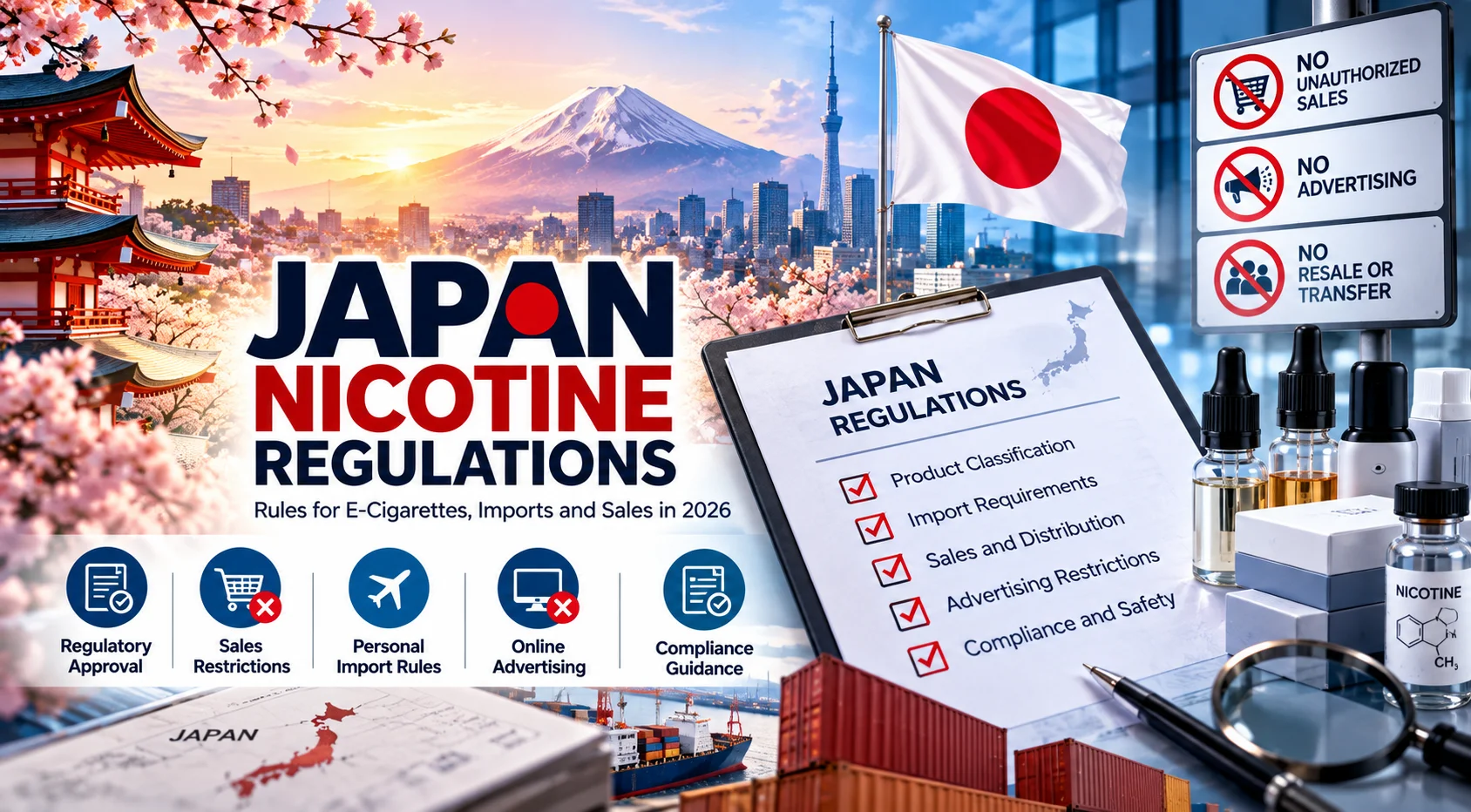
Japan Nicotine Regulations in 2026: Rules for E-Cigarettes, Imports and Sales
Japan nicotine regulations remain an important consideration for international manufacturers, distributors and businesses exploring the country’s nicotine-related product market. Japan regulates nicotine-containing e-cigarette liquids and cartridges differently from conventional tobacco products. Under Japan’s pharmaceutical regulatory framework, nicotine-containing e-cigarette products generally require the applicable approval before they can be marketed domestically.
In a ministerial briefing on July 24, 2026, Japan’s Ministry of Health, Labour and Welfare (MHLW) reiterated that the domestic sale, transfer and advertising of unauthorised nicotine-containing e-cigarette products are prohibited under the applicable law. The ministry also highlighted concerns about product quality, safety and online promotion.
For international suppliers, the key issue is understanding which rules apply to the specific product, how it will be imported and whether the intended business activity requires regulatory approval.
1. How Does Japan Regulate Nicotine-Containing E-Cigarettes?
Japan’s regulatory approach distinguishes nicotine-containing e-cigarette liquids and cartridges from products that do not contain nicotine.
Nicotine-containing e-cigarette liquids and cartridges are treated as pharmaceutical products under Japan’s Act on Securing Quality, Efficacy and Safety of Products Including Pharmaceuticals and Medical Devices, commonly known as the PMD Act.
As a result, businesses cannot assume that a nicotine-containing vape product can be sold in Japan simply because it is legally marketed in another country.
Companies considering the Japanese market should assess the product’s ingredients, intended use, classification and applicable approval requirements before planning commercial distribution.
Official reference: Japan MHLW — Nicotine-containing e-cigarette statement.
2. Are Nicotine Vapes Legal to Sell in Japan?
The domestic sale of unauthorised nicotine-containing e-cigarette products is prohibited under the relevant pharmaceutical regulations. The same regulatory framework restricts their unauthorised transfer and advertising.
This is an important distinction for retailers, online marketplaces and overseas suppliers. A product’s availability on a website does not establish that its sale complies with Japanese law.
Businesses should verify the applicable approval and licensing requirements before listing products, appointing distributors or accepting orders from Japanese customers.
Companies should also avoid assuming that the rules for nicotine-containing e-cigarette liquids automatically apply in exactly the same way to every tobacco product, nicotine ingredient or nicotine-free device.
3. What Are Japan’s Personal Import Rules for Nicotine Vapes?
Japan permits certain personal imports under specific conditions, but personal importation is not the same as commercial importation.
The MHLW explains that personal imports of regulated pharmaceutical products are intended for the individual’s own use. Products imported for personal use generally cannot be resold, transferred or supplied to other people.
For nicotine-containing e-cigarette liquids and cartridges, quantity limits and import procedures may apply. The Japanese authorities provide guidance on quantities that may be cleared through customs without additional import confirmation, as well as situations in which further documentation is required.
The applicable treatment can depend on the product, quantity and import circumstances. Importers should consult the current official guidance before shipping or carrying products into Japan.
Official references:
4. What Do the Rules Mean for Overseas Nicotine Suppliers?
International manufacturers and suppliers should determine the regulatory status of the exact product they intend to export. A rule that applies to a finished nicotine vape liquid may not automatically apply in the same way to a raw ingredient supplied for industrial use.
Before entering a commercial arrangement involving Japan, businesses should review:
- Product classification and intended use.
- Ingredient specifications and available technical documentation.
- Importer and distributor responsibilities.
- Applicable approval, licensing and import requirements.
- Product labelling and advertising restrictions.
- Documentation required by the relevant Japanese authorities.
These checks can help businesses identify regulatory questions before committing to a shipment or distribution agreement. They do not replace product-specific legal advice or confirmation from the appropriate Japanese authority.
For related background, see McCoy NIC’s nicotine procurement information. This company resource is intended as product and procurement information; it does not establish Japanese regulatory approval.
5. Online Advertising and E-Commerce Compliance
Online promotion is another area of regulatory attention in Japan. In its July 2026 briefing, the MHLW stated that it was strengthening online monitoring, including monitoring of social media, and seeking removal of illegal advertisements and posts.
This is relevant to businesses that promote nicotine-containing e-cigarette products through websites, online marketplaces, social media accounts or third-party sellers.
Companies should not assume that advertising is permissible simply because the content is published outside Japan or hosted on an overseas platform. The legal position can depend on the product, the content and the circumstances of the activity.
Businesses should review product listings, promotional claims and distribution arrangements with qualified regulatory advisers before targeting Japanese customers.
6. Nicotine-Containing and Nicotine-Free Products: Why Classification Matters
The regulatory classification of a product can materially affect its legal treatment.
Nicotine-containing e-cigarette liquids and cartridges fall under the relevant pharmaceutical framework in Japan. Nicotine-free e-cigarette devices are treated differently under this specific rule, although other laws and requirements may still apply.
Conventional tobacco products are also subject to a separate legal framework, including tobacco-related legislation and public-health rules.
Therefore, businesses should avoid using a single regulatory checklist for all nicotine-related products. The assessment should reflect the product’s composition, intended purpose, form and planned commercial activity.
7. What Should Companies Monitor Next?
Businesses interested in Japan should monitor official MHLW announcements and other relevant government guidance for changes in enforcement, import procedures and product-specific requirements.
Practical steps include:
- Confirm the product’s regulatory classification.
- Determine whether commercial importation, marketing or sale requires approval or a licence.
- Review applicable import documentation and quantity requirements.
- Check that online listings and marketing materials comply with relevant restrictions.
- Obtain advice from qualified professionals familiar with Japanese pharmaceutical and tobacco regulations.
Companies should distinguish official regulatory changes from general market commentary or unverified online claims.