Ireland Moves to Tighten Nicotine Product Regulations, Packaging and Advertising
Ireland is moving toward tighter regulation of nicotine products, with new measures targeting packaging, advertising, retail displays, flavour descriptions and the sale of newer nicotine products such as nicotine pouches.
The developments are part of Ireland’s wider effort to strengthen controls around nicotine-inhaling products and emerging nicotine consumption products.
For manufacturers, importers, distributors and B2B buyers, the changes could have important implications for product development, packaging, marketing and market-entry planning.
Ireland Nicotine Product Regulations Enter a New Phase
The Irish Government approved the publication of the Public Health (Tobacco Products and Nicotine Inhaling Products) (Amendment) Bill 2026 in March 2026.
The proposed legislation would further regulate nicotine-inhaling products and introduce additional controls for newer nicotine products, including nicotine pouches.
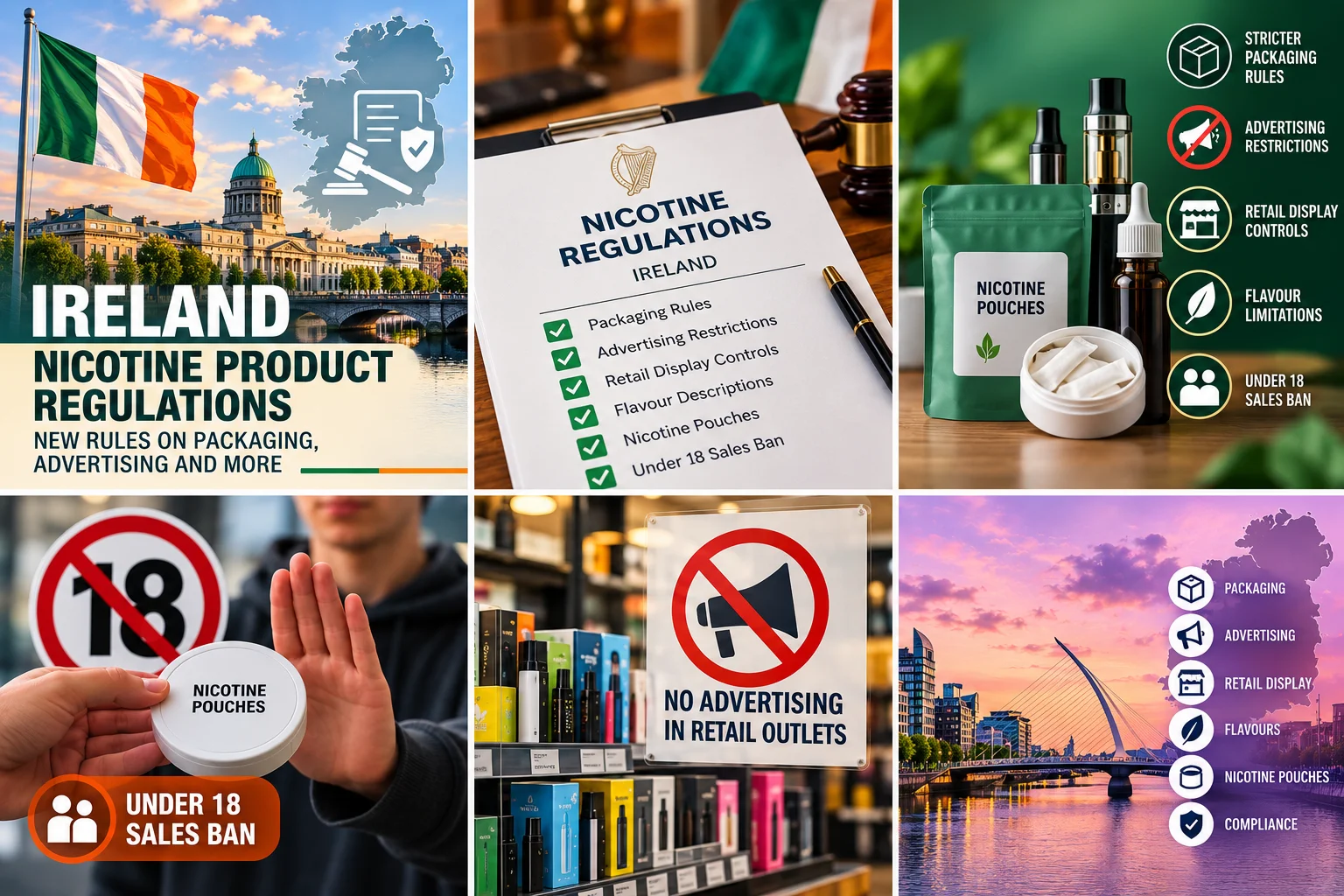
Among the measures under consideration are:
- A minimum age of 18 for nicotine consumption products
- Restrictions on advertising nicotine products in retail outlets
- Restrictions on point-of-sale displays in mixed retail premises
- Controls on colours and imagery on nicotine products and packaging
- Restrictions on certain flavour descriptions
- Restrictions on products designed to resemble toys or games
The legislation therefore represents an important development for businesses operating across Ireland’s nicotine supply chain.
New Packaging Rules Could Affect Nicotine Product Manufacturers
Packaging is one of the most significant areas of the proposed changes.
Ireland’s legislative proposals seek to reduce the use of eye-catching colours, imagery and other visual elements on nicotine-inhaling products and their packaging.
The measures also address decorative elements and product presentation.
For manufacturers, this means that packaging may increasingly need to be considered as part of the product’s regulatory compliance strategy rather than simply as a branding or marketing decision.
Businesses preparing products for the Irish market should therefore review packaging specifications alongside product formulation and classification.
Advertising Restrictions for Nicotine Products
Advertising is another important part of Ireland’s proposed nicotine regulations.
The legislation would prohibit advertising of nicotine-inhaling products and nicotine consumption products in retail outlets. It would also restrict point-of-sale displays in mixed retail premises.
These measures could change how nicotine products are presented and promoted in supermarkets, convenience stores and other retail environments.
For manufacturers and distributors, the development means that commercial launch strategies may need to account for market-specific advertising and display restrictions.
Ireland Moves to Regulate Nicotine Pouches
Nicotine pouches are receiving particular attention under the proposed framework.
The legislation would introduce a minimum age of 18 for the sale of nicotine consumption products such as nicotine pouches.
It would also bring these products into a stronger regulatory framework covering advertising and retail display.
The development is significant because nicotine pouches represent a newer category of nicotine products that has expanded in a number of markets.
For companies involved in nicotine pouch manufacturing or supply, understanding the distinction between raw-material requirements and finished-product regulations will become increasingly important.
Flavour Descriptions Face Greater Scrutiny
Ireland’s proposed legislation also addresses the way flavours are described and marketed.
The measures would prohibit flavour descriptions beyond basic flavour names and provide powers to restrict the range of flavours available for nicotine-inhaling products.
This could have implications for:
- Product names
- Packaging text
- Marketing materials
- Flavour descriptions
- Product development
- Consumer-facing communications
Manufacturers planning products for the Irish market should therefore consider flavour terminology during the development and compliance process.
What Ireland’s New Nicotine Rules Mean for B2B Buyers
For B2B buyers, the regulatory changes highlight the importance of supplier qualification and technical documentation.
A buyer sourcing nicotine raw materials should consider factors such as:
- Product grade
- Purity
- Intended application
- Certificate of Analysis (CoA)
- Safety Data Sheet (SDS)
- Batch traceability
- Packaging specifications
- Transportation documentation
- Regulatory classification
- Destination-market requirements
It is important to distinguish regulations applying to finished nicotine consumer products from requirements that may apply to raw nicotine supplied to manufacturers.
A raw-material supplier and a finished-product manufacturer can have different regulatory responsibilities depending on the application and market.
Why Supplier Documentation Matters
As nicotine regulations become more detailed, reliable technical documentation becomes an increasingly important part of B2B procurement.
Buyers should evaluate whether a supplier can provide consistent product specifications, batch documentation and relevant compliance information.
For manufacturers sourcing 99.9% pure nicotine, documentation can help support internal quality-control procedures and supplier qualification.
McCoy NIC provides nicotine raw materials for qualified B2B manufacturing applications, including different nicotine grades and specifications.
Businesses evaluating suppliers can also review available certifications and compliance documentation as part of their procurement process.
Ireland’s Regulatory Changes Reflect a Wider Industry Trend
Ireland’s latest measures are part of a broader international trend toward greater regulation of emerging nicotine products.
Governments and regulators are increasingly examining:
- Nicotine product packaging
- Product appearance
- Advertising
- Retail displays
- Flavour descriptions
- Minimum sales age
- Product licensing
- Traceability
- Market access
For international manufacturers, this means that regulatory monitoring is becoming an increasingly important part of market-entry planning.
A product that meets requirements in one market may require different packaging, labelling, marketing or distribution arrangements in another.
Disposable Vape Rules Are Also Changing
Ireland’s regulatory changes extend beyond nicotine pouches and packaging.
The Public Health (Single-Use Vapes) Act 2026 provides for a ban on the sale of single-use or disposable vapes. The legislation commenced in July 2026, with a six-month transition period meaning the sales ban is due to take effect on 24 January 2027.
This development adds another important compliance consideration for companies involved in the Irish vaping market.
Manufacturers, importers and retailers should therefore monitor both the nicotine-product legislation and the separate disposable-vape requirements.
What Should Nicotine Manufacturers Watch Next?
Businesses involved in Ireland’s nicotine market should continue monitoring the development and implementation of the 2026 legislation.
Key areas to watch include:
- Final packaging requirements
- Advertising restrictions
- Retail display requirements
- Nicotine pouch regulations
- Flavour restrictions
- Minimum-age requirements
- Product classification
- Implementation dates and enforcement
Companies planning to sell finished nicotine products in Ireland should verify the requirements applicable to their specific product before entering the market.