What Buyers Can Prepare for an Initial Technical Discussion With McCoy NIC
A technical discussion with McCoy NIC can help B2B buyers clarify product requirements, review available technical information, and identify the next steps in the procurement process. Preparing key details before the conversation can make it easier to discuss product suitability, specifications, documentation, quantity requirements, and delivery expectations.
For buyers evaluating nicotine ingredients, the initial discussion is an opportunity to explain their requirements and identify which product and quality details need further review. Having relevant information ready can help make the conversation more focused and productive.
Why Preparation Matters Before a Technical Discussion
An initial technical discussion may involve purchasing, quality assurance, research and development, regulatory, or operations teams, depending on the buyer’s organisation and intended application.
When requirements are clearly defined, the parties can identify information gaps earlier and avoid unnecessary back-and-forth communication. Preparation also helps buyers distinguish between confirmed requirements and details that still need internal approval.
The objective is not to have every technical answer in advance. It is to provide enough information to begin a meaningful discussion.
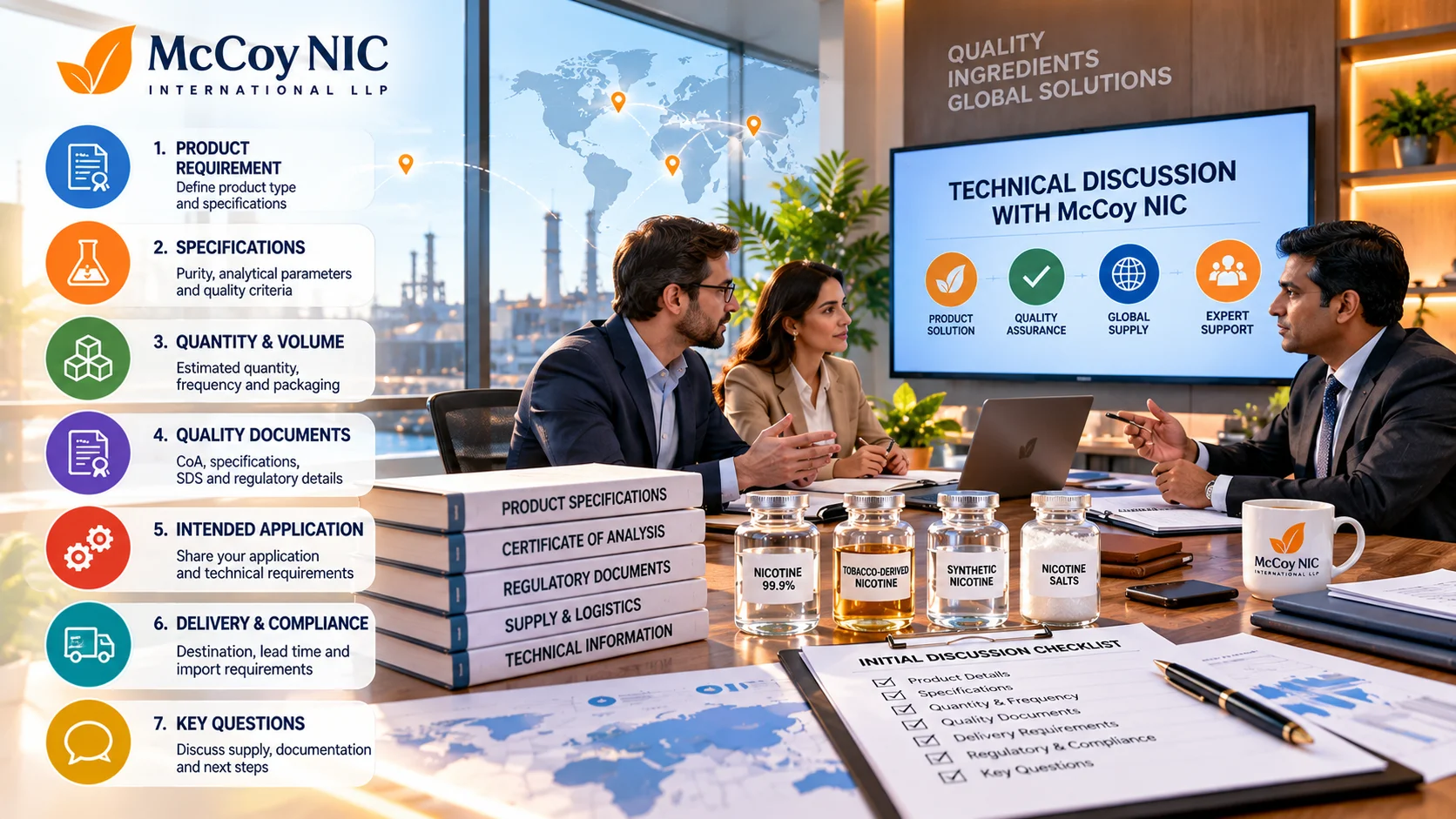
1. Define the Product Requirement
Before contacting a supplier, buyers should identify the product category they want to discuss and the specifications that matter for their intended application.
For example, buyers exploring nicotine ingredients may wish to review the following McCoy NIC product pages:
These pages provide starting points for understanding the different product categories. Buyers should confirm the exact product identity, available specifications, and suitability for their intended application directly with the supplier.
2. Prepare the Required Specifications
Product specifications help buyers and suppliers establish whether they are discussing the same material and quality requirements.
Depending on the product, useful details may include:
- Required product grade or purity
- Relevant analytical parameters
- Applicable specification limits
- Intended application and technical requirements
- Any specific quality criteria that must be met
Buyers should distinguish between mandatory specifications and preferred characteristics. If a requirement is still under evaluation, it can be identified as provisional rather than presented as final.
For additional background, buyers can visit the McCoy NIC Certificates and Quality Information page.
3. Estimate the Required Quantity and Purchasing Frequency
Quantity requirements help suppliers understand the commercial scope of a potential enquiry.
Before the discussion, buyers should estimate their initial requirement, expected order volume, and whether the purchase is a one-time requirement or part of a recurring procurement plan.
It is also useful to clarify:
- Initial quantity under consideration
- Expected repeat-order frequency
- Preferred packaging or shipment format
- Target purchasing timeline
- Whether quantities are confirmed or estimated
These details can support a more relevant discussion about availability, minimum order quantities, lead times, and quotation requirements. Actual availability and commercial terms should be confirmed with the supplier.
4. Identify the Quality Documents You Need
Buyers should consider which documents their internal teams require to evaluate the product.
Depending on the product and transaction, these may include a Certificate of Analysis (CoA), product specifications, a Safety Data Sheet (SDS), or other applicable technical and quality records.
A CoA provides analytical results for the identified batch or sample, as applicable. Buyers should confirm which test parameters are reported, whether the document relates to the relevant material, and whether the results meet their own acceptance criteria.
It is equally important to identify any additional requirements imposed by the buyer’s quality system or destination market.
5. Explain the Intended Application
A brief explanation of the intended application can help the supplier understand the context of the enquiry.
Buyers do not necessarily need to disclose confidential formulations or proprietary information during an initial conversation. Instead, they can share the non-confidential information needed to identify the relevant product category and technical questions.
Useful discussion points may include the general application, required product characteristics, applicable quality criteria, and any known compatibility or handling requirements.
Where the intended application is regulated, buyers should explain the relevant market and confirm applicable requirements with qualified regulatory professionals.
6. Prepare Questions About Supply and Delivery
Technical suitability is only one part of a procurement decision. Buyers should also understand the practical requirements for obtaining the material.
Consider preparing questions about:
- Product availability and expected lead time
- Minimum order quantity
- Packaging options
- Storage and handling information
- Quality documentation availability
- Shipping arrangements and destination requirements
- Information needed to prepare a quotation
Not every question needs to be resolved in the first discussion. The purpose is to identify which details can be confirmed immediately and which require further review.
For procurement-related background, see Factors That Affect Bulk Nicotine Procurement.
7. Share the Destination Market and Compliance Requirements
If the intended transaction involves international shipping, the destination market can affect import documentation, product classification, transport requirements, and regulatory checks.
Buyers should identify the destination country and any known requirements that apply to their intended use. They should also clarify whether internal approvals, import authorisations, or additional technical documents are needed before an order can proceed.
The supplier can help clarify product-related information and available documents, but buyers remain responsible for verifying the applicable import and regulatory requirements with the appropriate authorities or qualified advisers.
8. Prepare a Clear List of Questions
A short, prioritised question list helps buyers use the discussion time effectively.
Consider asking:
- Which product and specification best match the stated requirement?
- What technical and quality documentation is available?
- Which specifications or acceptance criteria need confirmation?
- What order quantities and packaging options can be discussed?
- What information is required for a formal quotation?
- What are the expected lead time and shipping considerations?
- Which points need further technical or regulatory review?
Prioritise the questions that affect product suitability and purchasing decisions. Additional details can be addressed in follow-up communication.
9. Organise the Next Steps After the Discussion
The initial conversation should conclude with a clear understanding of the outstanding information and the next actions.
Buyers may need to share a final specification, review a document, confirm the required quantity, or obtain internal approval. Suppliers may need to clarify product details or prepare a quotation based on the information provided.
Recording the agreed actions, responsible contacts, and expected response dates can help both parties maintain continuity.
Once the product requirements and commercial details are sufficiently clear, buyers can use the McCoy NIC Request CoA and Price page to make a relevant product enquiry.
A Practical Checklist for Buyers
Before the discussion, review the following checklist:
-
Identify the product category.
-
Prepare the required specifications and quality criteria.
-
Estimate the quantity and purchasing frequency.
-
List the quality documents needed.
-
Explain the intended application at an appropriate level.
-
Identify the delivery destination and target timeline.
-
Prepare questions about availability, packaging, and lead time.
-
Note any internal approvals or regulatory checks that remain outstanding.
Not every item will apply to every enquiry. Buyers can use this checklist as a starting point and update it as their requirements become clearer.