Why Buyers Need Comparable Supplier Quotations
In B2B procurement, receiving quotations from multiple suppliers is only the first step. The real challenge is determining whether those offers meet the same requirements and can be compared fairly.
For nicotine raw material buyers, differences in product specifications, quality documentation, packaging, delivery terms and additional charges can affect the overall value of a quotation. Comparing prices without reviewing these differences may lead to an inaccurate purchasing decision.
A structured supplier quotation comparison helps procurement teams evaluate offers consistently, identify gaps and make better-informed sourcing decisions.
What Is Supplier Quotation Comparison?
Supplier quotation comparison is the process of evaluating offers from different suppliers against a common set of requirements. These requirements may include product specifications, order quantity, pricing, documentation, delivery schedules and payment terms.
The Chartered Institute of Procurement & Supply (CIPS) highlights the importance of structured supplier evaluation, including technical capability, financial considerations, supplier performance and risk management.
For buyers, the objective is not simply to select the lowest price. It is to identify an offer that meets the agreed requirements and provides appropriate overall value.
1. Compare Identical Product Specifications
Before comparing prices, buyers should confirm that each supplier is quoting for the same product grade and specification.
For nicotine procurement, relevant parameters may include:
- Product identity and grade
- Required assay or purity
- Applicable impurity limits and acceptance criteria
- Testing methods and quality requirements
- Required technical and safety documentation
Two quotations may appear similar while referring to different specifications or documentation commitments. Buyers should identify these differences and request clarification before comparing the offers.
For more information, read our related guide on Industrial Nicotine Procurement Specifications.
2. Review Quality Documents Before Making a Decision
Quality documentation helps buyers assess whether an offer meets their technical and purchasing requirements.
Depending on the material and transaction, buyers may request a product specification sheet, Safety Data Sheet (SDS), Certificate of Analysis (CoA), batch identification details and other applicable documents.
A CoA provides analytical results for an identified batch or material. Buyers should check the reported results against the agreed specification and clarify missing information or deviations.
A single document does not establish every aspect of supplier quality or regulatory compliance. Documentation should be reviewed alongside appropriate supplier checks and the requirements of the intended application.
Read our guide: Nicotine Supplier Evaluation: 9 Documents Buyers Need.
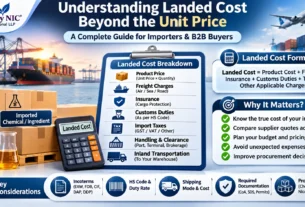
3. Calculate the Total Procurement Cost
The quoted unit price may not represent the total cost of receiving the material.
When comparing supplier quotations, buyers may need to review:
- Product price and order quantity
- Packaging and handling charges
- Freight and insurance
- Customs duties, taxes and clearance charges, where applicable
- Currency conversion and payment-related costs
- Other charges specified in the quotation
For a meaningful comparison, use the same currency and quantity basis wherever possible. Check whether freight, insurance and other costs are included or charged separately.
For international purchases, the total landed cost depends on the shipment, destination, delivery terms and applicable rules. Buyers should verify these details before approving an order.
4. Compare Lead Times and Delivery Terms
A competitive price may not be suitable if the supplier cannot meet the required delivery schedule.
Review each quotation for:
- Product availability
- Production or order-processing time
- Expected dispatch and delivery dates
- Packaging and shipping arrangements
- Delivery destination and agreed delivery terms
- Payment terms and quotation validity
Ensure suppliers are quoting delivery timelines on a comparable basis. For example, a dispatch estimate should not be treated as equivalent to a confirmed delivery estimate.
Clear delivery information helps purchasing teams assess whether an offer fits their operational requirements.
5. Evaluate Supplier Capability and Communication
Supplier selection should also consider the supplier’s ability to meet the agreed requirements.
Buyers may review the supplier’s business details, relevant experience, documentation practices, quality systems and ability to fulfil the requested quantity and schedule.
Communication is another practical consideration. Suppliers should clearly identify any deviations, assumptions or outstanding questions rather than leaving important commercial or technical details unclear.
CIPS recommends using defined evaluation criteria to support supplier assessment and selection. Buyers can adapt these principles to their own procurement procedures and risk requirements.
6. Use a Standard Supplier Quotation Comparison Checklist
A standard checklist helps procurement teams evaluate offers consistently.
Before making a decision, check whether each quotation clearly states:
- Product name, grade and specification
- Unit price, currency and quoted quantity
- Minimum order quantity, if applicable
- Relevant quality documents and testing information
- Packaging and handling arrangements
- Expected lead time and delivery terms
- Payment conditions and quotation validity
- Freight, insurance, taxes and other applicable charges
- Deviations from the requested specification or terms
- Any outstanding questions requiring confirmation
The checklist should be adjusted to the product, intended application and transaction. Technical and quality requirements should be reviewed by the relevant personnel before final approval.
7. Prepare a Clear Request for Quotation
A well-prepared Request for Quotation (RFQ) makes it easier for suppliers to submit comparable offers.
Before sending an RFQ, buyers should define the required product, specifications, quantity, packaging, destination, documentation requirements and expected delivery schedule.
If any requirement remains undecided, ask suppliers to state their assumptions clearly. This helps prevent hidden differences between quotations and reduces the need for repeated clarification.
For further information, read our related article on the Nicotine Procurement Journey.
How McCoy NIC Supports B2B Enquiries
McCoy NIC International LLP provides product information and supports B2B enquiries concerning nicotine raw materials.
Buyers can share their requirements to clarify relevant product specifications, quality documentation, quantities, packaging and commercial arrangements. Before placing an order, buyers should confirm the applicable technical requirements, delivery terms and regulatory obligations for their transaction.
Visit McCoy NIC International LLP to review available product information or submit an enquiry.