Proposed vs Enforced Nicotine Rules: What Buyers Should Know
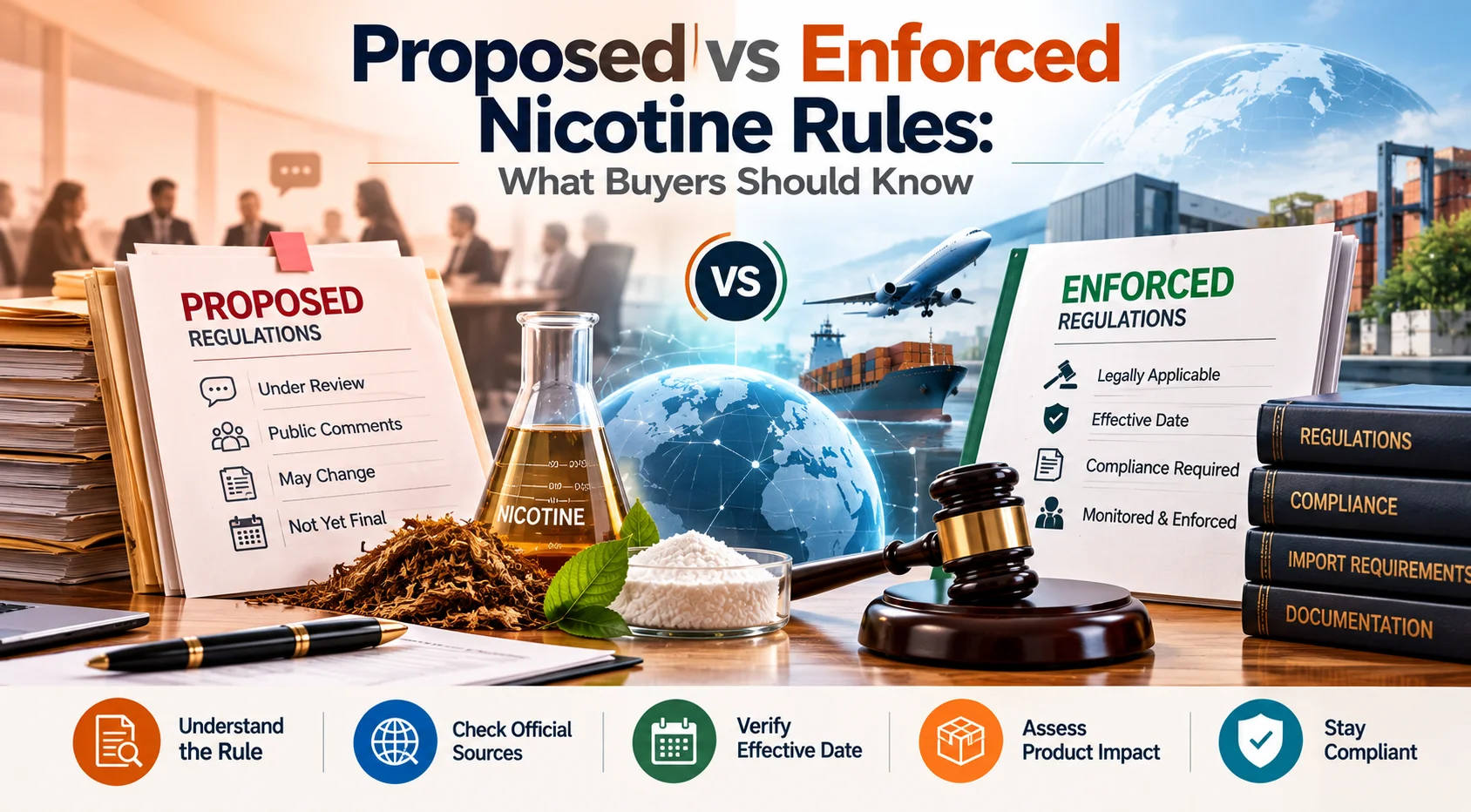
Proposed vs enforced nicotine rules are an important distinction for manufacturers, importers, distributors and B2B buyers working in the nicotine and tobacco industry. A proposed regulation may indicate a possible future change, but it does not automatically mean businesses must comply with that proposal immediately.
Understanding a rule’s current status, effective date and product scope can help procurement teams make better sourcing decisions, prepare documentation and reduce avoidable compliance risks.
What Are Proposed Nicotine Rules?
Proposed rules are regulatory changes published for consideration before they are finalized. Depending on the jurisdiction and regulatory process, authorities may invite public comments, review industry feedback and revise the proposal before issuing a final rule.
For example, the US Food and Drug Administration (FDA) publishes proposed and final tobacco-product rules on its official website. Buyers can review these listings to understand whether a regulatory change is still under consideration or has progressed to a later stage.
A proposed rule may signal future changes involving product standards, manufacturing practices, product listings, labelling or import procedures. However, its exact implications depend on the wording of the proposal and the applicable legal framework.
What Are Enforced Nicotine Rules?
Enforced rules are requirements that apply under the relevant legal framework and are currently in force for the product, business activity and jurisdiction concerned.
A final rule may specify an effective date, compliance deadlines, transitional arrangements or different dates for different requirements. Therefore, seeing the words “final rule” does not always mean every obligation applies immediately.
Businesses should also distinguish between a regulation, official guidance and an enforcement policy. These documents can have different legal effects. Their status and applicability should be verified before making a compliance decision.
The FDA explains its tobacco-product rulemaking process and publishes regulatory information through its official rules and regulations resources.
Proposed vs Enforced Nicotine Rules: Key Differences
| Point | Proposed Rules | Rules in Force |
|---|---|---|
| Regulatory status | Under consideration or in a proposal stage | Applicable under the relevant legal framework |
| Business obligations | A proposal alone does not automatically create a new enforceable obligation | Applicable requirements must be assessed and followed |
| Future changes | May be revised, delayed, withdrawn or finalized | May be amended, suspended or replaced |
| Effective date | May include a proposed date or anticipated timeline | Check the final effective date and any applicable compliance dates |
| Buyer action | Monitor developments and assess potential impact | Verify obligations and implement required controls |
The main lesson is simple: buyers should not treat a proposed nicotine rule as an enforced requirement without verifying its current legal status.
Why This Difference Matters for B2B Nicotine Buyers
1. Avoid incorrect compliance assumptions
A news headline may describe a regulatory proposal as a major upcoming change. Before changing a purchase order, supplier specification or import plan, buyers should read the underlying official notice.
Check whether the document is proposed, final, effective, delayed, amended or withdrawn. Also verify whether it applies to the specific product category and business activity.
2. Prepare for possible future requirements
Proposed rules still matter for business planning. Procurement teams can review possible changes and discuss readiness with suppliers without automatically treating every proposal as a current legal obligation.
For example, a proposed change to a product standard could prompt a buyer to review technical specifications, testing capabilities and supplier documentation. Any decision to change an order should be based on the actual proposal, commercial needs and applicable requirements.
3. Verify product classification and intended use
Nicotine-related products may be subject to different regulatory frameworks depending on their composition, intended use, product presentation and destination market.
A chemical ingredient supplied for industrial use should not automatically be assumed to have the same regulatory status as a finished consumer product or a pharmaceutical product. Buyers should confirm the applicable classification with qualified regulatory professionals or the relevant authority.
4. Check import and shipping requirements separately
A product’s regulatory status does not by itself establish that a shipment can be imported or transported without additional requirements. Customs rules, dangerous-goods transport requirements, permits, licences and destination-specific restrictions may apply independently.
Before dispatch, buyers and suppliers should confirm the requirements relevant to the product and route. Depending on the shipment, documentation may include a Certificate of Analysis (COA), Safety Data Sheet (SDS), technical specifications, commercial invoice, packing list and any required permits or declarations.
How Buyers Can Verify Whether a Nicotine Rule Is in Force
Use the following practical checklist before making a sourcing or shipment decision:
- Locate the original notice: Find the rule on the regulator’s official website or the relevant government publication.
- Confirm its status: Identify whether it is proposed, final, effective, amended, delayed or withdrawn.
- Read the dates carefully: Check publication, effective and compliance dates rather than relying on a headline.
- Check product scope: Confirm whether the rule covers the specific ingredient, finished product, intended use and business activity.
- Review import obligations: Check the destination country’s requirements, product classification and any necessary authorisations.
- Confirm documentation: Ensure that the supplier can provide accurate, current and product-specific technical and safety documentation.
- Record the verification: Keep the official notice, review date and relevant compliance correspondence with procurement records.
For US tobacco-product matters, start with the FDA’s Rules and Regulations Related to Tobacco Products. For applicable federal notices, the Federal Register can help buyers locate published regulatory documents.
These resources are useful starting points, but businesses should also consult the regulator responsible for the specific product and destination market.
How Suppliers Can Support Buyer Compliance Checks
Suppliers can help buyers make informed sourcing decisions by maintaining clear product specifications, consistent batch documentation and timely communication about relevant regulatory developments.
Depending on the product and transaction, buyers may request:
- A current Certificate of Analysis (COA) for the relevant batch.
- An SDS describing applicable hazards and handling precautions.
- Technical specifications and product identification details.
- Information about packaging, storage and transport conditions.
- Available quality documentation and traceability records.
- Cooperation with reasonable, product-specific compliance enquiries.
Documentation supports due diligence, but it does not automatically establish that a product is approved for every use or lawful to import into every country. Buyers remain responsible for verifying the requirements that apply to their own transaction.
McCoy NIC provides product-related information through its pure nicotine product page and available certification and documentation information. Buyers should confirm the current availability and suitability of any document for their specific requirements.
Frequently Asked Questions
Does a proposed nicotine rule have to be followed immediately?
Not simply because it has been proposed. Its legal effect depends on the applicable process and any other existing requirements. Buyers should verify the official status and check whether separate rules already apply.
Does a final rule always take effect on publication?
No. A final rule may specify a future effective date, transition period or separate compliance deadlines. Check the actual document for the dates and conditions that apply.
Can a proposed rule affect procurement planning?
Yes. It can help buyers identify potential future changes to specifications, documentation, manufacturing processes or import planning. However, planning for a possible change is different from treating that change as an existing legal obligation.
Which documents should buyers review before purchasing nicotine ingredients?
Depending on the transaction, buyers may need a COA, SDS, technical specifications and commercial shipping documents. Additional licences, permits, declarations or authorisations may be required according to the product, intended use and destination country.
Are nicotine regulations the same in every country?
No. Requirements can differ by jurisdiction and product category. Buyers should verify the relevant national and local rules rather than assuming that compliance in one market establishes compliance in another.