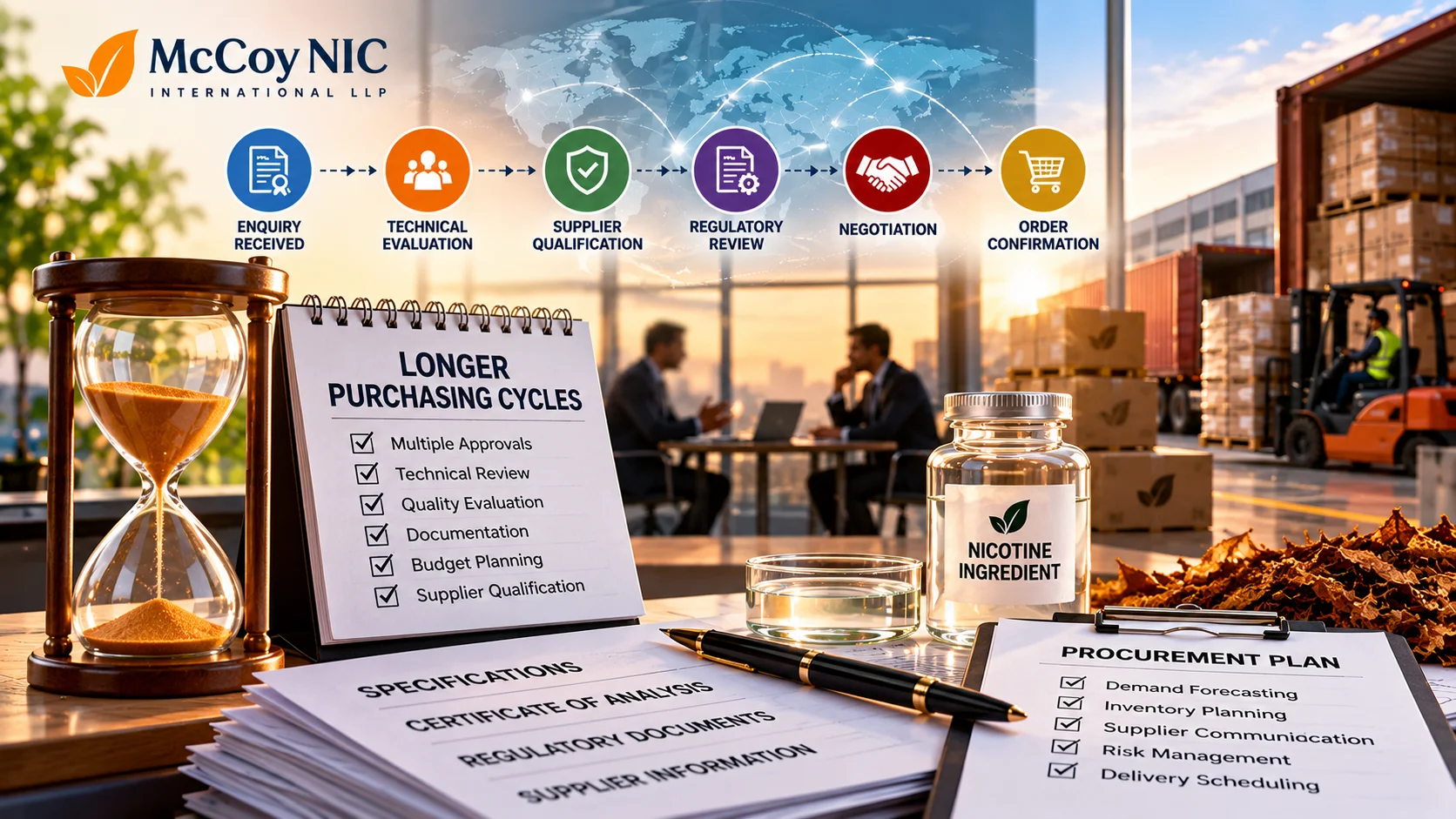
What Longer Purchasing Cycles Mean for Ingredient Suppliers
Longer purchasing cycles are changing how ingredient suppliers manage buyer relationships, sales forecasts, inventory planning, and commercial negotiations. In B2B markets, purchasing decisions may require several rounds of technical evaluation, budget approval, supplier qualification, and documentation review before an order is confirmed.
For ingredient suppliers, a longer sales cycle does not necessarily mean lower demand. It may mean that buyers need more time to assess risk, compare quotations, confirm specifications, and coordinate internal stakeholders. Understanding these stages can help suppliers improve communication and plan resources more effectively.
Why Are B2B Purchasing Cycles Becoming Longer?
Purchasing decisions for industrial ingredients often involve more than price and availability. Buyers may need approval from procurement, finance, quality assurance, regulatory, technical, and operations teams.
Several factors can contribute to a longer decision-making process:
- Detailed supplier evaluation: Buyers may compare product specifications, supply capabilities, documentation, and commercial terms.
- Budget approval: Purchasing teams may need to confirm available funds and obtain approval for larger orders.
- Quality and technical review: Product samples, specifications, test results, or other technical documents may need assessment.
- Regulatory requirements: Buyers may verify whether an ingredient meets the requirements of its intended market and application.
- Commercial negotiations: Payment terms, minimum order quantities, delivery schedules, and pricing may require additional discussion.
These factors vary by industry, product, company, and destination market. Suppliers should identify the actual reason for delays rather than assume every buyer follows the same process.
How Longer Purchasing Cycles Affect Ingredient Suppliers
1. Sales Forecasting Becomes More Complex
When enquiries take longer to convert into confirmed orders, suppliers may find it harder to predict when revenue will be realised.
An enquiry, quotation, or expression of interest should not automatically be treated as a confirmed sale. Suppliers can improve forecasting by tracking the stage of each opportunity, the buyer’s expected decision date, outstanding requirements, and the likelihood of conversion.
Separating confirmed orders from potential demand helps teams make more realistic production and sales plans.
2. Inventory and Production Planning Need Better Coordination
Suppliers must balance product availability with the risk of holding inventory for orders that have not yet been confirmed.
Producing too early may increase storage costs or tie up working capital. Waiting too long may create capacity or delivery challenges if several buyers confirm orders at once.
A practical approach is to use rolling forecasts, review historical order patterns, and distinguish firm commitments from provisional demand. Production decisions should also consider product shelf life, storage requirements, manufacturing lead times, and the commercial terms agreed with buyers.
3. Cash Flow and Working Capital Can Be Affected
Longer purchasing cycles can extend the time between an initial enquiry and a confirmed order. If the supplier also faces extended production, dispatch, or payment timelines, cash-flow planning becomes more important.
Suppliers should monitor quotation activity, order conversion, payment terms, and outstanding receivables separately. Clear commercial agreements can help both parties understand when production begins, when payment becomes due, and which costs apply if order requirements change.
4. Buyer Communication Becomes More Important
Repeated follow-ups without useful information may not accelerate a purchasing decision. Buyers are more likely to benefit from clear answers to the questions that are delaying approval.
Suppliers can support the process by providing accurate quotations, product specifications, applicable quality documentation, realistic delivery estimates, and prompt responses to technical queries.
A structured follow-up should identify the next decision required, the responsible contact, and any outstanding information. This approach helps maintain engagement without putting unnecessary pressure on the buyer.
5. Supplier Qualification Can Extend the Decision Timeline
Some buyers need to complete supplier registration, quality assessment, compliance checks, or internal approval before placing their first order.
Suppliers can prepare for these stages by maintaining organised company information, product specifications, relevant certifications, quality records, and other documents that are actually applicable to their operations.
For nicotine-related procurement, buyers may also need to review product identity, batch-specific analytical results, safety information, and destination-specific regulatory requirements.
Related resource: McCoy NIC Certificates and Quality Information.
What Ingredient Suppliers Can Do to Manage Longer Cycles
Build a Structured Sales Pipeline
Record each opportunity according to its current stage, such as initial enquiry, technical review, quotation issued, supplier approval, commercial negotiation, or confirmed order.
Assign a next action and follow-up date to each active opportunity. This gives sales teams a clearer view of which enquiries need attention and which are waiting for a buyer-side decision.
Make Quotations Clear and Complete
A quotation should clearly state the offered product, specification, quantity, price, currency, quotation validity, delivery terms, estimated lead time, and payment terms where applicable.
If technical information or supporting documentation is required for evaluation, identify what is available and what remains to be confirmed. Clear quotations can reduce repeated clarification and help buyers compare offers on a consistent basis.
Provide Technical Information Early
Where appropriate, suppliers should prepare product specifications, applicable certificates, batch documentation, and safety information for buyer review.
For nicotine procurement, buyers can review product information for Pure Nicotine 99.9% and Tobacco-Derived Nicotine.
The exact documents required depend on the product, transaction, intended application, and destination market. Suppliers should avoid promising compliance or certifications that have not been verified.
Coordinate Sales, Operations, and Quality Teams
Longer purchasing cycles often involve multiple internal teams. Sales may receive the enquiry, quality may review specifications, operations may assess capacity, and finance may evaluate payment terms.
A shared process for handling enquiries can help teams identify missing information, confirm realistic timelines, and avoid inconsistent commitments to prospective customers.
Track the Right Performance Indicators
Suppliers can monitor several indicators to understand where purchasing cycles are becoming longer:
- Average time from enquiry to confirmed order
- Quotation-to-order conversion rate
- Time spent at each sales stage
- Number of enquiries awaiting technical or quality information
- Forecast accuracy and changes in expected order dates
- Order fulfilment performance after confirmation
Reviewing these measures over time can help suppliers distinguish between delays caused by internal response times and those caused by buyer approvals or changing commercial requirements.
What This Means for Nicotine Ingredient Procurement
Nicotine ingredient procurement may require additional technical, quality, safety, and regulatory review depending on the product and market. Buyers may need to assess the offered specification, request relevant documentation, confirm import eligibility, and coordinate delivery requirements before making a purchasing decision.
Suppliers can support this process by communicating product information accurately, responding to documentation requests, and providing realistic estimates rather than treating an initial enquiry as a guaranteed order.
Buyers can explore McCoy NIC’s technical support information and use the Request CoA and Price page for relevant product enquiries.