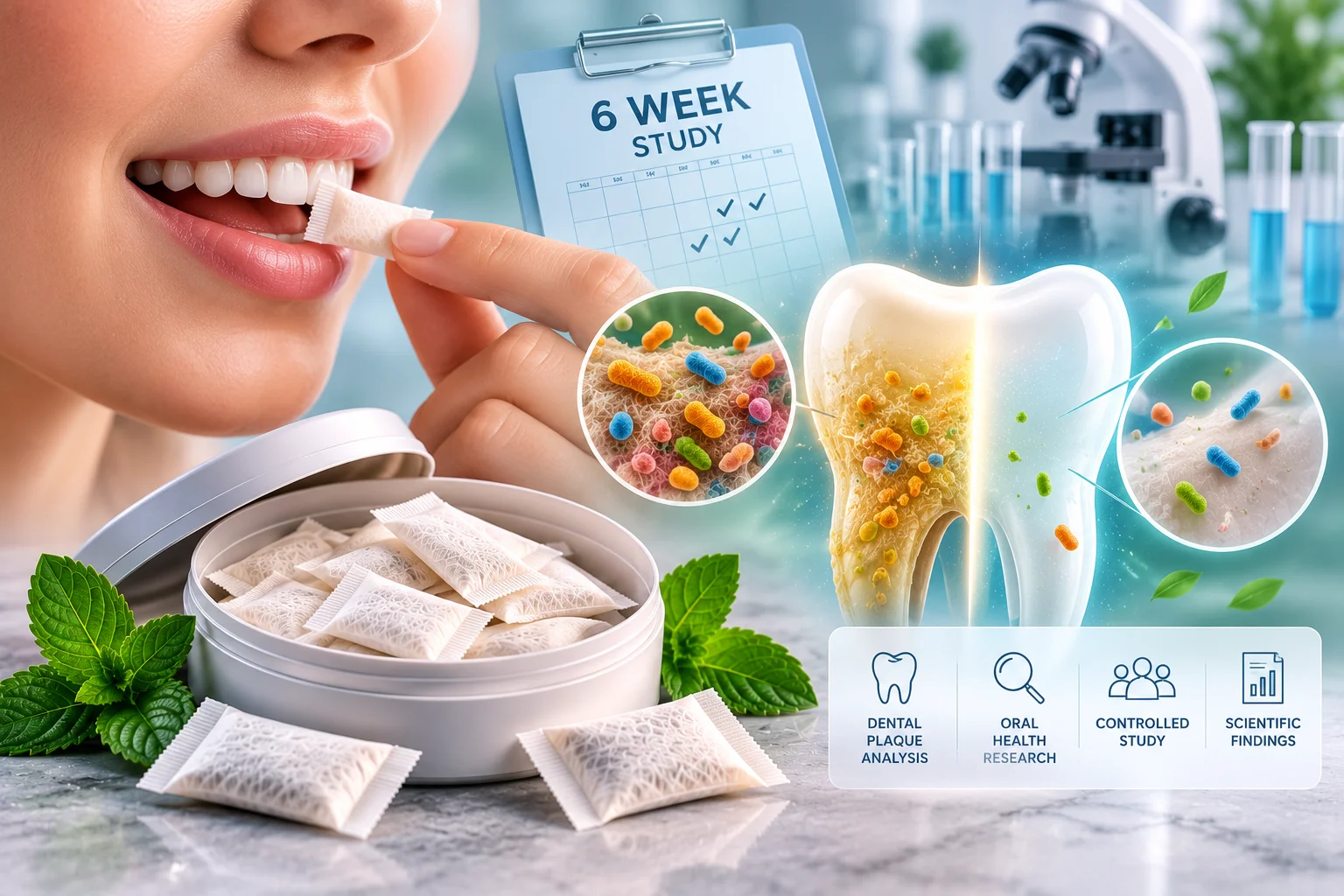
Six-Week Study Examines the Effects of Non-Tobacco Nicotine Pouches on Dental Plaque
A newly published study is examining how non-tobacco nicotine pouches may affect dental plaque characteristics and acidogenicity over both short-term and six-week periods. The research adds to the growing body of scientific literature investigating the oral effects of nicotine pouch products.
Published in BMC Oral Health in March 2026, the study examined nicotine pouch use among healthy tobacco-based snus users who switched to a non-tobacco nicotine pouch product. Researchers evaluated changes in dental biofilm acidogenicity as well as the amount of plaque during the study period. DOI
What Did the Six-Week Study Examine?
The research consisted of two parts.
The first part was an open-label, randomized crossover study involving 18 participants. Participants were exposed to flavored and unflavored ZYN products and comparison solutions containing sucrose or xylitol.
The second part was a six-week observational follow-up involving 56 participants. Researchers assessed dental plaque-related measurements at baseline and after two, four and six weeks of product use. DOI
The researchers specifically examined dental plaque acidogenicity, which relates to the ability of dental biofilm to produce acids following exposure to fermentable carbohydrates.
Study Finds Changes in Plaque Acidogenicity
One of the notable findings was that plaque acidogenicity was less pronounced following single-dose exposure to the nicotine pouch products than following the sucrose control.
During the six-week follow-up, use of the nicotine pouch product was associated with a statistically significant reduction in the measured acidogenic response compared with baseline. DOI
However, the study did not find a statistically significant change in the amount of dental plaque during the six-week period.
This distinction is important because a change in plaque acidogenicity should not automatically be interpreted as a reduction in plaque quantity or as proof of improved long-term dental health.
Why Dental Plaque Research Matters
The oral environment is an important area of research for manufacturers, researchers and healthcare professionals studying nicotine pouch products.
Unlike traditional tobacco-containing oral products, non-tobacco nicotine pouches do not contain tobacco leaf. The formulation used in this study contained microcrystalline cellulose and maltitol rather than ground tobacco leaves. DOI
Researchers are therefore continuing to examine how differences in product composition and exposure may affect oral biofilms and other oral-health indicators.
Product Formulation Can Influence Research Outcomes
The study also compared flavored and unflavored nicotine pouch products during its single-use component.
According to the researchers, there was no statistically significant difference between the flavored and unflavored ZYN products in the measured plaque acidogenicity outcome. DOI
This highlights why formulation characteristics and individual ingredients can be important areas of investigation as the nicotine pouch industry develops.
For manufacturers, maintaining consistency in raw materials and formulation parameters is an important part of product development and quality management.
What Does the Study Mean for Nicotine Pouch Manufacturers?
The findings provide additional scientific data for an industry that is increasingly focused on understanding the characteristics of oral nicotine products.
For manufacturers, research into dental plaque and oral biofilms can help inform future product-development discussions, particularly around:
- Product formulation
- Ingredient selection
- Nicotine delivery systems
- Quality control
- Product consistency
- Oral exposure characteristics
- Long-term research requirements
However, the findings should be considered within the specific design and limitations of the study.
More Research Is Still Needed
The researchers describe the findings as exploratory and note that the measurements reflect surrogate biofilm parameters rather than clinical caries outcomes. They also indicate that studies with longer follow-up periods and clinical endpoints are needed to better understand the long-term implications. PubMed Central (PMC)
Therefore, the study should not be interpreted as evidence that nicotine pouches prevent cavities or improve overall dental health.
Instead, it provides another data point in the continuing investigation of how non-tobacco nicotine products interact with the oral environment.
Implications for the Growing Nicotine Pouch Industry
Scientific research is becoming increasingly relevant as the global nicotine pouch sector develops.
Manufacturers and B2B buyers are paying greater attention to product composition, quality, consistency and the scientific evidence surrounding oral nicotine products.
Consistent manufacturing and reliable raw-material specifications can be particularly important when products are being evaluated across different research settings and commercial applications.
The Future of Oral Nicotine Research
The six-week study adds to a growing research base examining the oral effects of nicotine pouch use. Other recent research has also investigated oral tissue responses among nicotine pouch users, demonstrating that the scientific picture remains an active area of investigation. Wiley Online Library
Future research may provide more information about longer-term exposure, different formulations, nicotine strengths and their potential effects on oral tissues and dental health.