How to Check Whether a Regulatory Notice Is Still in Force
Regulatory notices can affect product compliance, import procedures, documentation and business operations. However, an older notice may have been amended, replaced, withdrawn or superseded by a newer legal instrument. Businesses should therefore verify the current status of a notice before relying on it for compliance decisions.
Understanding how to check whether a regulatory notice is still in force can help procurement teams, manufacturers, exporters and importers make better-informed decisions and maintain accurate compliance records.
Why Is It Important to Verify a Regulatory Notice?
A regulatory notice may explain a new requirement, announce a policy change, clarify an existing rule or communicate an administrative decision. Its continued relevance depends on the issuing authority, the legal instrument and any subsequent updates.
Relying on outdated information may lead to incorrect documentation, shipment delays or avoidable compliance problems. Businesses handling regulated ingredients, including nicotine, should check applicable requirements for their specific product, destination market and intended use.
1. Find the Original Notice on an Official Website
Start by locating the original notice on the website of the government department or regulatory authority that issued it.
Check the following details:
- Notice number or reference number
- Issuing authority and department
- Original publication date
- Subject and scope
- Effective date, if specified
- Official document or publication link
Avoid relying solely on search snippets, third-party summaries, social media posts or old PDF copies. Use them to locate a notice, then verify the document against the official source.
For example, businesses checking Indian drug-related notices can consult the CDSCO Public Notices page.
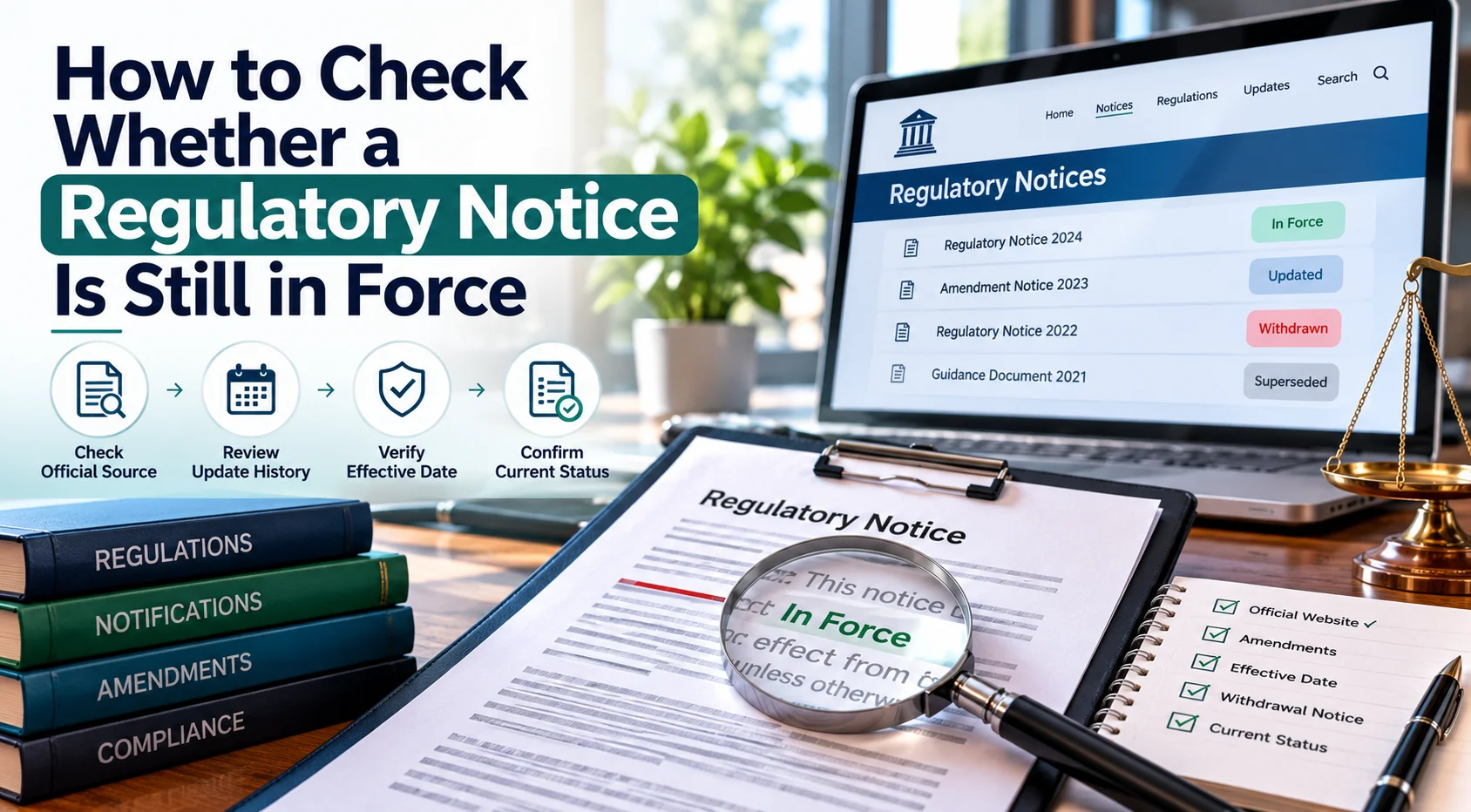
2. Check for Amendments, Revisions or Withdrawal
Finding the original notice does not establish that it remains in force. Search the same official website for its reference number, title and relevant keywords such as “amended,” “revised,” “withdrawn,” “rescinded,” “superseded” or “corrigendum.”
Read any later document carefully. It may replace the original notice entirely or change only specific provisions.
Where a notice refers to another regulation, order or notification, review that underlying legal instrument as well. The relationship between the documents may determine which requirements currently apply.
3. Verify the Effective Date and Any Expiry Conditions
A publication date and an effective date are not necessarily the same. Some notices take effect immediately, while others specify a future date, a transition period or a limited validity period.
Check whether the document contains:
- A specific commencement date
- An expiry or review date
- Transitional arrangements
- Conditions that trigger implementation
- References to later orders or legal changes
If the notice does not specify an expiry date, do not automatically assume that it remains applicable indefinitely. Check for subsequent official developments and the legal status of the underlying provisions.
4. Check the Latest Official Legal or Regulatory Record
Depending on the country and subject, the relevant source may be a government gazette, official register, regulator’s notice archive or consolidated version of the applicable regulation.
In the United States, the Federal Register publishes federal rules, proposed rules and notices. For Indian drug-related matters, consult the CDSCO website and relevant official Gazette notifications.
A notice may remain available online for historical reference even after it has been withdrawn or replaced. Its continued availability should not be treated as proof of current validity.
5. Confirm Whether the Notice Applies to Your Product and Business
Even a current notice may not apply to every business or product. Check its scope, definitions, jurisdiction, intended use and any stated exemptions.
For nicotine-related businesses, the relevant checks may include product classification, ingredient specifications, import permissions, labelling, safety documentation and transport requirements. These obligations vary by destination market and product category.
For example, a supplier preparing an international shipment should verify the applicable import rules and dangerous-goods transport requirements rather than assuming that one regulatory notice covers every aspect of the shipment.
Businesses can also review relevant McCoy NIC nicotine procurement information when assessing product specifications and supporting documentation.
6. Maintain a Regulatory Verification Record
After checking a notice, document the outcome so that colleagues can understand the basis for a compliance decision.
A simple record should include:
- Notice title and reference number
- Issuing authority
- Official source URL
- Date checked
- Current status identified
- Related amendments or replacement documents
- Products, markets or business activities affected
- Name of the person responsible for verification
If the status remains unclear, seek written clarification from the issuing authority or consult a qualified regulatory professional before making a significant compliance decision.
Example: Verifying a Notice Before an Export Shipment
Suppose an exporter finds an older notice describing documentation requirements for a regulated ingredient. Before arranging shipment, the compliance team locates the original notice, checks for amendments, confirms the effective date and reviews current import requirements in the destination country.
The team then records the official sources consulted and confirms the necessary documents with the importer or customs broker. If a newer instrument has replaced the earlier notice, the team follows the applicable current requirements rather than relying on the old document.