How to Ship Nicotine Safely: A Guide to UN 1654, Class 6.1
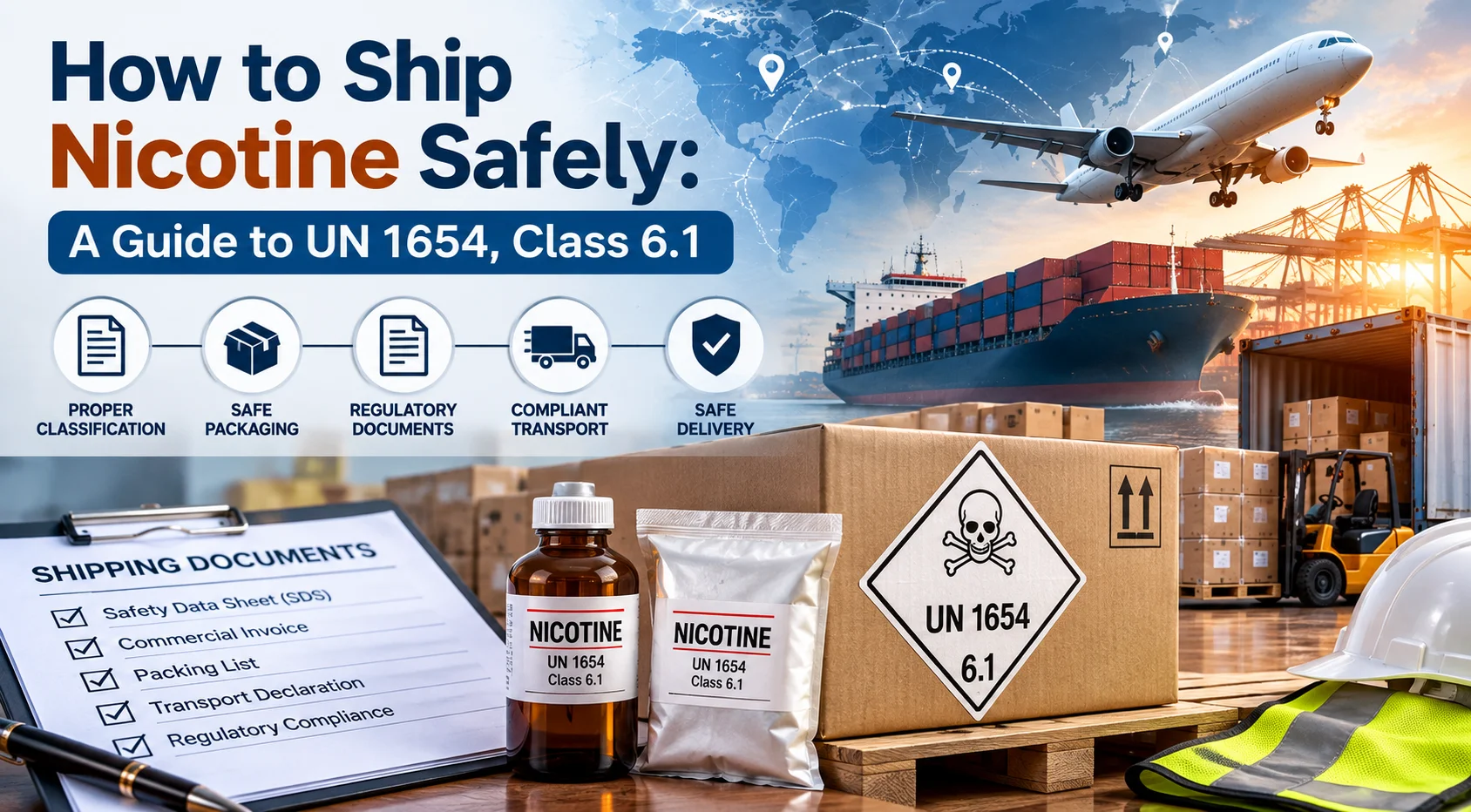
Nicotine is a toxic substance and is regulated as dangerous goods in international transport. Pure nicotine is classified as UN 1654, hazard Class 6.1 (toxic substances), Packing Group II. Buyers and suppliers who understand these rules can avoid shipment delays, rejected cargo and safety risks.
Classification at a glance
- Nicotine: UN 1654, Class 6.1, Packing Group II.
- Nicotine compounds and preparations (for example, some nicotine salts) may ship under other entries, such as UN 1655 (solid) or UN 3144 (liquid), with a packing group based on toxicity.
- Always confirm the correct entry in Section 14 of the product’s Safety Data Sheet (SDS).
Packing and labelling
- Use UN-specification packaging approved for Class 6.1 and the right packing group.
- Mark each package with the UN number and proper shipping name, and apply the Class 6.1 toxic hazard label.
- Seal and cushion inner containers to prevent leaks.
Documents needed for export
- Commercial invoice and packing list.
- Dangerous goods declaration, prepared by trained staff.
- Safety Data Sheet (SDS), Certificate of Analysis (COA) and specification sheet.
- Import permits or licences required by the destination country.
Air and sea rules
Air shipments follow the IATA Dangerous Goods Regulations, and sea shipments follow the IMDG Code. Each sets its own limits on quantity and packaging, so check with a certified dangerous-goods handler or freight forwarder before booking.
Buy and ship nicotine the right way with Trade Nicotine
Listings on Trade Nicotine are priced FOB India under Incoterms 2020. Its How Buying Works section explains the four steps from enquiry to dangerous-goods dispatch, and its Trade Compliance page lists what buyers and suppliers must provide. Find nicotine suppliers with export experience.