Growing Regulatory Attention on Nicotine Pouch Marketing
Nicotine pouches have become an increasingly visible category in the global nicotine market. Unlike traditional tobacco products, these small oral pouches are generally used by placing them between the gum and lip, without producing smoke or requiring combustion.
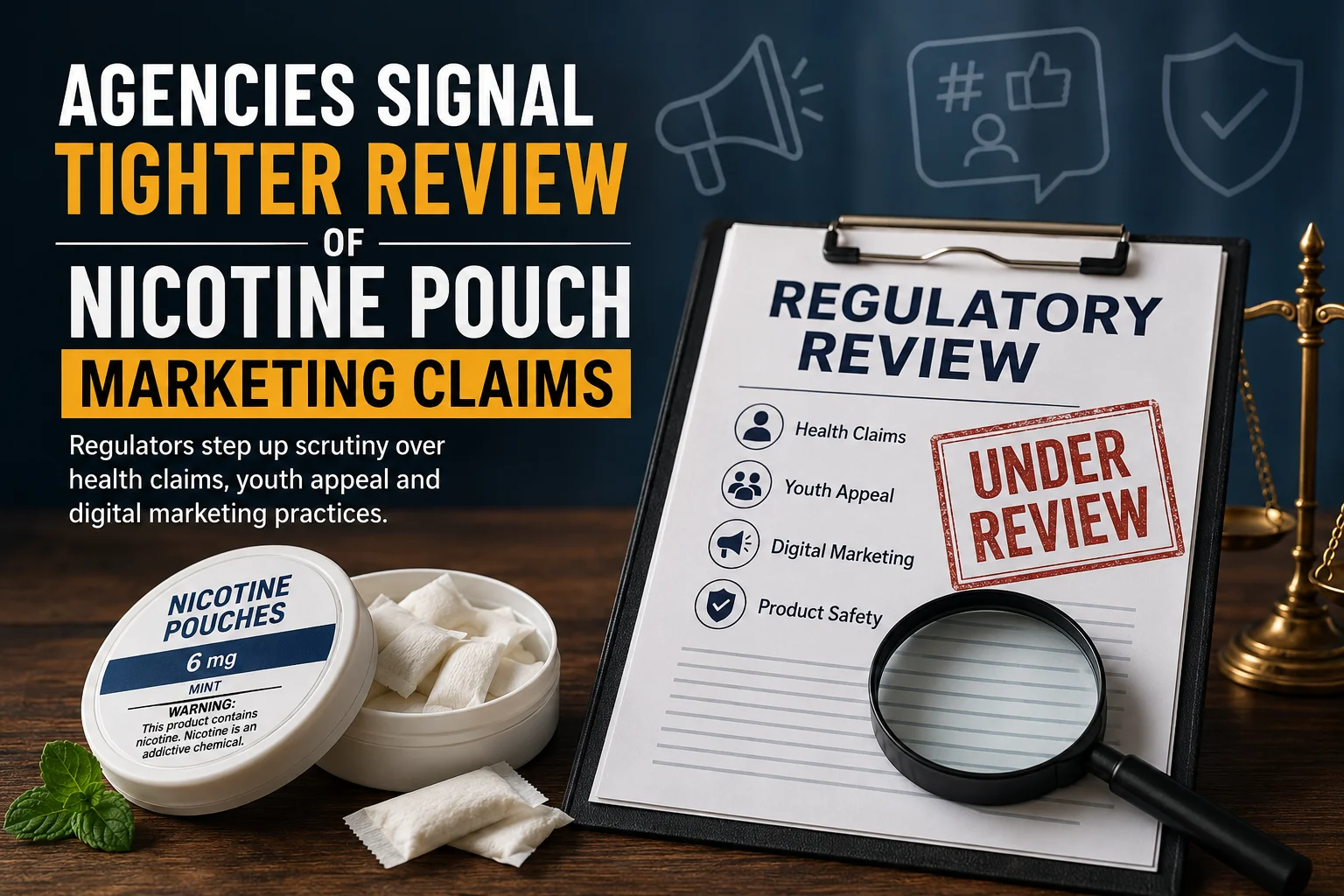
As the category expands, regulators and public-health organizations are paying closer attention to how nicotine pouches are marketed, particularly claims related to health risks, nicotine content, flavours, youth appeal and digital promotion.
The World Health Organization (WHO) has called for stronger controls on nicotine pouches, warning that some marketing practices may make these products attractive to younger audiences.
Why Marketing Claims Are Receiving More Scrutiny
One of the major issues is the way nicotine pouches are positioned in comparison with cigarettes and other nicotine products.
In some markets, manufacturers may seek to communicate that certain products expose users to fewer harmful constituents than combustible cigarettes. However, regulators distinguish between a claim that applies to a specific authorized product and a broad statement that all nicotine pouches are safer.
This distinction is important for manufacturers, distributors and marketers because health-related claims can require regulatory review and authorization before they can be used in product marketing.
In the United States, for example, the U.S. Food and Drug Administration (FDA) has authorized specific ZYN nicotine pouch products to be marketed with a modified-risk claim. The authorization applies to 20 specific products and does not represent a blanket authorization for the entire nicotine-pouch category.
FDA Decision Highlights the Importance of Specific Claims
On June 30, 2026, the FDA issued Modified Risk Tobacco Product orders for 20 ZYN nicotine pouch products.
The authorized products include different flavours and two nicotine strengths, 3 mg and 6 mg. The FDA’s order allows a specific modified-risk claim concerning lower risk compared with cigarettes when users switch completely from cigarettes.
The decision demonstrates that regulators can recognize differences in risk between nicotine products while still requiring evidence and product-specific review.
For businesses operating in the nicotine industry, this creates an important compliance lesson: marketing language should not go beyond the claims that regulators have actually authorized.
Youth Appeal Becomes a Key Regulatory Concern
Youth exposure is another major issue driving regulatory discussion.
In May 2026, WHO highlighted several marketing techniques that it said could appeal to younger audiences. These included sleek and discreet packaging, sweet-inspired flavours, influencer marketing, social-media promotion and sponsorship of concerts, festivals and sporting events.
The organization has called for stronger measures, including restrictions on advertising, controls on flavours and limits on nicotine content.
These concerns mean that manufacturers and marketers are likely to face increasing pressure to demonstrate that their promotional strategies are designed responsibly and do not encourage nicotine initiation among people who do not already use nicotine.
Social Media and Lifestyle Marketing Under the Microscope
Digital marketing has changed the way nicotine products reach consumers.
Social-media campaigns, influencer partnerships and lifestyle-oriented branding can potentially reach large audiences quickly. This has made digital promotion an important area of regulatory attention.
WHO has specifically identified influencer marketing and extensive social-media promotion as areas of concern.
For nicotine-pouch companies, this could mean greater emphasis on age-gating, responsible advertising practices, transparent product information and careful review of promotional content.
Product Strength and Consumer Information
Nicotine strength is also becoming an important part of the regulatory discussion.
The U.S. market has recently seen the introduction of higher-strength nicotine pouch products. Reuters reported in August 2026 that FDA had authorized 11 new ZYN Ultra products, while higher-strength products have been gaining a larger share of the U.S. pouch market.
As product strengths increase, accurate labelling and clear consumer information become increasingly important.
Manufacturers may therefore need to pay close attention to nicotine concentration, product descriptions, packaging statements and advertising language.
What This Means for Nicotine Industry Participants
The changing regulatory environment could have several implications for manufacturers, suppliers and distributors.
Companies operating in the nicotine pouch supply chain may increasingly need to focus on:
- Accurate product specifications and nicotine-strength information
- Evidence supporting any health or reduced-risk statements
- Responsible packaging and flavour strategies
- Age-appropriate marketing controls
- Compliance with local advertising regulations
- Careful review of social-media and influencer campaigns
- Clear separation between factual product information and promotional claims
Regulations can also differ significantly between countries. A marketing claim permitted in one jurisdiction may not be acceptable in another.
Therefore, companies involved in international nicotine markets need to evaluate marketing materials according to the regulatory requirements of each target market.
The Regulatory Direction Is Becoming Clearer
The global nicotine-pouch market is continuing to develop, but regulatory expectations are also evolving.
The recent FDA decision shows that regulators may authorize specific reduced-risk claims when supported by scientific and regulatory review. At the same time, WHO’s 2026 warnings demonstrate growing concern about youth-oriented marketing, flavours, social-media promotion and high nicotine exposure.
This creates a more complex environment for nicotine companies. Market growth may create new commercial opportunities, but manufacturers and marketers will need to place greater emphasis on evidence, transparency and regulatory compliance.