Rules & Regulations of Nicotine in Switzerland: What Manufacturers and Buyers Need to Know
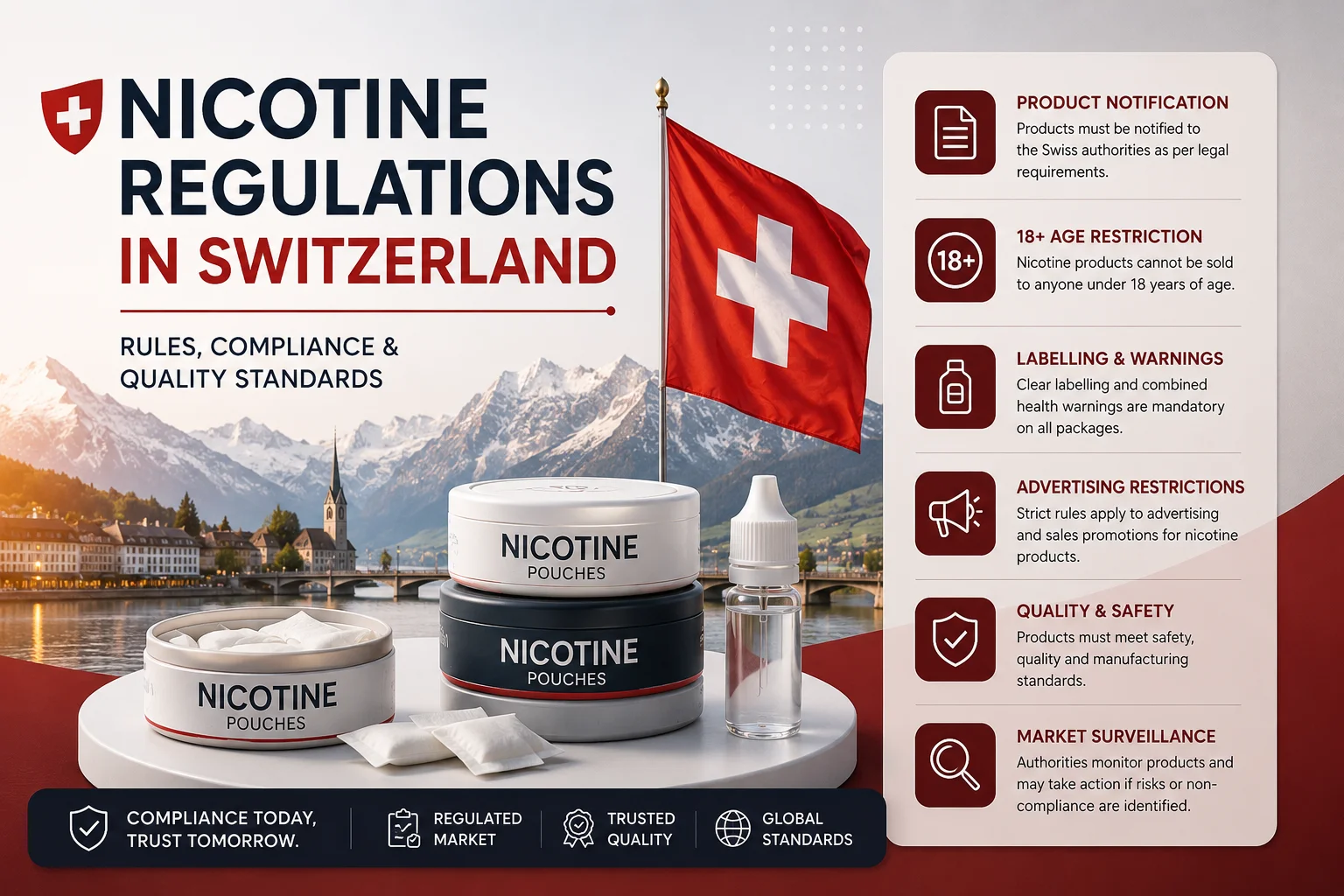
Nicotine regulations in Switzerland cover a comprehensive range of requirements for tobacco and nicotine products, including product safety, notification, labelling, sales, advertising and market surveillance.
Switzerland has introduced a comprehensive regulatory framework for tobacco and nicotine products. The Tobacco Products Act and Tobacco Products Ordinance came into force on 1 October 2024, establishing requirements covering product safety, composition, notification, labelling, sales, advertising and market surveillance.
For manufacturers, importers, distributors and B2B buyers, understanding Switzerland’s nicotine regulations is important when planning to place nicotine products on the Swiss market.
Switzerland’s Regulatory Framework for Nicotine Products
Switzerland regulates a broad range of tobacco and nicotine products under the Tobacco Products Act. These include traditional tobacco products, electronic cigarettes with and without nicotine, nicotine products for oral use such as nicotine pouches, nicotine products for nasal use and certain tobacco-free products.
The regulatory framework is designed to protect consumers, particularly minors, from the harmful effects of tobacco and nicotine consumption.
18+ Age Requirement
A key requirement under Swiss federal law is that products covered by the Tobacco Products Act cannot be supplied to minors. The federal framework establishes an age limit of 18 years for the products covered by the legislation.
Businesses selling nicotine products therefore need appropriate age-verification procedures. In addition, some Swiss cantons have their own rules concerning sales permits and may impose requirements that go beyond the federal framework.
Nicotine Pouches and Oral Nicotine Products
Switzerland’s current legislation specifically covers nicotine products for oral use with or without tobacco, including nicotine pouches. This means manufacturers and importers of oral nicotine products need to review the requirements of the Tobacco Products Act and Tobacco Products Ordinance before placing products on the market.
The Swiss authorities also provide guidance on standardised manufacturing processes and specifications. Companies can use internal procedures, good manufacturing practices or industry manufacturing specifications as part of their self-monitoring systems.
Product Notification and Documentation
The Tobacco Products Ordinance establishes requirements concerning product declaration and notification. Products covered by the legislation need to be handled according to the applicable notification requirements and deadlines. A transitional period was provided for product notifications following the law’s entry into force.
For B2B buyers, detailed product documentation is therefore important. Buyers may request information covering nicotine concentration, product composition, impurities, manufacturing specifications, safety data and batch-level testing.
A Certificate of Analysis (CoA) can also help buyers verify that each batch meets agreed quality specifications.
Labelling and Health Warnings
Switzerland has specific requirements for the declaration and labelling of tobacco and nicotine products. The Tobacco Products Ordinance establishes how products must be declared and provides requirements concerning health warnings, including combined image-and-text warnings for relevant product categories.
Manufacturers and importers should therefore review packaging and labelling before products are distributed in Switzerland.
Advertising and Sales Promotion
Advertising and sales-promotion activities for tobacco and nicotine products are regulated under Swiss federal law. The current framework restricts advertising in several public settings and limits certain promotional activities. Products cannot simply be distributed free of charge, and competitions involving gifts are prohibited under the current rules.
The rules can also vary at the cantonal level. Swiss cantons are permitted to introduce stricter requirements concerning advertising, sales and related areas.
Quality and Manufacturing Requirements
For manufacturers and suppliers, product quality and standardised production are important parts of compliance.
Companies should maintain clear specifications for nicotine concentration, purity, impurity profile, residual solvents, heavy metals, moisture and other relevant quality parameters where applicable. Batch consistency and traceability should also be supported by appropriate laboratory testing and documentation.
For buyers sourcing nicotine materials internationally, reviewing the supplier’s CoA, specifications and quality-control procedures can help establish whether the material meets the required commercial and regulatory specifications.
Market Surveillance and Product Safety
Swiss authorities have established market-surveillance mechanisms for tobacco and nicotine products. Businesses have responsibilities when products are found to be unsafe or non-compliant. In certain circumstances, companies may need to take corrective action or arrange a product recall and inform the relevant authorities.
This makes ongoing quality control important even after a product has entered the Swiss market.
Upcoming Regulatory Changes
Switzerland is also moving toward further restrictions on tobacco and nicotine advertising. Parliament approved a revision of the Tobacco Products Act on 20 June 2025. The revised provisions include additional advertising restrictions, including restrictions covering points of sale, publicly accessible places and internet or social-media advertising, with a limited exception for websites using reliable age-control systems. The revised law is expected to enter into force in early 2027, following the related regulatory process.
Businesses supplying the Swiss market should therefore monitor these upcoming changes.
What Manufacturers and Buyers Should Check
Before supplying nicotine products to Switzerland, companies should review:
- Product classification and applicable Swiss legislation
- Product notification requirements
- Nicotine concentration and product composition
- Product safety and quality specifications
- Packaging and labelling requirements
- Required health warnings
- 18+ age-verification procedures
- Advertising and promotional restrictions
- Batch-level CoAs and quality documentation
- Applicable cantonal requirements
- Upcoming regulatory changes
Conclusion
Switzerland has developed a structured regulatory framework for tobacco and nicotine products. The rules cover product safety, composition, notification, labelling, sales, advertising and market surveillance.
For manufacturers, exporters and B2B buyers, maintaining consistent product quality, accurate specifications and complete regulatory documentation is an important part of preparing nicotine products for the Swiss market.
Companies planning to manufacture, import or distribute nicotine products in Switzerland should verify the latest federal and cantonal requirements before commercial distribution, particularly as further advertising restrictions are expected to take effect in 2027.
Companies should regularly review nicotine regulations in Switzerland to remain compliant with current and upcoming requirements.